
Hotline +971 50 3436 930 Export +971 50 3436 475

UAE Midday Break Rules: How Outdoor Loading and Storage Areas Can Stay Compliant

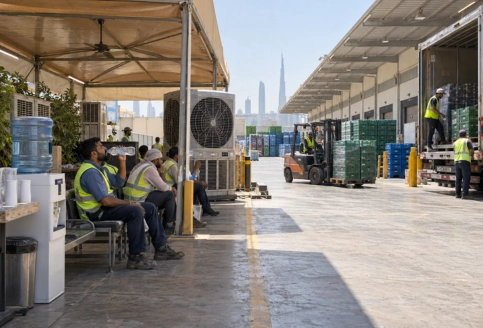
Close-up of shaded rest station with water cooler and seating beside warehouse loading dock

The UAE summer heat can make outdoor loading and storage work risky, especially during the hottest part of the day. For warehouses, logistics centers, and industrial yards, changing daily work plans before summer is important for both worker safety and legal compliance.

Under the UAE's annual heat stress policy, outdoor work under direct sunlight and in open areas must stop from 12:30 PM to 3:00 PM between June 15 and September 15. Outdoor loading, unloading, and similar yard activities should therefore be moved to cooler hours or suitable indoor areas during the restricted period.

Employers should provide shaded rest areas, drinking water, first aid, and clear heat-safety instructions for workers. Good planning also helps businesses keep loading and storage operations running without putting workers at unnecessary heat risk.

Why Outdoor Loading Areas Need a Summer Work Plan

Loading yards can become very hot because workers spend time around open concrete surfaces, metal containers, trucks, plastic pallets, and other heat-absorbing materials. Manual handling can make heat stress worse because it requires physical effort.

A summer work plan helps businesses move demanding tasks away from the hottest hours while keeping important warehouse activities organized. It should cover loading, unloading, stock movement, vehicle checks, outdoor storage work, and worker breaks.

The plan should be shared with supervisors and workers before the summer restriction starts, rather than being created after problems occur.

Key Steps to Keep Outdoor Loading and Storage Areas Compliant

The most effective approach is to combine the midday work restriction with good site planning, worker welfare, and daily monitoring. The following steps can help warehouse and logistics operators manage outdoor areas during the summer months.

1. Stop Restricted Outdoor Work from 12:30 PM to 3:00 PM

The first and most important step is to stop work that falls under the midday restriction. MoHRE states that the annual ban applies from June 15 to September 15, with restricted outdoor work hours from 12:30 PM to 3:00 PM.

This means businesses should not schedule normal loading, unloading, outdoor stock handling, or other covered tasks during these hours. Supervisors should check the daily schedule and make sure workers are not sent into open yards for routine tasks during the restricted period.

2. Move Heavy Loading Work to Cooler Hours

Heavy physical work should be planned for the early morning or later afternoon whenever possible. Tasks such as manual pallet handling, unloading cargo, moving boxes, outdoor stock counting, and truck loading can require a lot of physical effort.

Moving these activities away from peak heat reduces worker exposure and makes the work easier to manage. Warehouse managers can review shipment schedules and ask transport partners to plan arrivals around the site's summer operating hours. This can reduce pressure on workers while keeping the normal flow of goods moving.

3. Use the Midday Period for Indoor Tasks

The midday period does not have to mean that every warehouse activity stops. Work that can safely take place indoors can be planned during this time, as long as it does not involve restricted outdoor work.

Teams can use the period for stock records, inventory updates, order planning, paperwork, training, equipment checks, and other suitable indoor duties. Moving suitable tasks inside also helps maintain productivity without exposing workers to direct sunlight.

Businesses should clearly separate indoor duties from activities that require workers to enter an open yard.

4. Provide Proper Shaded Rest Areas

Workers need a suitable place to rest during the hot summer period. A shaded area should protect workers from direct sunlight and provide enough space for people to sit comfortably.

Depending on the site and work conditions, employers may use covered welfare areas or air-conditioned spaces.

The rest location should be easy for yard workers to reach and should not require them to walk a long distance through an exposed area. Keeping the area clean and well maintained also makes it more useful throughout the summer season.

5. Keep Cooling Equipment Ready

Shade alone may not provide enough relief when temperatures are very high. Warehouses should consider suitable cooling equipment for worker rest areas based on site conditions.

Industrial fans, air conditioning, and other approved cooling methods can improve comfort and help workers recover from heat exposure. Equipment should be checked before summer begins to make sure it is working correctly.

If fans are used, they should be positioned to provide useful airflow rather than simply being placed in a corner. Supervisors should report damaged cooling equipment immediately.

6. Provide Enough Cold Drinking Water

Water should be available to workers throughout the working day. Outdoor workers can lose fluids quickly through sweating, especially when they are moving goods or working around hot vehicles and storage surfaces.

Drinking water should be kept in suitable locations so workers can access it without difficulty. Employers should check supplies regularly during busy shifts.

Depending on the work and heat conditions, suitable electrolyte or rehydration solutions may also be provided. Workers should be encouraged to drink regularly instead of waiting until they feel very thirsty.

7. Keep First Aid and Heat Stress Support Ready

A first aid kit should be available and properly stocked at the facility. Supervisors should know the basic warning signs of heat stress, such as heavy sweating, weakness, dizziness, headache, nausea, confusion, or unusual tiredness.

Workers showing signs of heat illness should not simply be told to continue working. They should be moved away from heat and given appropriate assistance according to the site's emergency procedure.

First aid supplies should be checked regularly, and responsible staff should know who to contact if a serious health problem occurs.

8. Train Supervisors to Watch for Heat Stress

Supervisors play an important role because they are often the first people to notice when a worker is struggling in the heat. They should understand the summer work rules and know which outdoor activities must stop during the restricted hours.

They should also watch workers who perform physically demanding tasks, especially during very hot days. Short safety briefings can remind teams about drinking water, taking suitable rest, using shaded areas, and reporting symptoms early. Good supervision can prevent a small heat-related problem from becoming a serious emergency.

9. Reschedule Vehicle Loading and Unloading

Truck schedules should be included in the summer work plan. If a vehicle arrives during the restricted period, workers should not be placed in direct sunlight simply to keep the original loading schedule.

Businesses can work with drivers, transport companies, and customers to arrange deliveries during permitted hours. Early morning loading can be especially useful for large shipments that require manual handling.

Afternoon work can resume after the restricted period where conditions allow. A planned schedule is better than making last-minute decisions when a truck arrives at the yard.

10. Separate Outdoor and Indoor Storage Tasks

Warehouse managers should identify which storage activities require workers to go outside and which can be completed inside. Outdoor tasks can include moving stock between buildings, checking open storage areas, covering goods, and arranging yard inventory.

Indoor tasks may include labeling, stock records, picking, packing, and inventory system updates. Separating these activities makes it easier to create a safe midday schedule. A simple task map can show supervisors which activities are allowed during the restricted period and which must be moved to another time.

11. Protect Outdoor Goods Without Sending Workers Into the Heat

Outdoor storage areas may still need to protect goods during the midday period. Businesses should prepare materials before the restricted hours so workers do not need to enter the yard unnecessarily.

Suitable covers, secure storage systems, pallets, containers, and weather protection can help protect products. Where goods need to be moved, the task should be planned for permitted working hours.

This approach is especially useful for warehouses that store packaging, construction materials, industrial products, or other goods in open yards.

12. Use Clear Signs Around the Loading Yard

Clear signs can help workers, drivers, and visitors understand the summer work restrictions. Signs can show the restricted hours, emergency contact details, hydration points, rest areas, and basic heat safety instructions.

Information should be written in languages that workers can understand. Signs should be placed near entrances, loading bays, staff areas, and outdoor work zones. This reduces confusion and gives workers a quick reminder of the rules.

Supervisors should replace damaged or faded signs so important information remains easy to read throughout the summer.

13. Keep Loading Areas Clear and Safe

Heat safety does not replace normal warehouse safety. Loading areas should still be kept free from loose packaging, broken pallets, oil spills, damaged equipment, and other hazards. Clear vehicle routes reduce the risk of collisions and slips while goods are being moved.

Forklift routes should be separated from pedestrian areas where needed. During the summer, managers should pay extra attention to rushed work before and after the midday break. Workers should not be pushed to move goods quickly simply because the available working window is shorter.

14. Plan Shifts Around the Restricted Hours

Shift planning is one of the best ways to keep warehouse operations moving. Managers can place more outdoor work in the early morning and after 3:00 PM, while using the midday period for suitable indoor activities or rest.

The normal working-hour rules still apply, and overtime should be handled according to UAE labour requirements. UAE labour law provides a normal maximum of eight working hours per day or 48 hours per week for covered employees, subject to the applicable rules and exceptions. Shift changes should therefore be planned rather than simply adding extra hours at the end of the day.

15. Prepare an Exemption Procedure Where Applicable

Not every type of work is treated in exactly the same way under the midday break policy. The official MoHRE guidance identifies restricted outdoor work under the sun and sets the annual ban period and hours.

Where an activity may fall under a permitted exception, employers should confirm the applicable requirements instead of assuming that normal outdoor work can continue. If work must continue for a valid reason, the site should have stronger heat protection, supervision, and risk controls.

Businesses should rely on current MoHRE guidance when deciding whether a specific activity qualifies.

16. Record Daily Compliance Checks

A simple daily checklist can help supervisors confirm that the rules are being followed. The checklist can record the shift times, outdoor work status, water supply, condition of shaded rest areas, cooling equipment, first aid supplies, and any heat-related incidents.

Managers can also record corrective actions when a problem is found. These records help create a clear safety trail and make it easier to review the summer plan. Digital records can be useful for large warehouses with several loading yards or multiple shifts.

17. Communicate the Rules to Drivers and Contractors

Warehouse workers are not the only people who may enter a loading yard. Truck drivers, temporary workers, contractors, and visitors may also need access. Site rules should be explained to them before they enter restricted work areas.

Drivers should know that workers cannot be asked to load or unload during prohibited outdoor work hours simply because a vehicle has arrived. Security staff and gate teams can help by informing drivers about the summer schedule. Clear communication reduces arguments at loading bays and helps prevent pressure on workers to break safety rules.

18. Review the Plan Before the Summer Season

Businesses should review their summer work plan before June 15. Look at last year's loading patterns, delivery times, worker complaints, heat-related incidents, and periods when the yard became difficult to manage.

Then adjust staffing, delivery slots, shaded areas, water points, and indoor work plans. It is much easier to make these changes before the hot season starts. A pre-season review also gives maintenance teams time to repair fans, cooling systems, shade structures, lights, and other equipment used by outdoor workers.

What Can Happen If Businesses Ignore the Rules?

Ignoring the midday break can expose a business to enforcement action. The figures shared online about penalties should be checked against the latest official MoHRE rules before being used in company policies or legal notices.

The important point is that the midday break is an enforced occupational heat safety requirement, not simply a recommended rest period. MoHRE says the policy is designed to prevent injuries and harm linked to high summer temperatures. Businesses should therefore treat compliance as part of their normal health and safety system.

A Simple Summer Checklist for Warehouse Operators

Before the summer restriction begins, warehouse managers can use this checklist:

Confirm the June 15 to September 15 restricted period and 12:30 PM to 3:00 PM timing.

Stop covered outdoor work during the restricted hours.

Move heavy loading and unloading to cooler hours.

Prepare shaded or suitable cooled rest areas.

Keep enough drinking water available.

Provide suitable rehydration support where needed.

Check first aid supplies.

Train supervisors to identify heat stress.

Post safety instructions in languages workers understand.

Inform drivers and contractors about the work schedule.

Keep loading yards clean and free from hazards.

Record daily safety checks and corrective actions.

Review the summer plan before the restriction period begins.

How Better Storage Planning Supports Summer Compliance?

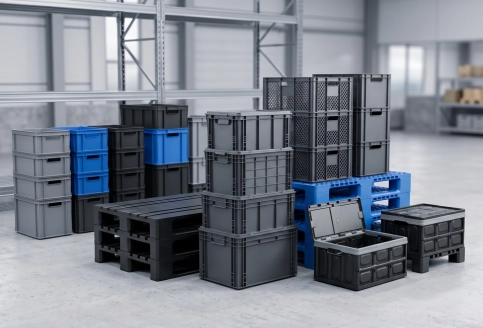
A well-organized storage area can make it easier to reduce outdoor work during the hottest hours. Businesses can use suitable plastic crates, pallets, containers, and other material handling products to keep goods organized and reduce unnecessary movement.

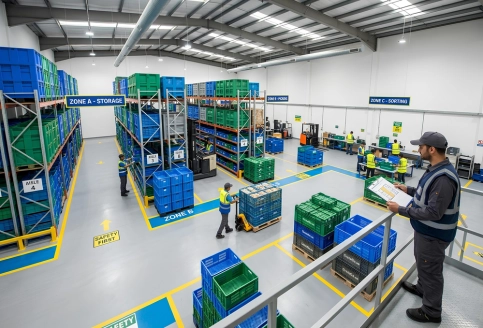
Clearly planned storage zones can shorten travel distances between receiving, storage, picking, and dispatch areas. This becomes especially useful when outdoor work must be limited during the midday period. Better organization also helps workers complete more tasks during cooler hours without creating rushed or unsafe loading conditions.

Conclusion

UAE warehouses and logistics facilities can stay compliant with the UAE midday break rules by planning outdoor work around the restricted hours from 12:30 PM to 3:00 PM between June 15 and September 15.

The safest approach is to move heavy loading and yard work to cooler hours, use the midday period for suitable indoor duties or rest, and provide workers with shade, water, cooling support, first aid, and clear safety instructions.

Supervisors should monitor daily compliance and keep drivers and contractors informed. Good storage planning can further reduce unnecessary outdoor movement and help the facility maintain smooth operations during the summer.

For warehouses looking to improve material handling and storage organization, Crateco Pack LLC provides industrial packaging and plastic storage solutions that can help businesses create cleaner, more organized, and efficient warehouse workflows.

Recent Blogs
Jerry can buying guide showing material, seal, and safety features for fuel and water storage
The Ultimate Guide to Choosing the Right Jerry Can for Your Needs
Plastic pallets vs wood pallets comparison for modern shipping and warehouse use
Why More Companies Are Switching to Plastic Pallets for Shipping
Workplace spill kit for chemical and oil hazard safety and compliance in UAE
Choosing the Right Spill Kit for Your UAE Workplace: What You Need to Know
Plastic drums for industrial chemical, food, and liquid storage solutions
The Complete Guide to Plastic Drums for Industrial Storage Needs
IBC tanks in UAE for industrial liquid storage and transport solutions
IBC Tanks UAE: Your Complete Guide to Industrial Storage & Transport Solutions
Durable platform trolley for efficient warehouse and logistics operations
Top 5 Features to Look for in a Quality Platform Trolley
Material handling equipment for efficient warehouse and supply chain management in UAE
How Material Handling Equipment Improves Supply Chain Management in UAE
Medical and kitchen waste bins for hygienic facility waste management in UAE
Medical & Kitchen Waste Bins UAE: How to Choose the Right One for Your Facility
Plastic manufacturer UAE bulk supply guide for industrial buyers and procurement teams
What Defines a Trusted Plastic Manufacturer in UAE for Large-Scale Supply?
Hard plastic box with lid for durable storage in UAE homes and warehouses
Why a Hard Plastic Box with Lid Matters in UAE Climate Conditions
Plastic pallet boxes for retail backroom organisation and inventory management by Crateco UAE
How to Use Plastic Pallet Boxes for Retail Backroom Organization
Nested crate storage solution for reducing transportation costs and saving space in UAE
The Complete Guide to Nested Crate Storage: Reducing Transportation Costs
5S workplace organisation system using plastic bins for UAE warehouse efficiency by Crateco
How to Implement a 5S Workplace Organization System Using Plastic Bins
Plastic crates for automotive parts storage outperforming metal alternatives in UAE warehouses
Automotive Parts Storage: Why Plastic Crates Beat Metal Alternatives
Medium duty racking system for organised warehouse logistics and inventory in UAE
How Medium Duty Racking Streamlines Logistics Operations in the UAE
Stackable storage boxes for space-saving organisation and item protection in UAE
How to Choose the Right Stackable Storage Boxes in the UAE
Slotted angle shelving system for organised warehouse and workspace storage in UAE
Slotted Angle Shelving: The Practical Storage Choice for UAE Businesses
Compliant reusable packaging options for UAE businesses replacing restricted single-use plastics under the 2026 ban.
UAE's 2026 Single-Use Plastics Ban: What It Means for B2B Packaging Buyers
Assorted plastic crate types including ventilated, nestable, and jumbo crates displayed for industrial use in UAE
A Complete Guide to Types of Plastic Crates and How to Choose the Right One
Various plastic pallet types and styles for warehouse storage in the UAE
A Complete Guide to Pallet Types, Styles & Materials
Smart storage solutions for UAE SMEs to reduce costs and improve efficiency
Cut UAE SME’s Costs with Smart Storage Solutions
Plastic manufacturing process in UAE showing production steps and materials
Understanding the Plastic Manufacturing Process in the UAE
IBC tank capacity comparison chart for industrial storage by Crateco UAE
Comparing IBC Tank Capacities: Which One Is Right for You?
IBC chemical storage tank for safe and efficient liquid handling in UAE industries
Why IBC Tanks Are the Preferred Choice for Chemical Storage?
Liquid storage solutions including jerry cans, drums, and IBC tanks by Crateco
Picking Right Liquid Storage Solutions: Jerry Cans, Drums & IBC | Crateco
Plastic pallets for durable and cost-effective logistics solutions in UAE
Plastic Pallets: The Smarter Logistics Choice for UAE Businesses
Spare parts bins for efficient storage and organization by Crateco UAE
Organize, Store, and Simplify with Spare Parts Bins from Crateco
Industrial jerry cans for safe chemical, fuel, and food-grade fluid storage in UAE
Industrial Jerry Cans: Your Complete Guide to Fluid Handling & Storage in UAE
Plastic crates for durable storage and transport solutions across UAE industries
Plastic Crates: Your Complete Guide to Durable Storage & Transport in UAE
Jumbo crates for heavy-duty storage and product protection across industries
Jumbo Crates: The Complete Guide to Heavy-Duty Storage Solutions
Modern waste bins for homes and offices offering hygiene and style in UAE
Top 5 Waste Bins for Modern Homes and Offices in the UAE
vegetable-crates-smart-choice-storage
Why Vegetable Crates Are the Smartest Choice for Fresh Produce Storage in UAE
Water and energy efficient plastic manufacturing facility in the UAE with closed-loop cooling systems and rooftop solar panels
How UAE Plastic Manufacturers Cut Water and Energy Use in Daily Production
Hygienic pallets for pharmaceutical storage compliance and efficiency in UAE facilities
Pharmaceutical Storage UAE: Hygienic Pallets and Compliance Standards
Ventilated crates for e-commerce picking systems and warehouse efficiency in UAE
E-Commerce Picking Systems UAE: Boost Efficiency with Ventilated Crates
IBC tanks and spill containment for UAE chemical storage regulation compliance
UAE Chemical Storage Regulations: IBC Tanks and Spill Containment Guide
Spill control products and practices for workplace hazard prevention in UAE industrial facilities
Spill Control Best Practices for UAE Industrial Facilities
Lightweight plastic crates for reducing logistics costs and improving ROI in UAE warehouses
Reducing Logistics Costs: The ROI of Lightweight Plastic Crates in UAE
Plastic products for supply chain resilience and operational risk reduction in UAE
Supply Chain Resilience: Why Plastic Products Reduce Risk and Downtime
Plastic crate sanitization guide for food-grade operations and contamination prevention in UAE
Cleaning and Sanitizing Plastic Crates: Best Practices for UAE Food Operations
Warehouse layout design using different crate types for maximum storage efficiency in UAE
Warehouse Layout Design: Choosing the Right Crate Types for Maximum Efficiency
Insulated tubs for temperature control and perishable product storage efficiency by Crateco UAE
Temperature Control in Storage: Why Insulated Tubs Are Essential for Perishables
Plastic and wood pallets side by side in a UAE warehouse, compared for carbon footprint and logistics performance.
Carbon Footprint Comparison: Plastic Pallets vs. Wood Pallets in UAE Logistics
UAE EPR compliance overview for plastic manufacturers and B2B buyers, covering material tracking and recycling obligations.
Extended Producer Responsibility (EPR) in the UAE: What Plastic Manufacturers and Buyers Need to Know
Color-coded plastic crates organised by category in a UAE warehouse to improve inventory control and picking accuracy.
Color-Coded Crate Systems: Improving Inventory Management and Warehouse Efficiency
Standardized plastic containers stacked for reverse logistics returns in a UAE distribution centre.
Return Logistics: Using Standardized Plastic Containers for Reverse Supply Chains
Safely stacked plastic crates and pallets maximising vertical storage space in a UAE warehouse.
Stacking Height Optimization: Maximizing Vertical Space Without Compromising Safety
Stackable and nestable plastic crates arranged for FIFO inventory rotation in a UAE warehouse.
Inventory Rotation: FIFO Systems Using Stackable and Nestable Crates
Closed plastic crates protecting sensitive components from dust and contamination in a UAE cleanroom facility.
Dust and Contamination Control: Using Closed Crates in Sensitive Environments
Reusable plastic crates replacing cardboard and stretch wrap in a UAE packing and distribution facility.
Packaging Integration: How Crates Reduce Secondary Packaging Needs
Heavy-duty commercial ingredient bin for hygienic food storage by Crateco UAE
Upgrade to a Heavy-Duty Commercial Ingredient Bin
Jumbo Crates for Warehouse Efficiency
How Jumbo Crates Can Streamline Your Warehouse Operations
HACCP-compliant plastic storage containers supporting food safety compliance in UAE facilities
Food Safety Standards: Why HACCP-Compliant Storage Matters
Stacked reusable plastic crates on pallets in a UAE warehouse for cost-efficient logistics.
Waste Reduction Strategy: How Reusable Containers Lower Operational Expenses
Heavy-duty commercial pallets used for warehouse and logistics storage in UAE.
Maintenance Tips to Extend Pallet Lifespan in Commercial Operations
UV-resistant plastic pallets stored outdoors in a UAE warehouse yard.
Choosing UV-Resistant Pallets for Exposed Outdoor Storage Areas
Recyclable plastic pallets and crates supporting circular economy logistics in UAE.
Circular Economy in Logistics: Recyclable Plastic Solutions Explained
Eco-friendly reusable packaging alternatives used in UAE supply chain logistics.
Eco-Friendly Packaging: Reducing Environmental Impact in UAE Supply Chains
Closed and ventilated plastic food crates used in UAE food distribution.
Hygiene Standards for Food Distribution: Closed vs. Ventilated Crates
Forklift-compatible plastic crates used for material handling in UAE warehouses.
Material Handling Compatibility: Choosing Crates That Work With Your Forklifts
Pallet jack-compatible industrial containers used in UAE warehouse operations.
Ensuring Your Containers Work With Standard Pallet Jack Equipment
Heavy-duty commercial ingredient bins for food-grade bulk storage by Crateco UAE
Why Upgrading to a Heavy-Duty Commercial Ingredient Bin Makes Sense
Fish crates used for seafood storage and transport in the fishing industry
Importance of Fish Crates in the Fishing Industry
Stacked plastic Halal storage containers in a UAE warehouse used for segregated food handling and transport
Halal Supply Chain Compliance: Why Storage and Transport Containers Matter
UAE plastic manufacturing facility with finished products undergoing MOIAT safety testing and ECAS conformity checks
MOIAT Product Safety Standards: What UAE Plastic Manufacturers Must Meet
Recycled plastic packaging containers produced at a UAE manufacturing plant to meet recycled content and EPR requirements
Recycled Content Requirements: What UAE Regulations Mean for Packaging Manufacturers
Crateco pallet supplier comparison guide for UAE logistics and warehouse businesses
Crateco vs Other Pallet Suppliers in UAE: Which One Is Right for You?
Warehouse storage bins for efficient organization and inventory management by Crateco UAE
How to Organize Your Warehouse Efficiently Using Storage Bins
Waste management solutions for UAE businesses promoting sustainability and efficiency
The Rising Importance of Waste Management for UAE Businesses
Insulated tubs for safe and efficient heavy-duty storage by Crateco UAE
The Ultimate Guide to Insulated Tubs for Efficient and Safe Storage
Plastic storage containers for modern home and office organisation by Crateco UAE
Why Plastic Storage Containers Are Ideal for Modern Homes and Offices
Multi tier warehouse mezzanine with guardrails and load capacity signage in a UAE industrial storage facility
Working at Height and Mezzanine Load Compliance: Storage Standards for UAE Warehouses
Warehouse worker moving a loaded pallet with an ergonomic hand pallet truck in a UAE distribution facility
Manual Handling and Ergonomics: Reducing Injuries with the Right Trolleys and Pallet Trucks
Supervisor checking a forklift operator safety record on a clipboard inside a UAE warehouse facility
UAE Labour Law and Employer Obligations for Material Handling Equipment
Stacked chemical storage drums with GHS hazard pictogram labels in a UAE industrial warehouse
GHS Labeling Explained: Chemical Container Compliance for UAE Businesses
UN-certified plastic drums and jerry cans marked with UN codes in a UAE hazardous goods storage area
UN-Certified Packaging: Why It Matters for Transporting Hazardous Goods in the UAE
Chemical drums stored inside a bunded spill containment pallet in a UAE industrial facility
Spill Containment Compliance Checklist: What UAE Environmental Inspectors Look For
Cooler box guide UAE for choosing the best ice cooler for outdoor use
Your Complete Guide to Choosing the Perfect Cooler Box in the UAE
Plastic dairy crates stacked for efficient storage and transport
Why the Modern Plastic Dairy Crates Are a Logistics Must
Stainless steel trash bin by Crateco for clean waste management
Why a Stainless Steel Trash Bin Is the Smart Choice for Every Space
Waste bins for businesses offering hygienic and efficient waste management
How to Choose the Right Waste Bin for Your Business
Metal waste bin for durable and eco-friendly waste management in the UAE
Metal Waste Bins: Durable & Eco-Friendly Waste Solution
UAE warehouse with high bay pallet racking, overhead sprinkler pipework, and clear aisle spacing for fire safety compliance
What UAE Civil Defence Requires from Warehouse Racking and Fire Safety Systems
UAE warehouse racking and fire safety setup prepared for Municipality and Civil Defence audit
Preparing Your Warehouse for UAE Municipality and Civil Defence Compliance Audits
Warehouse workers using shaded cooling station to prevent heat stress at UAE outdoor facility
Heat Stress Prevention in Outdoor Warehousing: Practical Steps Beyond the Midday Break Law
Food-grade storage racks and containers meeting Dubai Municipality F&B license requirements
Dubai Municipality Food Trade License Requirements: Storage Equipment Checklist for F&B Businesses
Food-grade storage containers meeting ADAFSA food safety inspection requirements in Abu Dhabi UAE
ADAFSA and Municipal Food Safety Inspections: What Storage Containers Must Meet
Labeled hazardous waste containers stored with segregation controls at UAE industrial facility
Basel Convention and UAE Hazardous Waste Rules: Proper Containment and Labeling
Halal-compliant plastic storage containers for food supply chain handling in UAE warehouse
Halal Supply Chain Compliance: Why Storage and Transport Containers Matter
Food-grade plastic egg trays compliant with UAE food-contact packaging regulations
Egg Tray and Food-Contact Packaging Compliance in the UAE
Inflated dunnage bags securing palletized cargo in a container for UAE transport safety
Dunnage Bags and Cargo Securement: Meeting UAE Transport Safety Standards
Reusable plastic packaging crates supporting ESG reporting for UAE logistics operations
ESG Reporting for UAE Logistics Companies: How Packaging Choices Affect Your Sustainability Score
Flame-retardant garbage bins for fire risk control in UAE industrial and commercial areas
Understanding the Importance of Flame-Retardant Garbage Bins in UAE
Modular plastic crates for scalable warehouse storage and business growth in UAE
Why Modular Plastic Crates Are Key to Warehouse Efficiency in the UAE
Stackable pallets for vertical warehouse space optimization and efficiency in UAE
Maximize Warehouse Space with Stackable Pallets: A Vertical Storage Guide
Pallet truck safety and maintenance guide for efficient UAE warehouse operations
Pallet Truck Safety & Maintenance: A Complete Guide for UAE Warehouses
Platform trolley guide for warehouse, office, and retail efficiency and heavy lifting
Maximize Efficiency with Platform Trolleys: Your Complete Buying Guide
Sustainable warehousing trends showing eco-friendly storage solutions in UAE
Top 5 Sustainable Storage Trends Shaping Modern Warehousing in UAE
Packaging strategies for operational resilience using plastic crates and pallets in UAE
How Packaging Strategies Drive Operational Resilience in UAE Supply Chains