
UAE plants and factories handle large volumes of hazardous liquids every day. The risk of a chemical spill is real. It applies to sites in Abu Dhabi, Sharjah, and Dubai alike.
Spill control best practices for industrial facilities reduce that risk. They cover containment gear, worker training, and UAE legal compliance.
One uncontrolled spill can injure workers. It can also pollute soil, damage assets, stop output, and bring heavy fines. A 2022 study in the International Journal of Environmental Research and Public Health found 728 deaths from large chemical accidents in China from 2000 to 2020. Most were preventable.
At Crateco, we help UAE clients build spill control systems. This guide covers the 8 most proven best practices to apply now.
Spill control is a system that stops hazardous liquids from leaving their intended zones. It also defines how to respond when a spill occurs. The goal is to protect workers and the surrounding area.
In the UAE, this is a legal duty. It is not just a best practice.
OSHAD-SF is run by the Abu Dhabi Public Health Centre (ADPHC). It requires high-risk sites to keep written hazard control systems. These must include chemical spill prevention and response plans.
Dubai Municipality and Dubai Civil Defence enforce similar rules. Federal Decree Law No. 33 of 2021 requires employers to find and control all liquid hazards at work.
Breaking these rules leads to fines and shutdown orders. It also triggers costly clean-up work. Uncontrolled spills cause 5 types of harm:
Worker injuries such as chemical burns, breathing damage, and slip-and-fall accidents.
Soil and water pollution, which is serious given the UAE's limited freshwater supply.
Asset damage from corrosive chemicals attacking machinery and surfaces.
Output downtime that can last hours or days.
Legal and insurance costs from poor records and non-compliance.
A strong spill control programme deals with all five at once.
Start by finding every possible spill source on your site. This is the base of good spill control.
A spill risk audit covers 6 key areas. These are chemical storage zones, pump stations, machine lubrication points, loading bays, drainage systems, and walkways near liquid-handling areas.
For each zone, record the liquid type (oil, acid, alkali, solvent, fuel, or coolant), the maximum volume present at any time, how often transfers take place, the state of existing containment gear, past spills and near-misses, and whether workers know what to do if a spill occurs.
Talk to machine operators, maintenance crews, and shift supervisors. They spot patterns that checklists miss. One example is a pump fitting that drips at shift changeover. Another is a drain that backs up during summer washdowns.
UAE sites face extreme heat. Temperatures go above 45°C from June to September. This speeds up chemical evaporation. It also breaks down containment gear and makes solvents more volatile. Include this in your audit. It matters most for outdoor storage in Jebel Ali Free Zone, KIZAD, and Sharjah estates.
Source containment stops spills at their starting point. It is the most cost-effective layer of protection. It keeps liquid in the system before any backup measure is needed.
The 7 most critical source containment measures include:
Closed-transfer systems that replace open decanting with sealed couplings and closed-loop pumps.
Drip trays and collection pans under all pumps, valves, compressors, and hydraulic units.
Absorbent socks and booms around machine bases and along floor drainage channels.
Drum funnels with integrated seals to stop overflow during drum filling.
Anti-drip nozzles and quick-release couplings on all liquid transfer lines.
Monthly gasket and seal checks on pipe flanges, valve seats, and pump seals.
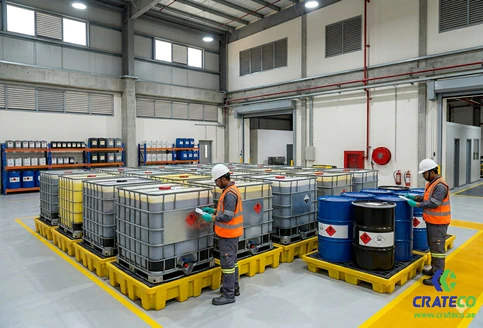
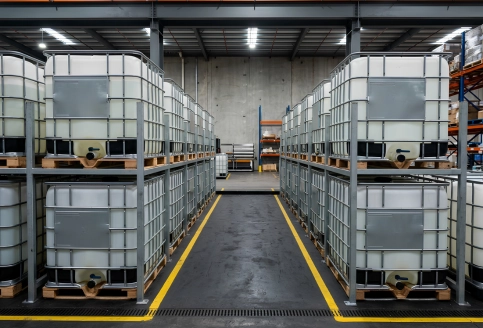
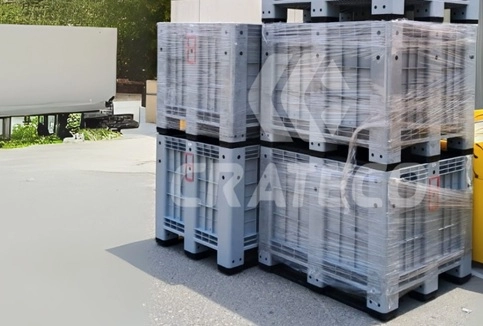
Bunded storage for all 200-litre drums and IBCs (intermediate bulk containers).
A 2020 study in the Journal of Environmental Protection found that most chemical accidents come from small, ongoing leaks. Degraded seals and loose couplings are the main causes. Fixing these at the source cuts spill rates before backup systems are ever needed.
Secondary containment is a physical barrier. It catches liquid when source containment fails. Secondary containment systems include spill berms, spill pallets, floor bunding, drip trays, and sump pits.
Each type suits specific liquid volumes, chemical types, and locations.
Spill Containment Berms:
Spill berms form a liquid-tight wall. They go around storage tanks, process equipment, fuelling points, and outdoor storage areas. They are made from PVC, polyethylene, or urethane-coated fabrics. These resist oil, diesel, acids, and most solvents.
EPA SPCC rules (40 CFR Part 112) state that secondary containment must hold the full volume of the largest container. It must also include an extra freeboard. The accepted standard is 110% of the largest container's volume.
The 4 most widely used berm types in UAE sites include:
Flexible drive-over berms for fuelling stations and tanker bays; walls flatten under tyres and rise back behind them.
Rigid modular berms that bolt together to form permanent zones around large tanks.
Foam-wall portable berms for fast use during maintenance; fold flat and deploy in under 2 minutes.
Concrete bunded enclosures for large tanks in refineries, fuel farms, and chemical plants.
For outdoor areas in Abu Dhabi's Mussafah district, Dubai Investment Park, and KIZAD, use UV-stabilised or urethane-coated berms. Standard PVC breaks down fast under the UAE sun.
Spill Containment Pallets:
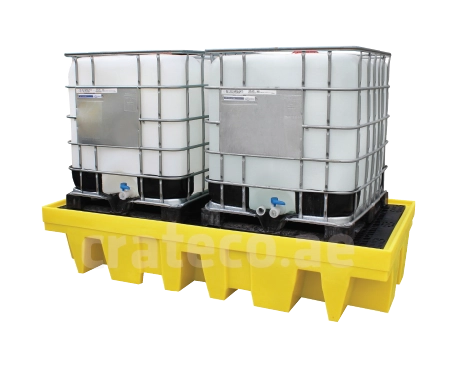
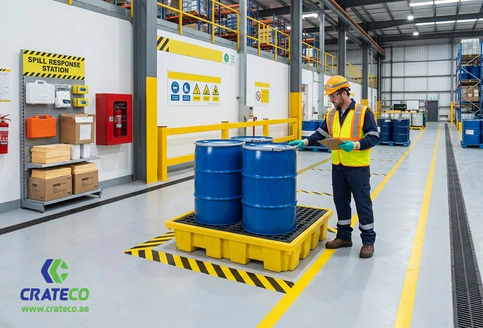
Spill pallets hold drums and IBCs above a built-in sump. EPA code 40 CFR 264.175 says the sump must hold 10% of the total container volume or the full volume of the largest container. Use whichever is greater.
Use galvanised steel pallets for acid and alkali storage. Use polyethylene pallets for hydrocarbons and solvents. The wrong material will break down under the stored liquid.
Floor Bunding and Sump Systems:
For large areas like mixing rooms and solvent vaults, install floor bunding. This is a raised wall around the work zone. Spills flow to a central sump pit for safe collection.
Connect the sump to a closed waste system. Never connect it to the stormwater drain. OSHAD-SF and Dubai Municipality both ban chemical waste from stormwater drains. Violations bring large fines.
A spill kit is a ready-to-use set of absorbent materials. Workers grab it fast when a spill occurs. Using the wrong kit type for the liquid on-site is a costly mistake.
The 3 standard spill kit types are:
Oil-only spill kits (white absorbents) that repel water and absorb only hydrocarbons; for fuelling stations and hydraulic oil systems.
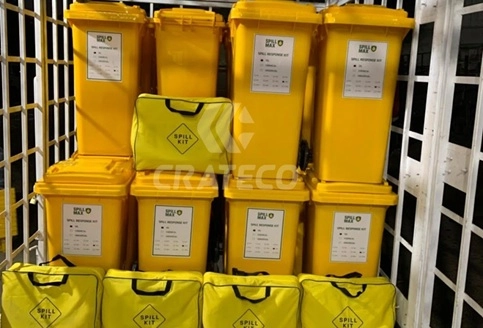
Chemical/hazmat spill kits (yellow absorbents) for acids, alkalis, solvents, and unknown chemicals; for chemical storage rooms and process lines.
General-purpose spill kits (grey absorbents) for water, oil, and mild chemicals; for workshops and mixed-use areas.
Position spill kits using these 5 rules: within 10 metres of every drum storage area and IBC station; next to every pump, compressor, and hydraulic unit; at every chemical transfer and dispensing point; at the entrance to every chemical storage room; and in every maintenance vehicle working outside the main site.
In large UAE sites over 5,000 square metres, use a colour-coded site map. Mark the location and type of every kit. Workers must reach the right kit within 60 seconds.
Check and restock all spill kits every month. UAE summer heat breaks down absorbent materials fast. A kit stocked in January may have less capacity by July if stored outdoors.
Worker training is the most important factor in spill control. Systems need trained people. Workers must spot a spill fast and follow the right steps for that liquid.
A 2022 study in Annals of Work Exposures and Health found that untrained workers suffer more chemical contact injuries. Better training directly cuts injury rates in the petroleum and chemical industries.
OSHAD-SF requires written safety training for all workers in hazardous areas. For liquid handling, training must cover reading Safety Data Sheets (SDS) to identify the chemical; selecting the right PPE including gloves, goggles, respirators, and chemical-resistant aprons; using the correct spill kit and containment gear; shutting off the spill source by closing valves or stopping pumps; stopping liquid from reaching floor drains, stormwater channels, and vents; notifying the supervisor and safety officer right away; bagging and labelling contaminated absorbent materials as hazardous waste; and completing the post-spill incident report.
Run spill response drills at least twice per year. One drill covers a minor spill. The other covers a major one. Workers who practise the major scenario respond faster when it happens for real.
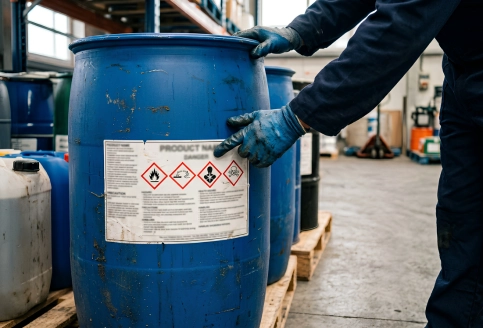
For sites with workers from many countries, use English and Arabic at a minimum. OSHAD-SF requires dual-language labels on chemical containers. The same applies to training cards at every kit location.
A written emergency spill response plan defines what happens after a major spill. It covers the first 10 minutes, the first 60 minutes, and the first 24 hours. Without one, the response is guesswork. Guesswork leads to injuries and bigger fines.
The American Chemical Society's Guide for Chemical Spill Response confirms that a planned response cuts injury and pollution costs significantly.
The 6 most essential parts of an emergency spill response plan include:
Spill size matrix with 3 tiers: minor (under 20 litres, non-volatile), moderate (20 to 200 litres or any volatile liquid), and major (over 200 litres or any release into a drain).
First-responder roles and contact list naming the team leader, safety officer, and contacts per shift.
Exit zones and muster points with wind-direction routes for each storage and process zone.
Spill isolation cards posted at every pump station and valve cluster.
Notification steps for contacting Dubai Civil Defence, Tadweer, or the relevant emirate authority.
Drain protection priorities listing the 3 nearest drain inlets per zone, with drain plugs and booms placed at each.
Review and update the plan every year. Also, update it after any change to chemicals, equipment, or site layout.
Every spill response creates contaminated waste. This includes used absorbent pads, soiled PPE, collected liquid, and packaging. All of it must follow the UAE hazardous waste rules. Putting it in regular bins is a violation.
Set up a labelled temporary hazardous waste area inside the site. It must be covered, bundled, and ventilated. Keep it away from ignition sources and the production floor.
Store contaminated items in sealed, labelled UN-approved hazardous waste containers. Keep waste types separate. Never mix hydrocarbon waste with acid, alkali, or halogenated solvent waste. Mixing these creates fire and reaction risks.
In Abu Dhabi, use Tadweer-licensed operators for collection. In Dubai, use Dubai Municipality-approved contractors. Keep a manifest for every collection. OSHAD-SF inspectors check these records during audits.
Documenting every spill is the final step in a complete spill control programme. Every spill gives you data that helps prevent the next one.
A 2021 study in the Journal of Occupational Health Psychology found that incident reviews cut repeat rates in high-risk industries. Sites that log near-misses and dig into root causes have fewer repeat incidents.
Fill in a spill incident report within 24 hours of any spill. Include the date, time, location, and shift details; the liquid type, volume released, and whether any reached a drain; the cause (equipment failure, human error, or material degradation); the containment measures used and whether they worked; PPE worn and any worker exposure or injury; waste created and how it was disposed of; corrective actions taken, and who is responsible; and root cause analysis for all moderate and major incidents.
Review all reports together each month. A pump station causing 40% of all spills tells you where to act first. Night shifts with triple the spill rate of day shifts tell you to add more briefings. This targets the real cause, not just the result.
OSHAD-SF requires annual OSH performance reports with incident data. Sites with clean records close audits faster and face fewer repeat findings.
Spill control in the UAE comes with climate challenges that most guides ignore.
Summer heat from June to September speeds up solvent evaporation. Vapour builds up in enclosed spaces. This raises the risk of explosion and breathing injuries. Absorbent materials left outdoors also break down faster. Run extra checks on outdoor storage in summer.
Dust and sand from shamal (northwest wind) events clog floor drains and cover spill kit stations. It also cuts visibility during outdoor spill response. Add drain clearing to your weekly maintenance schedule.
Winter coastal humidity from December to February corrodes steel drip trays, bunded pallets, and metal containment gear. Check all steel hardware every quarter. Replace corroded items before they fail.
Ramadan shifts run longer in many UAE sites. Fatigue goes up on these shifts, and spill incidents often follow. Increase kit checks and safety briefings during Ramadan.
UAE spill control regulations apply at both the federal and emirate levels.
Federal Decree Law No. 33 of 2021 requires employers to keep workers safe from liquid hazards. UAE Federal Law No. 24 of 1999 bans the discharge of polluting substances into soil and groundwater.
At the emirate level:
In Abu Dhabi, OSHAD-SF requires a full Occupational Safety and Health Management System (OSHMS) aligned with ISO 45001. This covers hazard identification, risk assessment, control measures, incident reporting, and annual OSH performance reports. Sites with large volumes of hazardous substances must also run a Process Safety Management (PSM) programme.
In Dubai, Dubai Municipality and Dubai Civil Defence enforce chemical storage, handling, and spill response rules. Sites above certain thresholds need approved emergency response plans, inspection records, and third-party safety audits.
Run internal compliance audits every quarter. Bring in a third-party HSE consultant once a year. Fix gaps before a regulator finds them.
To meet OSHAD-SF, Dubai Municipality, and ISO 14001 requirements, implement all of the following:
Conduct an annual spill risk audit covering chemical storage zones, transfer points, drainage systems, and process equipment.
Install bundled spill pallets beneath all drums and IBCs, sized to hold the volume of the largest single container.
Deploy spill berms around all above-ground tanks, outdoor chemical storage areas, and fuelling stations.
Select and position oil-only, chemical, and general-purpose spill kits within 10 metres of every liquid handling point.
Inspect and restock all spill kits monthly; increase frequency during summer months.
Train every worker near hazardous liquids, covering SDS reading, PPE selection, spill kit use, and emergency steps.
Conduct spill response drills twice annually, covering both minor and major spill scenarios.
Maintain a written emergency spill response plan with spill tiers, exit routes, isolation steps, and notification protocols.
Set up a hazardous waste storage and disposal system using UAE-licensed contractors.
Complete a spill incident report within 24 hours of every spill, and review data monthly.
Crateco supplies sites across Dubai, Abu Dhabi, Sharjah, Ras Al Khaimah, Fujairah, and Umm Al Quwain with spill control equipment. This includes oil-only, chemical, and general-purpose spill kits; spill berms in flexible, modular, and drive-over types; spill pallets and bunded storage systems; absorbent socks, pads, and granules; drain plugs; and hazardous waste containers.
Whether you are starting a programme from scratch, replacing old gear before an OSHAD inspection, or fixing gaps after an incident, Crateco's team can help. We know the products, and we know UAE regulations.
Contact Crateco today. Get your spill control assessed and protect your workers, your licence to operate, and the UAE environment.