

Eggs need safe packaging to reach stores and customers without cracks, contamination, or damage. In the UAE, businesses must choose egg trays and food packaging that meet the required safety standards.
Egg tray and food-contact packaging compliance in the UAE focuses on material safety, chemical migration, hygiene, and proper labeling. The rules help prevent harmful substances from moving from packaging into food.
Businesses must also check applicable product standards and conformity requirements before placing packaging on the market. Choosing suitable materials, maintaining proper handling practices, and keeping the right documents can help manufacturers, suppliers, and food businesses meet these requirements.
Food-contact packaging compliance means making sure that packaging materials are safe for direct or indirect contact with food. In the UAE, the applicable rules cover materials such as plastic, paper, cardboard, and molded fiber.
The main goal is to prevent contamination and protect consumer health. The Ministry of Industry and Advanced Technology (MoIAT) oversees national standards and conformity systems. Earlier, the Emirates Authority for Standardization and Metrology (ESMA) handled many of these responsibilities.
Depending on the product and its intended use, businesses may need to meet specific technical requirements, complete conformity assessments, and provide test reports or declarations. Requirements can vary by material and packaging type.
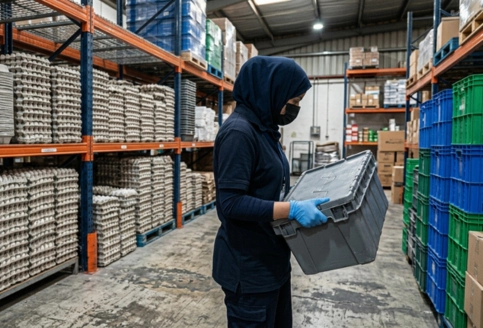
Egg trays do more than hold eggs in place. They protect fragile shells from impact, reduce movement during transport, and help keep eggs clean. Poor-quality trays may contain unsuitable substances, release unwanted chemicals, or fail to provide enough protection during storage and delivery.
In the UAE, egg packaging must be suitable for its intended use and comply with the relevant food-contact safety requirements. This is important for molded pulp trays, plastic egg trays, and other packaging formats.
Even when a tray does not touch the edible part of an egg directly, businesses should assess its intended use, possible contact, and applicable food safety rules. Safe packaging also supports better product quality and reduces waste.
Businesses need to identify the standards that apply to their packaging materials. The following standards and frameworks are useful starting points based on the information provided.
Their current status, scope, and applicable editions should be verified with MoIAT or the relevant conformity assessment body before use.
UAE.S GSO 2231 is associated with general safety requirements for materials and articles that come into contact with food. Its purpose is to reduce the risk of harmful substances transferring from packaging into food under normal conditions of use.
For egg packaging suppliers, this means checking the safety of the materials used in trays, coatings, liners, and other packaging parts. Businesses should obtain relevant technical information from manufacturers and confirm that the packaging is suitable for its intended use.
Material safety documents and test reports can help demonstrate compliance. The exact requirements depend on the standard's current scope and the packaging type.
UAE.S GSO 1863 covers requirements for plastic packages intended for food contact. It is especially relevant to plastic egg trays, plastic containers, and other food packaging products made from plastic materials.
One important part of plastic packaging safety is chemical migration. Migration occurs when substances from packaging move into food. The standard includes limits and requirements intended to control this transfer. Businesses may need to carry out overall migration and specific migration tests, depending on the packaging material and intended use.
Factors such as temperature, contact time, and food type can affect test conditions. Suppliers should confirm the applicable requirements before manufacturing or importing plastic food-contact packaging.
UAE.S GSO 839 provides general requirements for food packaging made from different materials. It is relevant to packaging made from plastic, paper, cardboard, glass, metal, and other materials covered by its scope. This makes it useful when assessing packaging options beyond plastic egg trays.
Businesses should check whether their packaging meets the applicable material and performance requirements. For example, molded paper egg trays should be suitable for their intended use and should not create a contamination risk.
Suppliers should also provide material details and relevant test documents. Choosing packaging based only on its appearance or price can lead to problems if it does not meet the required safety conditions.
Chemical migration is one of the main safety concerns for food-contact packaging. It happens when substances from packaging move into food during storage, transport, or use. The risk depends on the packaging material, the type of food, temperature, and contact time.
Migration testing helps check whether the transfer of substances stays within the permitted limits. Two common terms are:
Plastic packaging may require testing under conditions that represent its intended use. Businesses should use suitable laboratory reports and verify the limits in the applicable standards. These checks are especially important for packaging that touches food directly.
The Emirates Conformity Assessment Scheme (ECAS) is a UAE system used to assess whether regulated products meet relevant technical requirements. Food-contact materials may fall under the applicable conformity scheme, depending on the product category and current rules.
Manufacturers and importers should confirm whether their egg trays or other packaging products require an ECAS certificate before selling them in the UAE. The process may involve submitting product details, technical documents, and test reports for review.
MoIAT provides a service for issuing conformity certificates for regulated products. Businesses should check the current application steps and required documents directly with the ministry or an approved conformity assessment body.
Egg packaging labels help customers identify the product and understand how to store it safely. The requirements for egg labels are different from the conformity requirements for the packaging material itself. Businesses must check the rules that apply to both.
For fresh chicken eggs, the relevant UAE egg standard includes information such as:
The exact label details depend on the product and current requirements. Food businesses should also verify applicable language rules and label approval requirements with the relevant UAE authorities.
Egg trays come in different materials. Each option has its own safety, storage, and environmental features. Businesses should select a tray based on how eggs are packed, stored, and transported.
These trays are made from molded paper fibers and are commonly used for egg storage and transport. They are lightweight and help reduce plastic use. Businesses should check fiber quality, recycled material sources, inks, and any added chemicals. The trays must be clean, suitable for their intended use, and protected from excess moisture.
Plastic trays are often used because they are durable, lightweight, and easy to shape. They can provide good protection during handling and transport. However, plastic food-contact packaging must meet the relevant material safety and migration requirements. Manufacturers should verify the plastic type, additives, and intended use before supplying trays to food businesses.
Bagasse is a material made from sugarcane processing waste. It can be used to produce molded packaging for different food products. These trays can support efforts to reduce reliance on conventional plastic.
However, plant-based materials are not automatically food-safe. Businesses should check coatings, binders, inks, and other added substances, along with the relevant food-contact requirements.
Sustainable packaging is becoming an important part of business planning in the UAE. Companies are exploring recyclable, reusable, and plant-based materials to reduce waste and improve resource use.
Molded paper trays and suitable fiber-based packaging can be useful options for businesses looking to reduce conventional plastic use. However, sustainable packaging must also meet food safety requirements.
A recyclable or biodegradable label does not prove that a product is safe for food contact. Businesses should check material composition, disposal conditions, and relevant conformity documents.
They should also review current federal and local rules on single-use products, as restrictions can vary by material, product category, and location.
Packaging compliance problems often happen because businesses overlook basic checks during purchasing, production, or import. Avoiding these mistakes can reduce delays and help protect consumers.
A proper supplier review and regular quality checks can help businesses prevent these problems.
Before ordering egg trays or other food-contact packaging, businesses should follow a clear checking process. This helps avoid costly changes after production or shipment.
Confirm whether the tray is made from plastic, molded paper, bagasse, or another material. Ask the supplier for its material specifications, including details of coatings, colorants, and additives.
Identify the current UAE standards and technical regulations that apply to the packaging. Confirm whether the product falls under the food-contact conformity scheme.
Ask for relevant migration test reports, material safety documents, and other required technical evidence. Check whether the tests match the intended food contact and usage conditions.
Confirm whether ECAS certification or another approval is required. Review the certificate details, including the product name, material, manufacturer, and validity period.
Check sample trays for cracks, sharp edges, poor molding, loose fibers, and other defects. Test their ability to hold eggs securely during normal handling.
Store supplier documents, test reports, certificates, inspection results, and purchase details. These records make future quality checks and regulatory reviews easier.
Egg tray and food-contact packaging compliance in the UAE is essential for protecting food safety, maintaining product quality, and meeting applicable regulations.
Standards such as UAE.S GSO 2231, GSO 1863, and GSO 839 provide important guidance for assessing packaging materials. Migration testing, conformity checks, correct labeling, and proper material selection are also key parts of the process.
Businesses should choose packaging based on safety, durability, and its intended use rather than price alone. Sustainable materials can offer additional benefits when they meet the required standards.
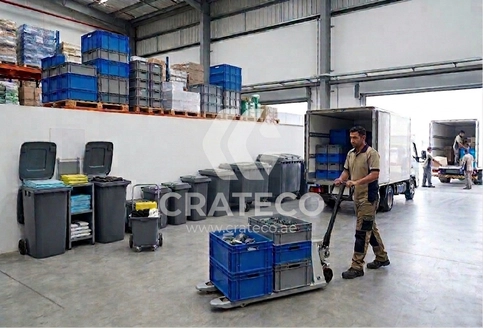
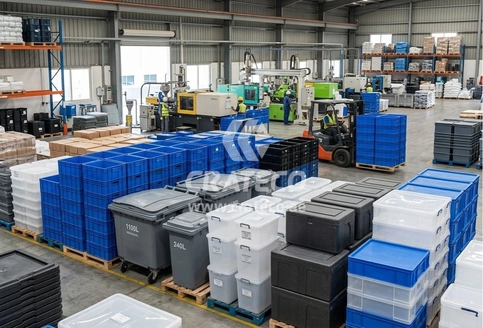
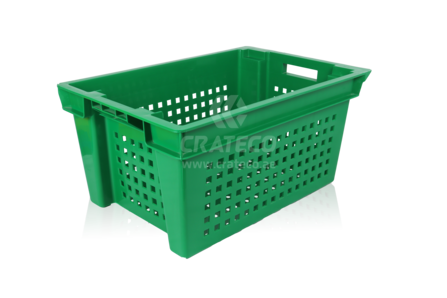
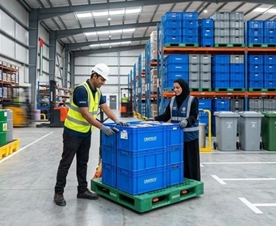
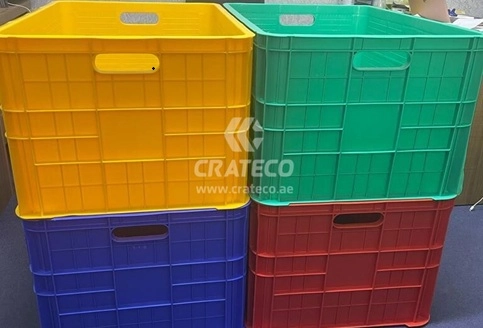
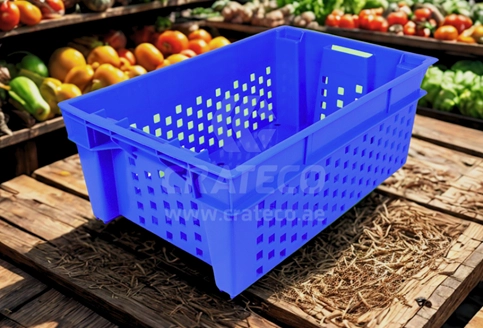
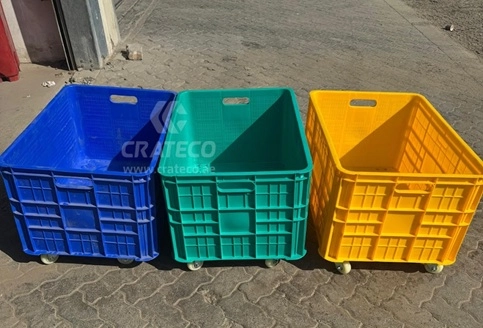
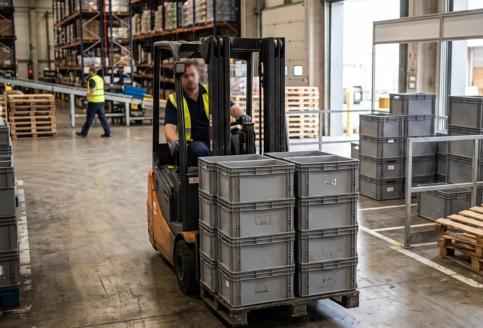
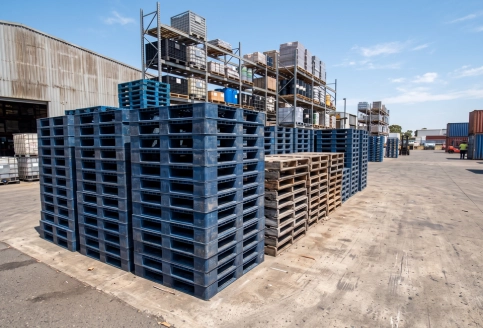
For reliable industrial packaging and material handling solutions, Crateco Pack LLC provides a range of plastic crates, storage products, and packaging solutions for businesses across the UAE and GCC. Explore its product range to find suitable options for organized storage, safe handling, and efficient supply chain operations.