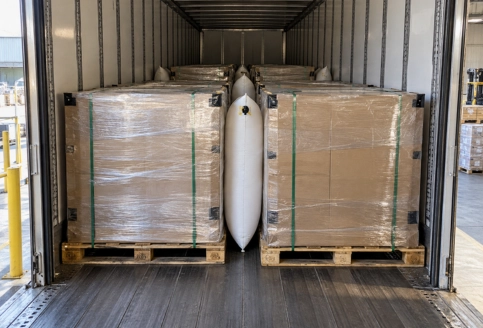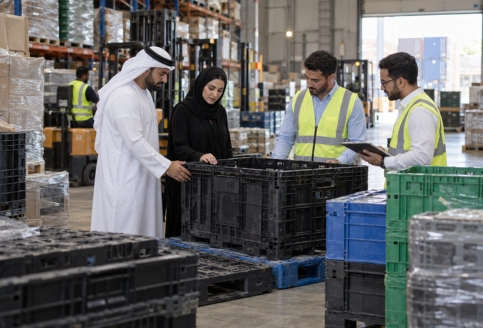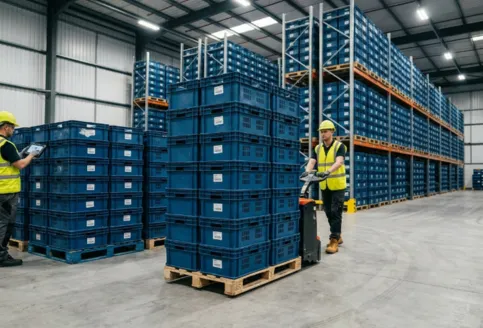
Products often need more than primary packaging to stay safe during storage and transport. Cardboard boxes, stretch wrap, tape, and extra fillers can add cost, labor, and waste.
Packaging integration reduces these extra layers by using rigid reusable crates as both a transport container and a protective outer structure.
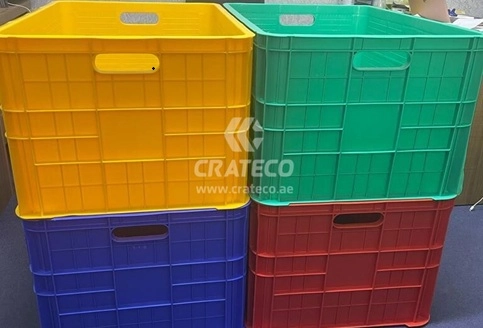
Crates reduce secondary packaging needs because their strong walls support stacking, their fixed size keeps products stable, and some designs include lids or partitions.
This allows businesses to move products with fewer disposable materials while improving handling efficiency across UAE and GCC supply chains.
Secondary packaging is the layer placed around primary packaging to group products and protect them during handling. Common examples include corrugated cartons, shrink film, strapping, dividers, and protective fillers.
While these materials can provide useful protection, they also create extra purchasing, packing, storage, and disposal work. For high-volume operations, the repeated use of these materials can become expensive.
Reusable crates combine containment and protection in one durable unit. This reduces the number of packaging layers needed between the product and the pallet, truck, warehouse, or retail location.
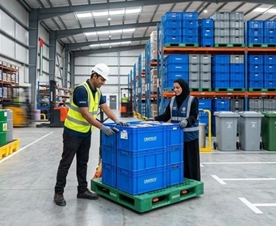
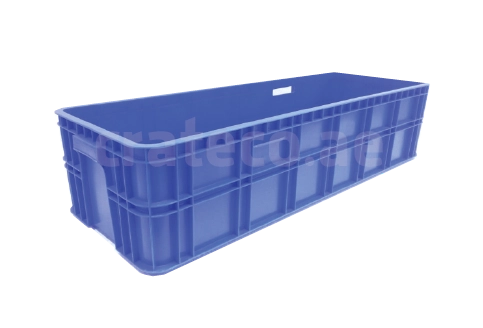
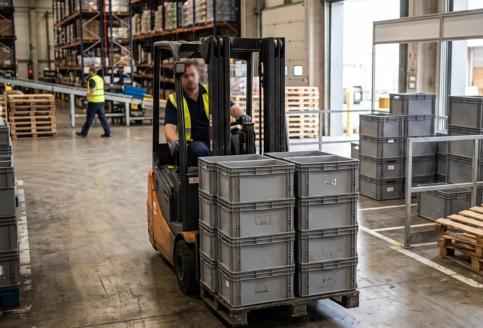
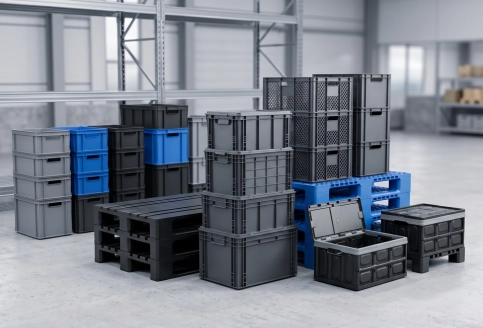
Rigid crates can take over several jobs normally handled by secondary packaging. Their walls provide structural support, while their base creates a stable platform for stacking and movement.
Products can often be loaded directly into the crate without first placing them inside an outer carton. Depending on the design, crates can also include partitions, lids, handles, and locking features.
These built-in features reduce the need for separate protective materials. The result is a simpler packaging system with fewer individual components to buy, apply, remove, store, and dispose of.
Plastic crates made from materials such as polypropylene (PP) or high-density polyethylene (HDPE) can provide strong structural support during transport.
Reinforced walls, corners, and bases help the crate carry stacking loads without relying on a cardboard master carton. This is important when products are moved through warehouses or distribution centers where loads may be stacked several levels high.
A rigid outer structure also helps protect goods from minor impacts and pressure. By taking over the protective role of an outer carton, the crate can remove one common layer of secondary packaging.
Standard crate dimensions help businesses create more stable pallet loads. When crate footprints match common pallet sizes, available space can be used more effectively, and empty gaps are reduced.
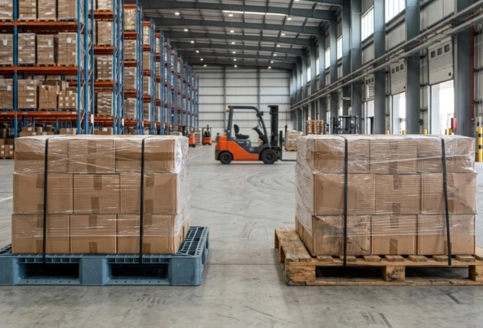
A close fit helps prevent crates from moving during handling and transport. This can reduce the need for excessive stretch film, straps, or loose filler materials. Standard dimensions also make warehouse stacking easier because each unit follows a predictable footprint.
For UAE distribution networks, consistent crate sizes can support smoother movement between warehouses, delivery vehicles, retail locations, and regional hubs.
Traditional packaging may require several steps before a product is ready for transport. Workers may need to build a carton, place the product inside, add protection, close the box, apply tape, and then wrap the completed load.
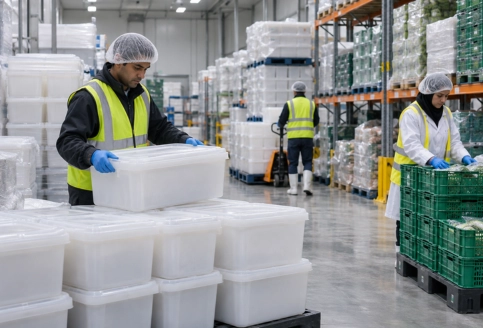
Reusable crates can shorten this process by allowing products to be placed directly into a ready-to-use container. Workers can then stack or move the crate using normal handling equipment.
Fewer packing steps can reduce labor time and make daily warehouse operations more consistent. It also limits the amount of packaging equipment and consumables required.
Some reusable crates include molded dividers or internal compartments that keep products separated during movement. These features are useful for smaller items, bottles, components, electronics, and other goods that may rub or strike each other during transport.
Instead of using bubble wrap, foam inserts, cardboard dividers, or loose fillers, the crate itself provides product separation. Fixed compartments can also make picking and counting easier because each item has a defined position.
This built-in protection helps businesses reduce disposable cushioning materials while keeping products organized throughout storage and distribution.
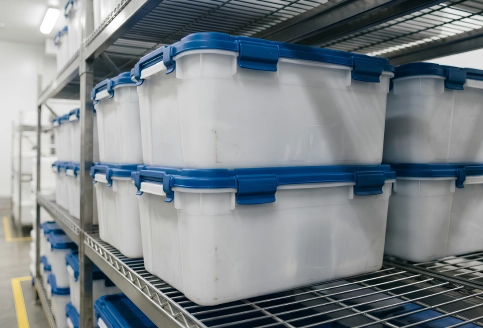
Lidded crates protect without requiring separate cardboard covers or plastic sheets. A fitted lid can help keep products inside the container while reducing exposure to dust, dirt, and handling contact.
Some industrial crate designs also use locking mechanisms or security features to keep the lid firmly closed during transport. These features can reduce the need for packing tape, straps, and additional wrapping.
Lidded crates are particularly useful for spare parts, retail goods, tools, and other products that need protection during movement between warehouses, delivery vehicles, and customer locations.
Interlocking crate designs improve stability by allowing containers to sit securely on top of one another. When crates lock into position, there is less movement during handling, loading, and transport.
This can reduce the amount of stretch film or strapping used to hold individual boxes together. Some designs can also be stacked securely without additional wrapping around every unit.
This is valuable for businesses that make frequent deliveries because the same crate design can provide consistent load stability across multiple transport cycles. Over time, reducing disposable wrapping can lower material use and packaging waste.
Not every product needs the same crate design. Fresh food may require ventilation, electronics may need internal separation, and industrial parts may need strong load-bearing walls. Choosing the right crate type helps businesses remove unnecessary packaging without reducing product protection.
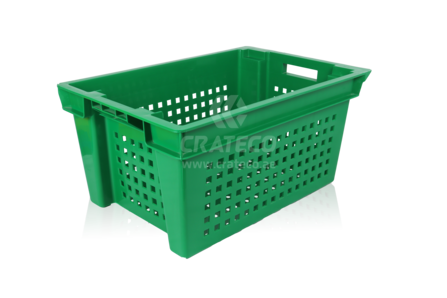
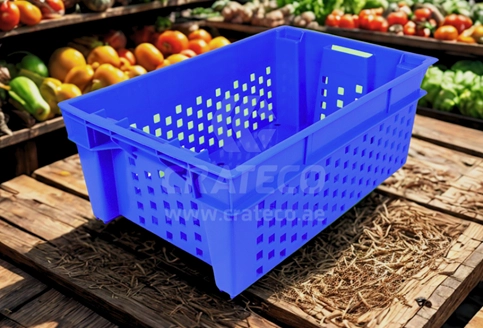
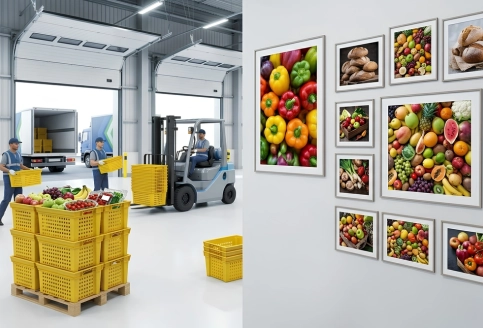
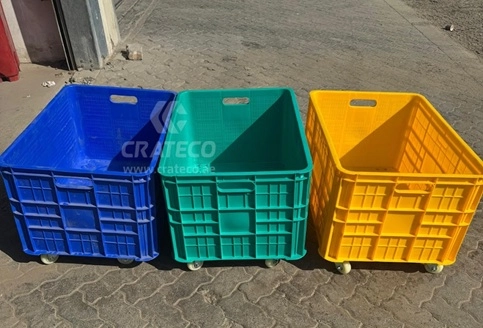
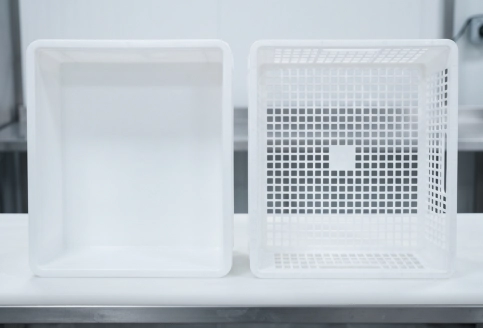
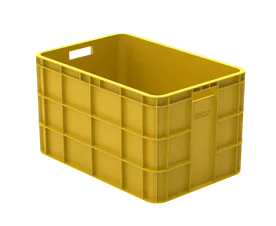
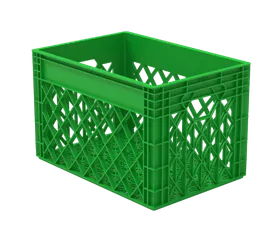
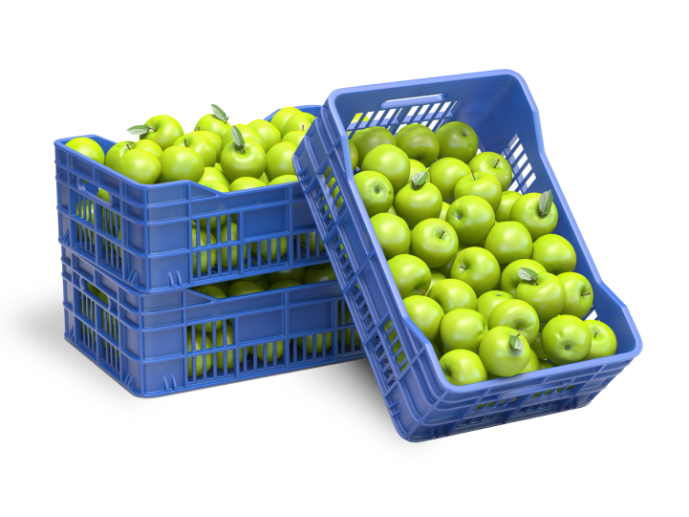
Open-wall plastic crates are useful for products that need airflow during storage and transport. Fresh produce, food items, and some industrial goods can benefit from ventilation because air can move through the crate walls.
The rigid structure still provides better support than loose packaging materials. Open designs also make it easier to inspect products without opening a cardboard box. For food and agricultural supply chains, this can support faster handling and sorting.
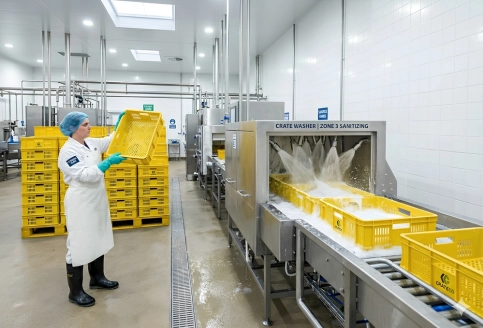
The washable nature of suitable plastic crates can also make them practical for operations where containers need regular cleaning between cycles.
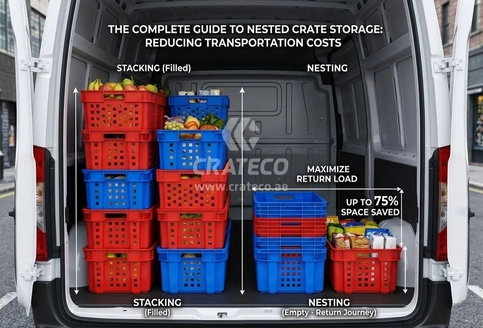
Nestable crates are designed to fit inside one another when empty. This feature reduces the space required when crates return from stores, customers, or distribution points to a central facility.
Better return-load efficiency can lower vehicle space requirements and improve reverse logistics. When full, the crates provide a stable container for products, while empty units can be nested for easier movement.
This makes them useful for businesses operating closed-loop or repeated delivery routes across the UAE. The design can help reduce the transport burden associated with returning reusable packaging after each distribution cycle.
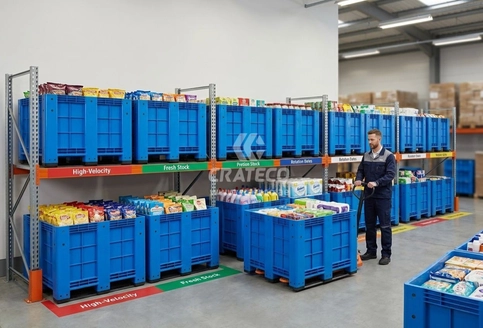
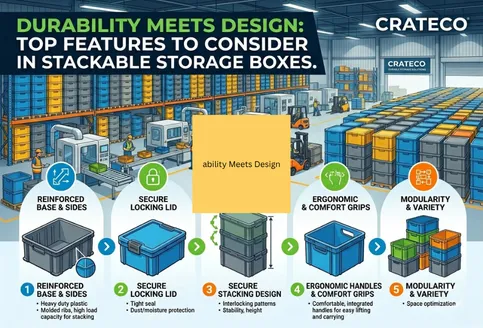
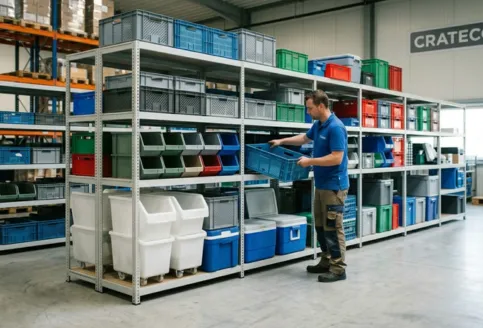
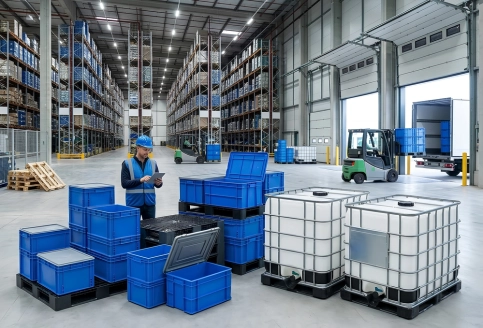
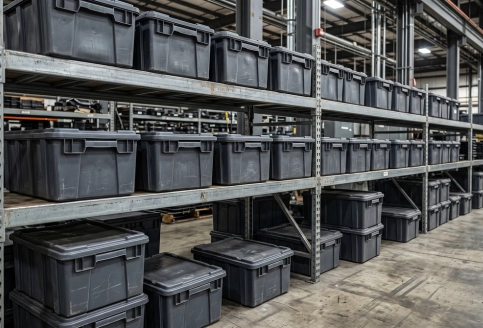
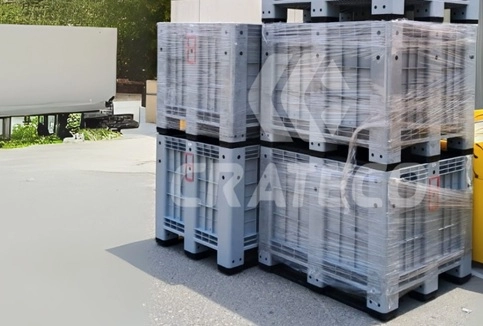
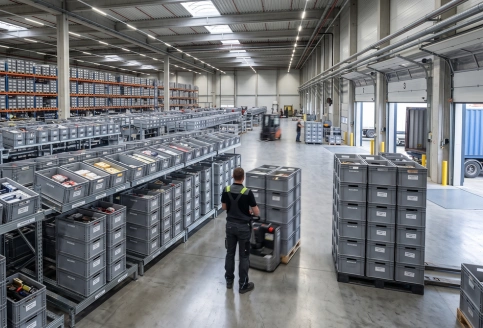
Stackable crates are built to sit securely on top of one another when filled. Their reinforced bases and corners help distribute weight through the stack, which protects the products and improves storage efficiency. Stackable crates can also support FIFO inventory rotation by keeping products organized and accessible during storage and picking.
This design can reduce the need for additional outer cartons or stabilizing materials. Stackable units are useful in warehouses, manufacturing plants, spare-parts operations, and distribution centers where products move frequently.
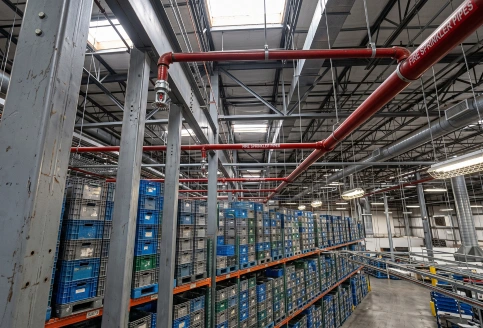
Consistent stacking also helps create organized storage locations. Better vertical use of warehouse space can support higher storage density while making it easier to arrange stock according to FIFO principles and access older inventory first.
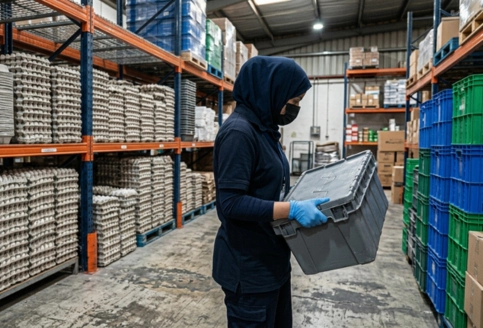
Lidded crates add another level of protection by using an integrated or fitted cover. The lid can help keep products contained and reduce exposure to dust, dirt, and handling contact. Some designs also use locking features or security seals where needed.
This can remove the need for separate cardboard covers, adhesive tape, or additional wrapping. Lidded containers are suitable for parts, retail goods, tools, and other items that need added protection during movement.
They can also make handling easier because the complete container can be closed before it leaves the warehouse.
Faster Packing: Reusable crates arrive ready for use, reducing time spent building cartons, taping boxes, and wrapping products.
Lower Labor Requirements: Fewer packaging steps allow workers to complete packing, stacking, and loading tasks more efficiently.
Cleaner Work Areas: Removing cardboard, tape, film, and strapping reduces packaging waste and keeps warehouse areas more organized.
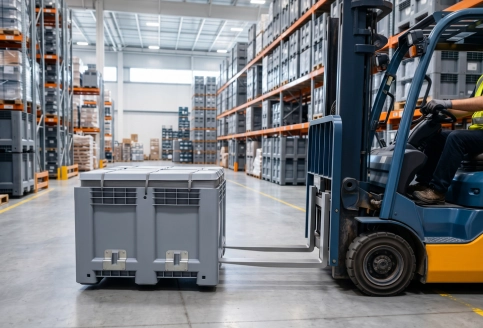
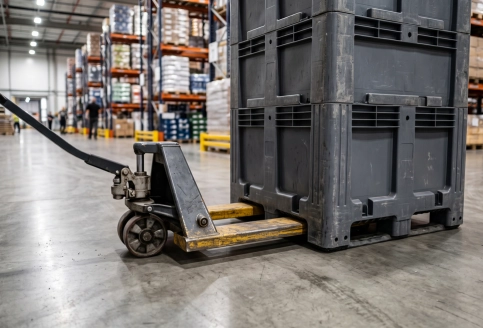
Simpler Handling: Standardized crates can be stacked, moved, and stored easily using common warehouse handling equipment.
Lower Packaging Storage: Businesses need less space for storing cardboard boxes, wrapping materials, tape, and other disposable supplies.
Less Packaging Waste: Reusable crates reduce the amount of cardboard, plastic film, tape, and other materials discarded after delivery.
Longer Service Life: Durable crates can complete many transport cycles, reducing the need for frequent replacement packaging.
Lower Material Consumption: Repeated crate use helps businesses consume fewer disposable packaging materials throughout regular distribution operations.
Supports Circular Packaging: Reusable containers keep packaging assets in circulation instead of sending them for disposal after one trip.
Better Resource Efficiency: Using durable crates can reduce waste generation while supporting more efficient material use across regional supply chains.
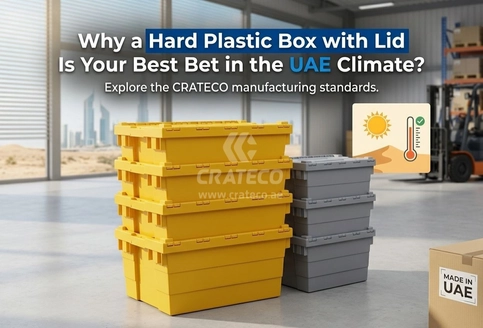
The UAE presents packaging challenges that are not always easy for corrugated materials to handle. Heat, humidity, dust, and chilled storage can affect cardboard strength, especially when boxes are exposed to moisture.
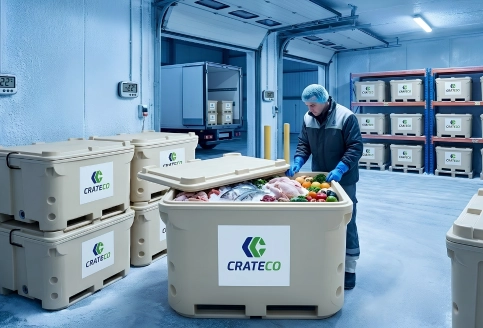
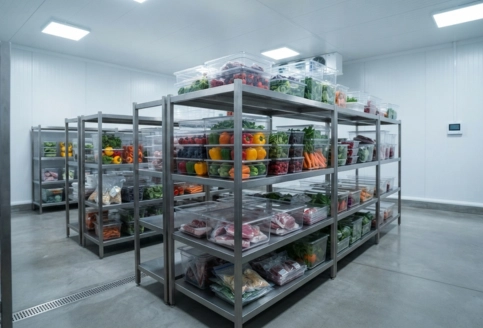
Suitable plastic crates are resistant to moisture and maintain their shape during repeated handling. This makes them useful for food distribution, cold-chain operations, retail supply, industrial parts, and warehouse movement.
Crates can also be cleaned more easily than many disposable packaging formats. For GCC businesses operating across hot and demanding environments, durable containers can provide more reliable performance over repeated transport cycles.
The difference becomes clearer when the complete packaging cycle is considered. Single-use cartons and wrapping may have a lower purchase cost per unit, but they require repeated buying, packing, removal, and disposal.
Reusable crates require an initial investment but can complete many transport cycles. Their long service life can spread the original cost over multiple deliveries. The table below highlights the main operational differences.
| Feature | Single-Use Packaging | Reusable Plastic Crates |
|---|---|---|
| Lifespan | Usually one trip | Multiple transport cycles |
| Moisture resistance | Can weaken when wet | Generally high |
| Packing work | Building, taping, wrapping | Direct loading |
| Waste | Generated after use | Reused repeatedly |
| Stacking | May need extra support | Designed for stable stacking |
| Return logistics | No return needed | Can be nested or collapsed |
| Cleaning | Usually not practical | Many designs can be washed |
A successful transition requires more than simply replacing cardboard with plastic. Businesses should first study product dimensions, weight, stacking height, route length, cleaning needs, and return flows.
The crate must provide enough load capacity and internal protection for the product. Companies should also consider whether containers will move in a closed loop or return through a wider distribution network.
Factors such as pallet footprint, forklift access, storage space, and washing facilities can affect the final choice. A properly planned system can remove unnecessary packaging while maintaining safe and efficient product movement.
Packaging integration can make crates part of the product's complete transport system instead of treating them as simple containers. Strong walls can replace outer cartons, standardized footprints can reduce stabilizing materials, and built-in features can reduce tape, fillers, and wrapping.
Reusable designs also support repeated delivery cycles, easier cleaning, and lower packaging waste. For UAE and GCC businesses, the value is especially clear where products face heat, humidity, cold-chain conditions, and frequent handling.
The right crate can therefore improve protection and efficiency while reducing dependence on disposable secondary packaging.
The right crate design can help your business reduce packaging waste, simplify handling, and improve supply chain efficiency.
Crateco Pack LLC is a leading crate supplier in the UAE, offering durable plastic crates and other industrial packaging solutions for businesses across the UAE and GCC.
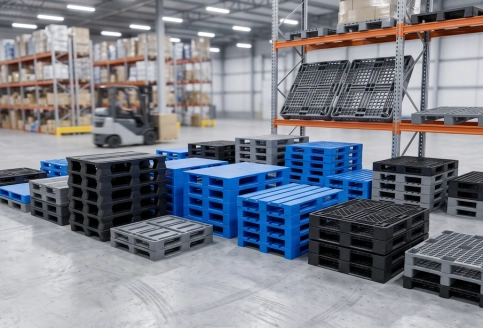
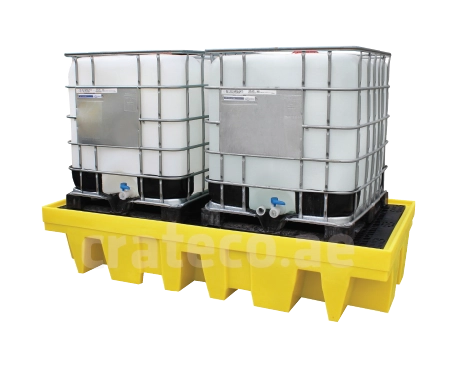
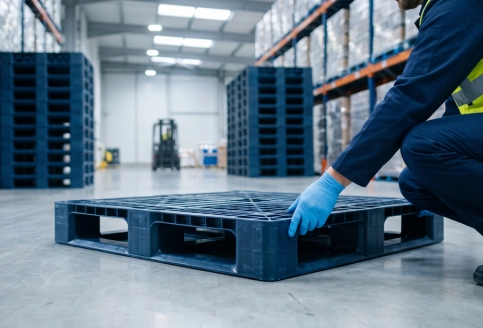
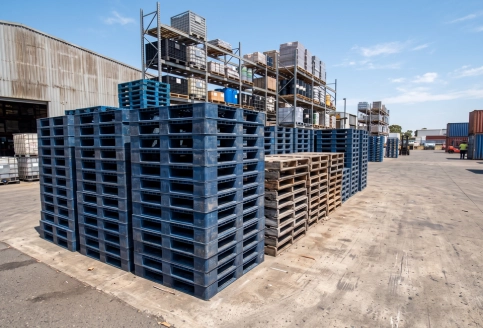
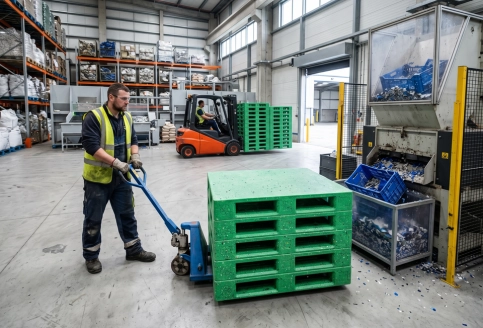
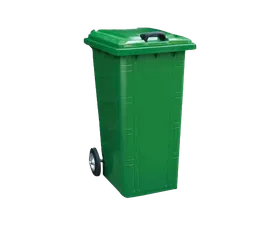
From reusable crates to plastic pallets, spill pallets, and waste bins, Crateco can support different material handling and storage needs. Choose Crateco Pack LLC for reliable, reusable packaging solutions designed for demanding commercial operations.