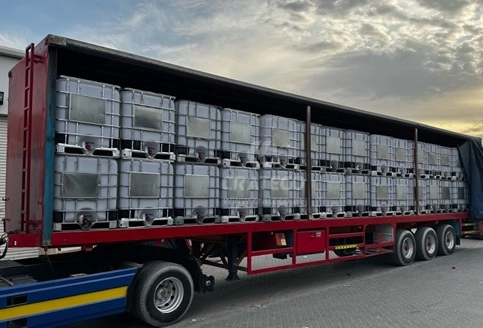

Cargo can move during transport due to sudden braking, sharp turns, road conditions, or rough handling. Even a small shift can damage goods, break packaging, or affect vehicle stability. Proper cargo securement helps prevent these problems and keeps shipments safe.
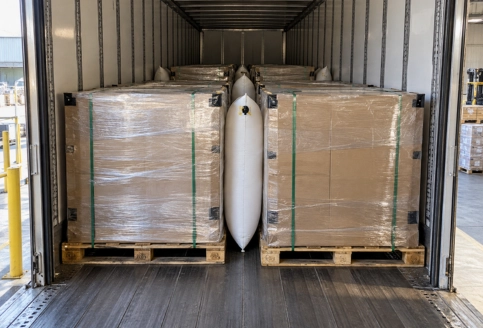
Dunnage bags are useful tools for securing cargo in trucks, shipping containers, and other transport units. They fill empty spaces between loads and help stop goods from moving during transit.
When selected and installed correctly, they improve load stability and reduce the risk of damage. UAE logistics businesses can use them alongside proper loading methods and international cargo packing guidelines, such as the IMO/ILO/UNECE Code of Practice for Packing of Cargo Transport Units (CTU Code).
Dunnage bags are inflatable packaging products used to secure cargo during transport. They are placed in empty spaces between pallets, cartons, or other loads. Once inflated, they create pressure against the surrounding cargo and help prevent movement.
Most dunnage bags have an inner air bladder and an outer protective layer. The inner bladder holds air, while the outer material provides strength and protection against handling damage.
Some bags are designed for use in shipping containers, while others are made for road and rail transport. Their size, material, and strength depend on the cargo weight, gap size, and expected transport forces.
The UAE is a major logistics and trade hub, with goods moving between ports, warehouses, industrial areas, and regional markets. Cargo may travel through hot conditions, busy roads, and long-distance routes.
Poor load security can lead to damaged products, delivery delays, and safety risks. Cargo securement helps keep goods in place during transport. It also reduces pressure on cartons, pallets, and container walls caused by shifting loads.
Businesses should use suitable blocking, bracing, straps, and other securement tools based on the cargo type. Dunnage bags can be part of this system, but they should not replace proper loading plans or other required safety measures.
Effective cargo securement depends on more than filling empty spaces. Businesses must understand the forces acting on cargo and select suitable equipment to control movement. The following principles help improve load stability and support safer transport operations.
Empty spaces between cargo allow goods to move when a vehicle accelerates, brakes, or turns. These gaps can increase the risk of impact damage and load imbalance. Dunnage bags help fill suitable spaces and create support between adjacent loads.
The size and location of each gap should be checked before choosing a bag. A gap that is too large may require additional blocking or a different securement method.
The CTU Code provides guidance on cargo packing and securing, but businesses should not treat a single gap measurement as a universal legal requirement. The correct solution depends on the load, container, and transport conditions.
Cargo experiences different forces during transport. These include forward movement during braking, sideways movement during turns, and vertical movement caused by road conditions. The weight of the cargo and the expected transport conditions affect the strength of the securement system.
Dunnage bags must have enough blocking capacity to resist the forces acting on the load. Businesses should consider cargo weight, the direction of movement, the size of the gap, and the manufacturer's rated capacity. A bag that is too weak may fail under pressure. For heavy or valuable cargo, a qualified load-planning professional can help calculate the required securement capacity.
The IMO/ILO/UNECE CTU Code provides internationally recognized guidance for packing and securing cargo transport units. It covers container loading, weight distribution, cargo restraint, and the safe use of securing equipment.
UAE logistics companies involved in international shipping can use the CTU Code as a reference when creating cargo packing procedures. It helps businesses understand how to prevent cargo movement and reduce risks during handling and transport.
However, the code is a guidance document rather than a blanket UAE legal requirement for every shipment. Businesses must also follow any applicable UAE transport rules, carrier requirements, and contractual conditions.
Not all dunnage bags have the same strength or pressure rating. Choosing a bag without checking its specifications can lead to damage or failure during transit.
Businesses should review the manufacturer's information, including the bag's size, working pressure, blocking capacity, and recommended applications. Some products carry industry-specific testing or verification, such as Association of American Railroads (AAR) approval for applicable uses.
Such verification should be checked against the actual shipment requirements. A certification or rating does not automatically make a bag suitable for every cargo type, transport method, or loading condition.
Choosing the right dunnage bag helps prevent cargo movement without placing unnecessary pressure on the goods or container. The selection process should consider the gap size, cargo weight, transport method, and expected movement during transit.
Measure the width and height of the gap between cargo units before selecting a bag. The bag should fit the space properly when inflated and provide enough support to prevent movement. A bag that is too small may not provide enough pressure, while an oversized bag may create unnecessary stress on the load.
Also, check the position of the gap. Avoid placing bags where they may interfere with container doors, sharp edges, or other parts of the loading structure. Follow the manufacturer's sizing instructions to ensure a safe fit.
Cargo weight affects the amount of force that a securement system must resist. Heavy pallets and industrial goods may need stronger dunnage bags than lightweight cartons. Businesses should check the bag's rated blocking capacity and match it to the cargo and transport conditions.
Consider the direction in which the cargo may move. Forward, sideways, and other forces can create different securement needs. Do not choose a bag based only on its size or appearance. Review technical specifications and consult the manufacturer if the required capacity is unclear.
Dunnage bags are available with different outer materials, such as woven polypropylene and kraft paper. The choice depends on the type of cargo, handling conditions, and level of protection required.
Businesses should also consider moisture exposure, sharp packaging edges, and storage conditions. The outer material must provide suitable protection during loading, inflation, and transport.
A shipment moving by road may experience different forces from one transported by sea or rail. Long-distance transport, rough roads, handling at transfer points, and changes in temperature can affect cargo and securement equipment.
Select dunnage bags based on the full transport route rather than just the loading location. Check whether the bag is suitable for the expected temperature range and handling conditions.
For international shipments, consider the requirements of shipping lines, freight forwarders, and destination markets. A suitable product should provide reliable support throughout the journey without creating risks for other cargo or transport equipment.
Correct installation is essential for getting the expected performance from dunnage bags. Poor positioning, incorrect inflation, or a lack of protection can reduce their effectiveness and cause damage during transport.
Before placing a bag, check that the cargo is properly loaded and that the gap is suitable for the selected product. Remove loose materials and check for sharp pallet edges or objects that could puncture the bag.
Use protective sheets or suitable edge guards where needed. The surrounding cargo should be stable enough to support the bag after inflation.
Never use a dunnage bag to correct a poorly balanced load or support cargo that is already at risk of falling. Proper loading and weight distribution must come first.
Place the deflated bag in the center of the gap according to the manufacturer's instructions. Ensure that it has enough space to expand without becoming trapped against sharp objects or unsuitable surfaces.
The bag should sit securely between the cargo units it is intended to support. Avoid positioning it where inflation could damage cartons, crush fragile goods, or push cargo against container doors.
Check the bag's placement before connecting the inflator. Correct positioning helps distribute pressure more evenly and improves the stability of the load.
Inflate the bag using a suitable inflation tool and follow the manufacturer's recommended pressure range. A calibrated inflator can help maintain consistent pressure and reduce the risk of human error.
Under-inflation may leave enough space for cargo to shift. Over-inflation can place excessive pressure on the load or damage the bag. Never use one pressure setting for every shipment without checking the bag's specifications and the cargo conditions.
Workers should also be trained to recognize signs of incorrect inflation, such as bulging, uneven expansion, or visible damage.
After inflation, inspect the bag and surrounding cargo. Check for leaks, unusual bulges, loose positioning, and contact with sharp edges. Confirm that the bag provides support without creating excessive pressure on the load.
Also review the overall loading arrangement. Make sure the cargo is stable, the weight is properly distributed, and the securing system is suitable for the journey.
Keep the container doors clear and ensure that the bag does not obstruct safe closing. A final inspection helps identify problems before the shipment leaves the warehouse.
Small mistakes during cargo loading can lead to serious problems during transport. Businesses should identify common errors and train workers to prevent them.
A clear loading checklist can help workers follow the same safety steps for every shipment. Regular training and equipment checks also reduce the risk of cargo damage and transport delays.
Dunnage bags offer several benefits for companies that transport goods across the UAE and international markets. They provide a practical way to secure cargo while supporting efficient loading and handling.
Reduced cargo damage: Filling suitable gaps helps prevent goods from colliding, falling, or shifting during transport.
Faster loading operations: Inflatable bags are generally easy to position and inflate, helping workers secure suitable loads without complex equipment.
Better use of container space: Proper gap management can improve load stability and reduce wasted space where suitable.
Lower packaging losses: Preventing cargo movement can reduce broken cartons, damaged products, and customer complaints.
Flexible applications: Different sizes and strength ratings allow businesses to use dunnage bags for many types of palletized and packaged cargo.
These benefits depend on correct selection, installation, and inspection. Dunnage bags should always be part of a suitable cargo securement plan.
Businesses involved in freight, warehousing, and distribution should create clear cargo securement procedures. These procedures should cover equipment selection, loading methods, inspections, and staff responsibilities.
Some useful steps include:
For international shipments, businesses should also check the requirements of shipping lines, freight forwarders, and destination authorities. These additional checks help create a consistent approach to cargo safety across different transport stages.
Dunnage bags are not the only way to prevent cargo movement. Depending on the shipment, businesses may need blocking, bracing, straps, or other load restraint systems.
| Securement method | Main purpose | Common applications |
|---|---|---|
| Dunnage bags | Fill gaps and support cargo | Palletized goods and container shipments |
| Ratchet straps | Hold cargo in position through tension | Machinery, equipment, and secured pallet loads |
| Wooden blocking | Prevent movement through physical barriers | Heavy cargo and large industrial shipments |
| Edge protectors | Spread strap pressure and protect packaging | Cartons and palletized goods |
| Anti-slip mats | Increase friction between surfaces | Pallets and loads that may slide |
Each method has its own limits. Dunnage bags are particularly useful for filling suitable gaps, while straps and blocking can provide restraint in situations where air-filled support is not enough. Combining methods may be necessary for heavy or irregular cargo. The securement plan should account for the cargo's weight, shape, center of gravity, and transport conditions.
Dunnage bags play an important role in cargo securement by filling empty spaces and reducing the movement of goods during transport.
For UAE logistics businesses, safe use involves selecting the right bag, measuring gaps, checking pressure ratings, protecting bags from damage, and inspecting loads before dispatch. International guidance such as the CTU Code can also help businesses develop safer loading procedures.
Proper cargo securement reduces the risk of damaged goods, delays, and unsafe transport conditions. It also supports more organized warehouse and shipping operations.
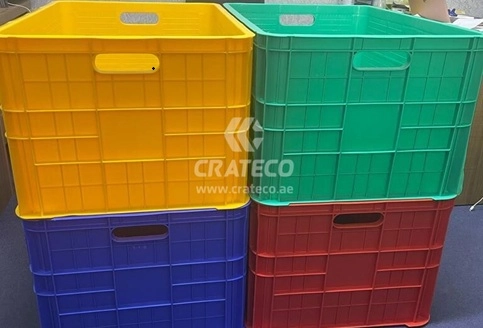
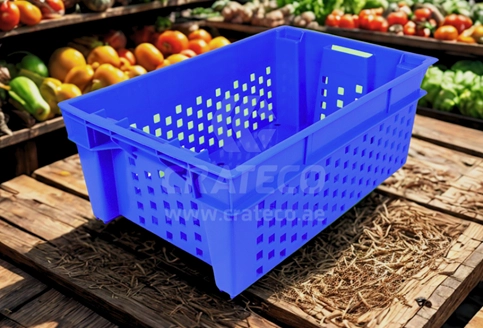
For durable material handling and industrial packaging solutions, Crateco Pack LLC offers products designed to support efficient storage, handling, and transport operations. Explore its range of industrial packaging and material handling solutions to improve cargo organization and support your supply chain needs.