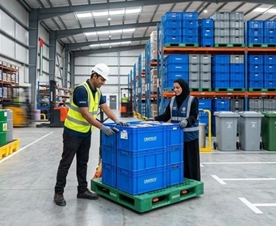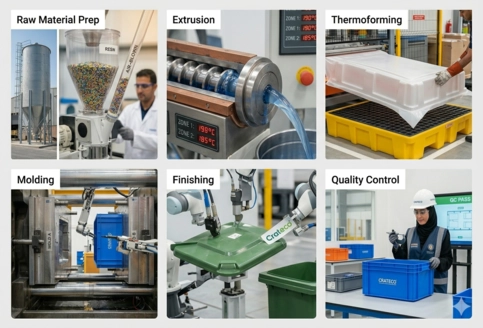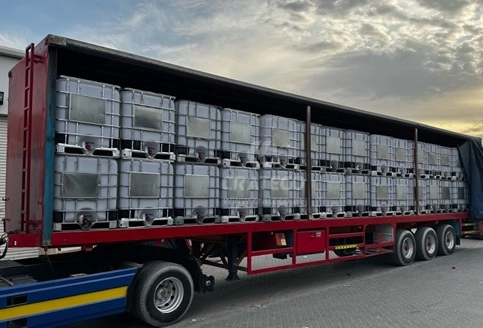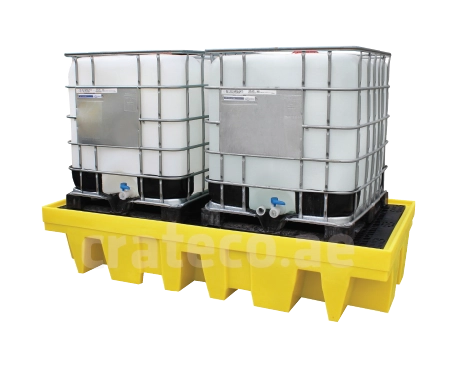
Logistics packaging is one of the most ignored cost drivers in supply chains. Most businesses look at fuel, labor, and freight rates. But the container you use to move goods matters just as much.
In the UAE, logistics costs take up 8 to 12% of total revenue for most supply chain businesses. A large part of that waste comes from heavy containers, damaged goods, and poor return freight planning.
Lightweight plastic crates fix these problems across six cost areas. This article shows how each saving works and what the numbers look like.
Plastic crates are built to save money at every step of the supply chain. Here is why they work:
Tare Weight: Plastic crates weigh 40 to 60% less than heavier alternatives, which means every truck carries more product and burns less fuel per trip.
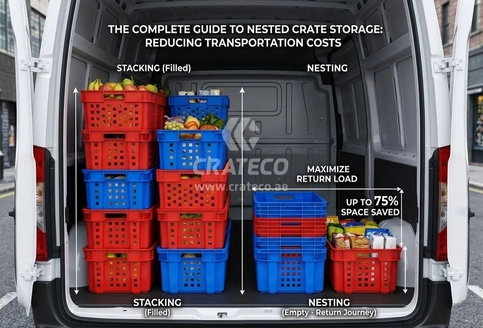
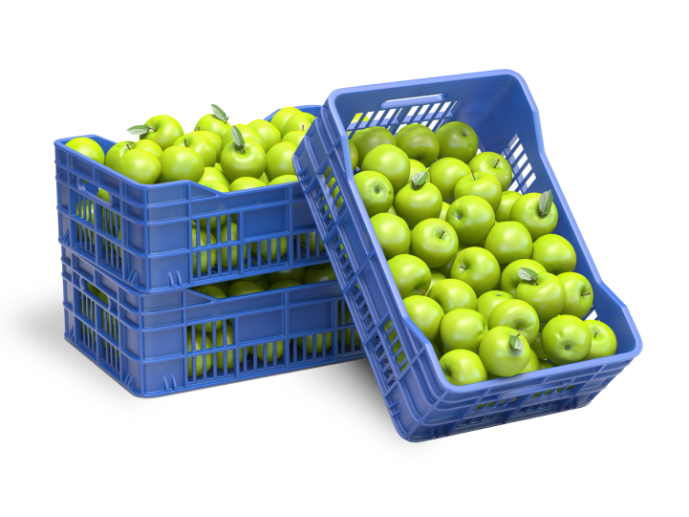
Nesting Design: Empty plastic crates nest inside each other, so return trucks carry far more units in the same space.
Standard Dimensions: Consistent sizing means crates stack cleanly, load faster, and reduce handling errors on the floor.
Reuse Cycles: A single plastic crate lasts 5 to 7 years with proper use, removing the constant cost of buying and disposing of short-life packaging.
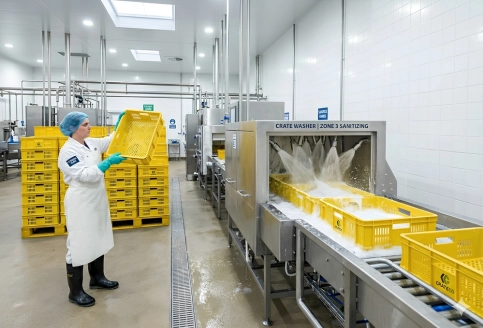
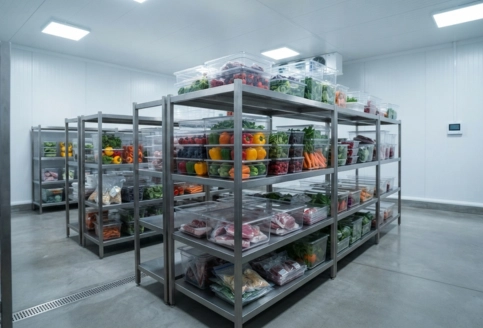
Hygiene Properties: Plastic is non-porous and easy to wash, which cuts cleaning time and removes contamination risk from your supply chain.
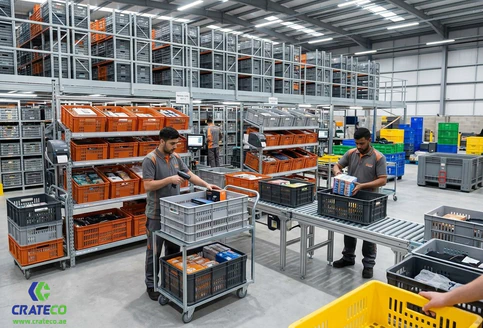
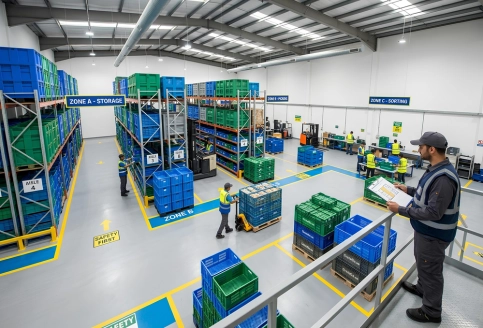
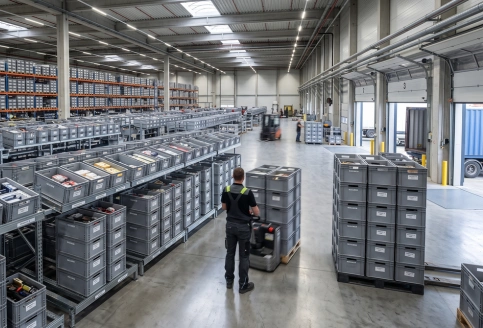
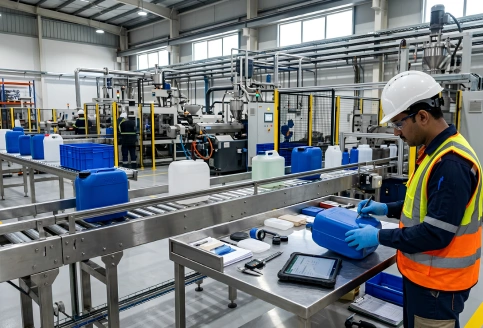
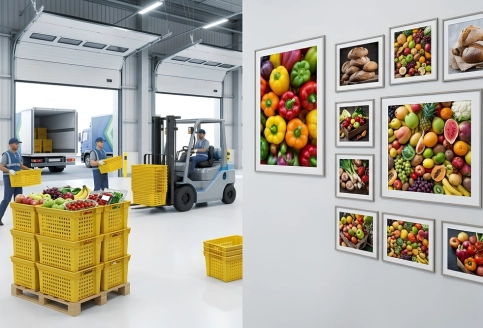
Automation Fit: Uniform plastic crates work directly with conveyor belts and sorting systems, which reduces manual labor and speeds up warehouse throughput.
Each of these points saves money on its own. Together, they change the economics of your entire logistics operation.
1. Lower Fuel and Freight Costs
Every extra kilogram of packaging burns fuel. Multiply that across a full fleet and a full year, and the numbers are significant.
A 2013 life cycle analysis in the International Journal of Life Cycle Assessment confirmed that lighter reusable containers reduce transport costs compared to heavier single-use options. A separate study found freight costs drop by around 15% when businesses switch to lightweight crates.
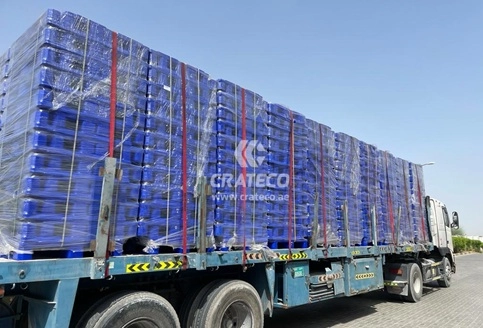
For a logistics operation running vehicles across the UAE, from Abu Dhabi to Ras Al Khaimah, that 15% adds up fast. Lighter crates also increase payload per truck. More product moves per trip, so fewer trips are needed to cover the same volume.
One in every 10 shipments globally is damaged in transit, according to APR Containers' supply chain data. Damaged goods mean write-offs, replacement costs, and delays.
A 2025 study by the Fraunhofer Institute for Material Flow and Logistics found that switching to reusable plastic crates cuts product damage by up to 98%. The study estimated that replacing 1.75 billion single-use crates annually could save around 93 million euros in damage-related losses.
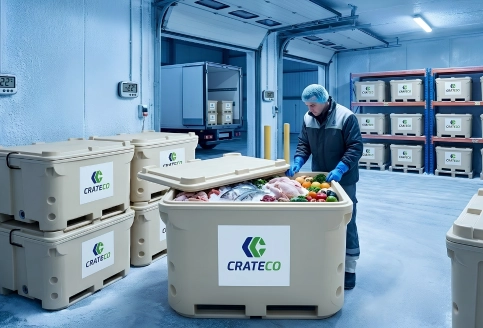
Plastic crates absorb transit shocks without warping, cracking, or losing shape. For food businesses, plastic also does not harbor bacteria. This is critical for businesses operating under Dubai Municipality and ADAFSA food safety standards.
The real cost of short-life packaging is not the purchase price. It is the replacement cycles, disposal fees, and labor tied to managing packaging turnover.
A Fraunhofer UMSICHT study on reusable plastic systems found that reusable plastic packaging is less expensive over time despite a higher upfront cost. One pharmaceutical logistics case found maintenance costs dropped 66% over five years after switching to plastic containers.
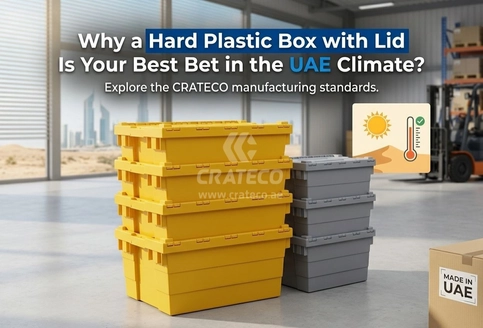
Plastic resists moisture, heat, and repeated cleaning. In the UAE, where temperatures exceed 45 degrees in summer, and crates move between cold stores and outdoor loading bays, this durability is a real operational advantage.
Empty return trips cost money. Nestable plastic crates change this equation.
IFCO's supply chain data shows that nestable designs fit 2.5 times more empty units per truck compared to non-nestable options. Foldable crates collapse flat and reduce return bulk even further.
Fewer return trips mean lower fuel, fewer driver hours, and less vehicle wear. In the UAE, warehousing costs in free zones like JAFZA, DWC, and Hamriyah are high. Nestable crates reduce storage floor space, which lowers monthly overhead directly.
Lighter crates take less effort to load, unload, sort, and stack. Less effort means faster handling at every touchpoint.
A Logistics Industry Association report found that businesses using lightweight crates see a 30% gain in handling efficiency. Closed-loop operations report up to 50% time savings on logistics moves due to faster packing and fewer replacements.
Ergonomic handles on plastic crates reduce fatigue and injury risk. For industries running multiple shifts across large UAE distribution facilities, these gains lower labor cost per unit significantly.
Plastic crates are exempt from ISPM 15 phytosanitary rules. These rules require certain packaging types to be heat-treated or chemically fumigated before crossing borders.
ISPM 15 compliance adds costs through treatment fees, inspection charges, and documentation. When certificates are questioned at a border, shipments get delayed. Plastic removes all of this entirely.
For UAE businesses exporting to Europe, South Asia, East Africa, or other GCC countries, this exemption speeds up processing at Jebel Ali and Khalifa Port. No treatment certificates are needed. No compliance delays slow the shipment down.
Plastic crates cost more upfront than single-use alternatives. The question is how fast that investment pays back.
A 2025 life cycle cost study published in the Clausiuss Press journal modeled total packaging cost under multiple reverse logistics scenarios. It found that switching to reusable plastic cuts total packaging cost by 61% over the full lifecycle compared to disposable options.
A study in Frontiers in Sustainability confirmed that reusable plastic containers reduce life cycle costs when use cycles are high, and routes are managed well.
For most operations, payback happens within 12 to 24 months. After that, every trip the crate completes generates net savings.
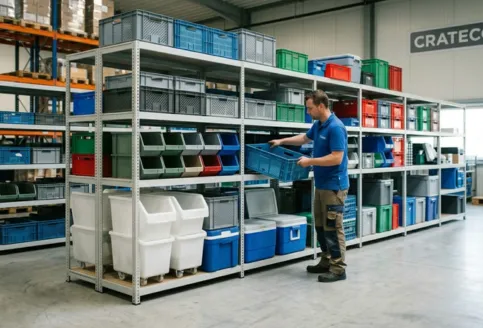
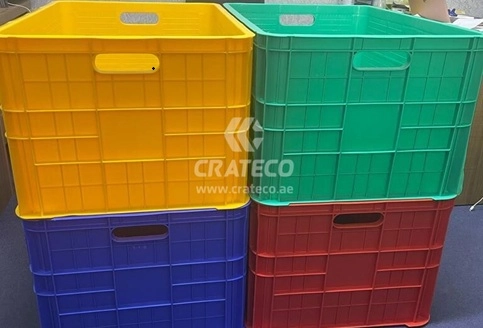
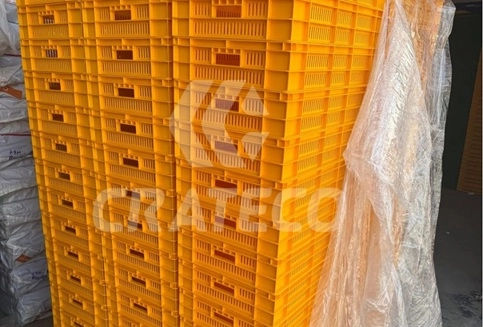
Food and Beverage Distribution: Bakeries, produce suppliers, fish processors, and dairy businesses across the UAE use plastic crates daily. Ventilated crates keep air moving around fresh goods. Closed crates keep packaged items clean.
Pharmaceuticals and Healthcare: Cold chain logistics need clean, uniform containers. The UAE healthcare sector runs under DHA and MOHAP rules. Plastic crates meet those standards and hold up under daily use.
Retail and FMCG: Fast-moving products need fast, uniform packaging. UAE retail chains need containers that are easy to stack and quick to handle in store rooms.
Industrial and Automotive: Parts and components need protection from shaking, water, and rough treatment. Closed plastic crates with lids do this well. Facilities in Sharjah, Ajman, and KIZAD Abu Dhabi use them every day.
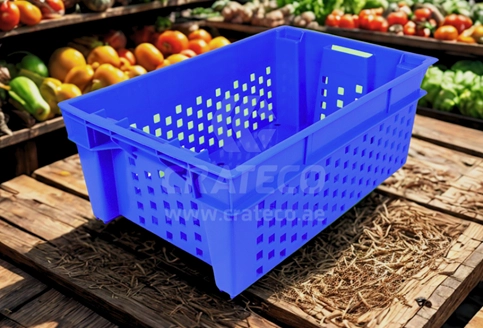
Agriculture and Fresh Produce: The UAE brings in over 80% of its food. Produce coming through Jebel Ali and Abu Dhabi ports needs packaging that keeps goods safe and clean all the way to the shelf. Ventilated nestable crates are built for this.
Not every crate fits every job. Picking the right type has a direct impact on cost and performance.
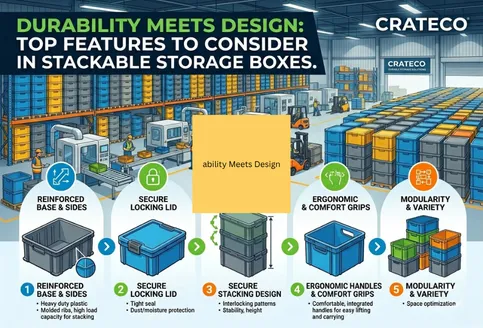
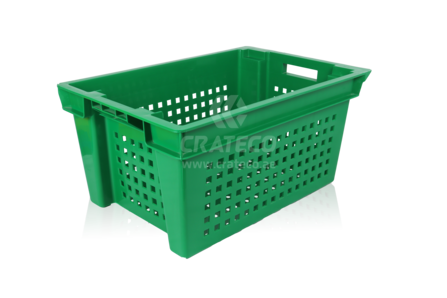
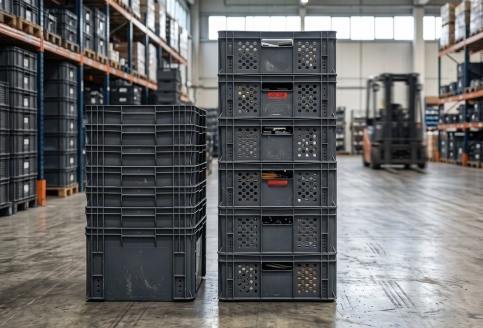
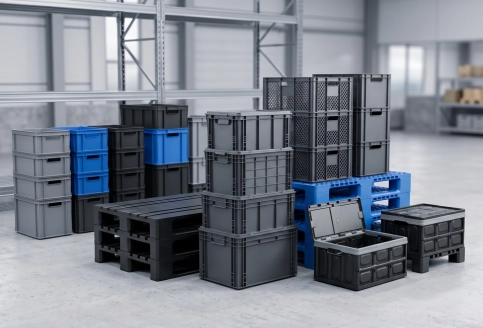
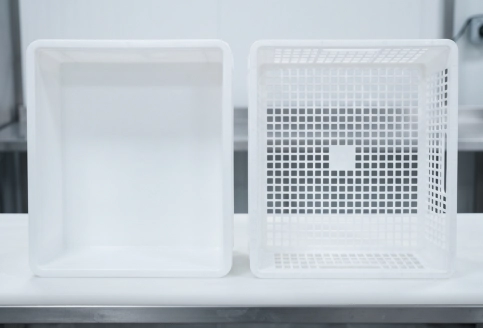
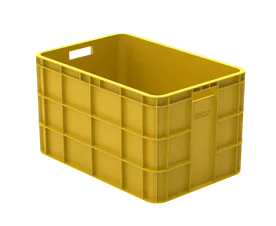
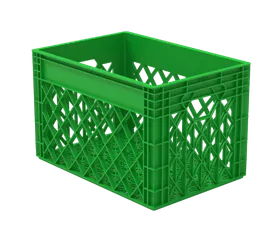
Ventilated crates: Allow airflow and suit fresh produce, bakery goods, and any cargo that needs ventilation during transit or storage.
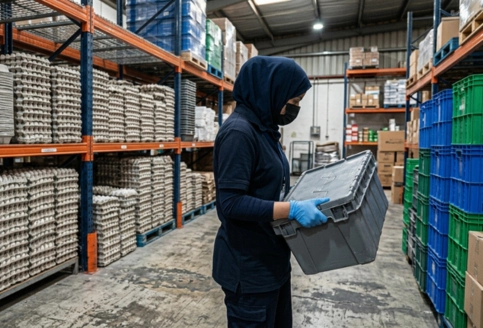
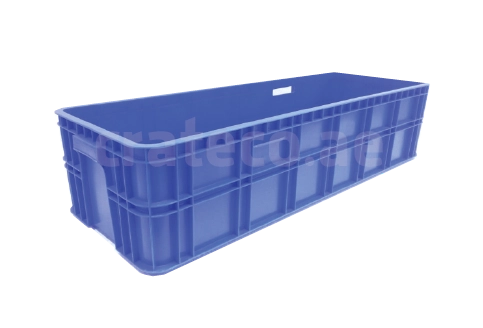
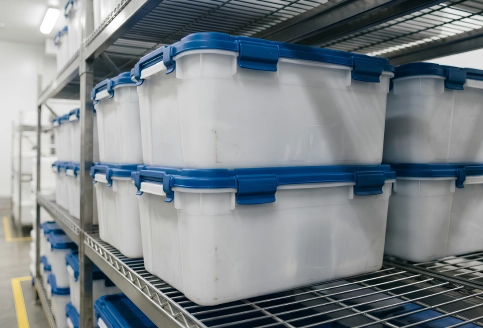
Closed crates: Block dust, moisture, and contamination. Use them for packaged goods, spare parts, pharmaceuticals, and any item needing a clean enclosed space.
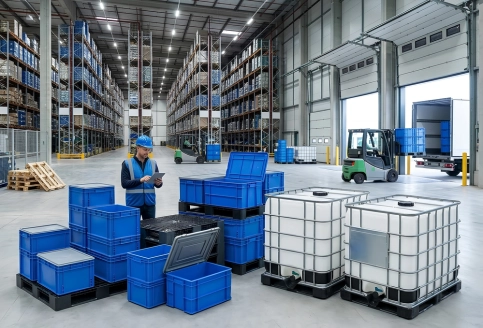
Nestable crates: Save the most space on return trips and in storage. Best for operations with high container volumes and regular return logistics.
Foldable crates: Collapse flat when empty. Use them when storage space is tight, and containers need to be compacted between trips.
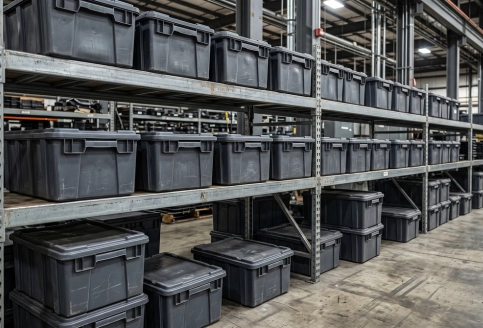
Lidded crates: Add security and sealing without extra steps. Common in pharmaceutical, food service, and export applications.
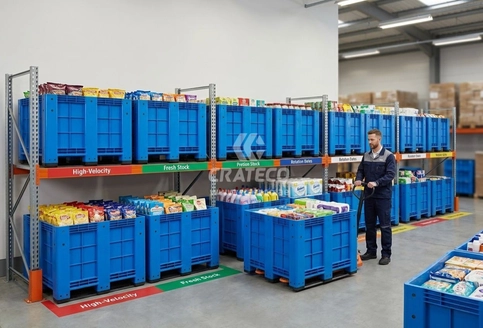
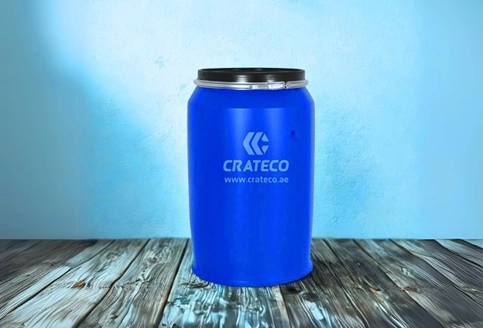
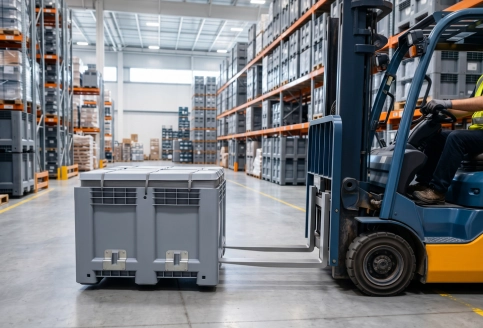
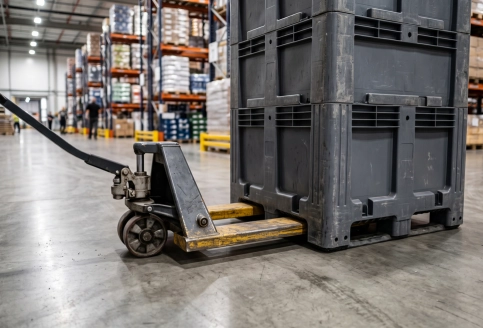
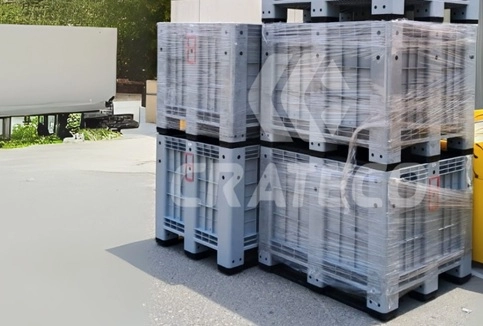
Jumbo crates: Handle large volume loads in agricultural and industrial settings where standard sizes would need too many units per pallet.
Crateco is a UAE-based manufacturer and supplier of plastic crates. The company operates from Ajman and delivers across Dubai, Sharjah, Abu Dhabi, Ras Al Khaimah, and exports to Saudi Arabia, Oman, Qatar, and Kuwait.
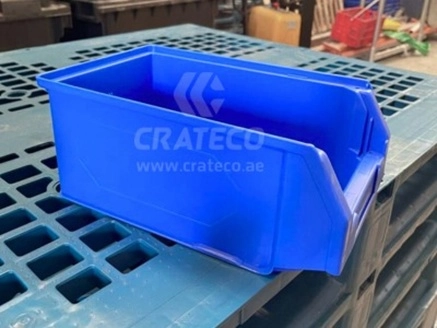
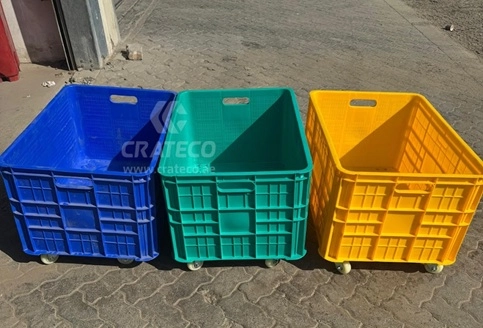
Crateco supplies over 100 crate configurations, including closed, ventilated, nestable, jumbo, foldable, spare parts bins, and lidded series. All crates are built to handle UAE conditions, including summer temperatures above 45 degrees, wash-down cycles, and the demands of high-throughput distribution.
Contact Crateco to find the right crate for your operation.
Crateco Pack LLC, Manufacturer and Supplier of Plastic Crates, Pallets, Bins, and Industrial Packaging Solutions across the UAE and GCC.
Lightweight plastic crates reduce logistics costs in ways that go beyond the container itself. They lower fuel spend, cut damage losses, reduce labor time, and simplify export compliance all at once. The research backs this up, with verified studies showing cost reductions between 15% on freight and up to 61% on total packaging lifecycle cost.
For UAE businesses running high-frequency supply chains, the switch to plastic crates is a cost decision, not just a packaging upgrade. The numbers show a clear return, and most operations reach payback within two years. After that, every crate that completes a trip works as a cost-saving asset.
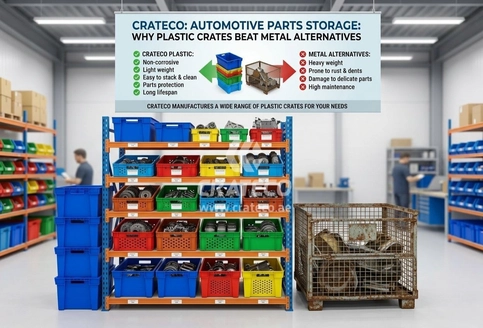
With regular cleaning and normal handling, plastic crates last 5 to 7 years. They hold up against heat, moisture, and impact across hundreds of trips.
Yes. Their fixed dimensions fit directly with conveyor belts, sorting arms, and barcode readers. They are a good fit for any facility that uses or plans to use automated systems.
Most operations get their money back in 12 to 24 months. Every trip after that saves money compared to buying disposable packaging again and again.
Yes. Plastic does not soak up water or grow bacteria. It meets the hygiene rules set by Dubai Municipality, ADAFSA, DHA, and MOHAP.
No. Plastic crates are free from ISPM 15 rules. They cross borders without heat treatment, fumigation, or extra paperwork.