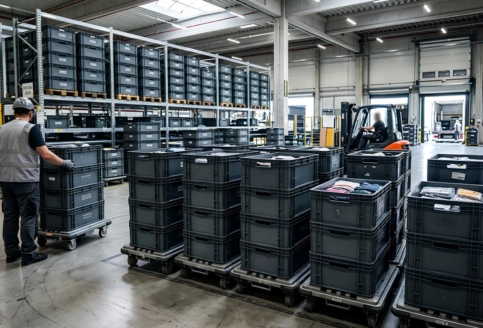
Are you tired of making dozens of trips to move heavy boxes? Or maybe your current trolley feels wobbly and hard to push? Moving goods shouldn't be a workout. In a busy warehouse, office, or retail store, a high-quality platform trolley is your best friend.
At Crateco, we know that not all trolleys are built the same. A cheap one might break in a month, but a quality one will last for years. If you want to move items faster and safer, you need to know what to look for. Let's dive into the top five features that make a platform trolley truly great!
The most important job of a trolley is to carry weight. Before you buy, you must know the "Load Capacity." This tells you the maximum weight the trolley can safely move.
If you overload a weak trolley, the platform might bend, or the wheels might snap. This isn't just a waste of money; it's a safety hazard for your team.
Standard Use: For light office work or small boxes, a capacity of 150kg is usually plenty.
Heavy Duty: For warehouses or moving machinery, look for trolleys that can handle 300kg to 500kg.
Safety Margin: Always choose a trolley that can hold slightly more than your heaviest item. This prevents wear and tear on the frame.
Crateco Pro Tip: A trolley with a reinforced underside will handle heavy loads much better than a thin, single-layer plastic or metal base.
The wheels (also called castors) are the "engine" of your trolley. If the wheels are bad, the whole trolley is useless. You want a smooth, silent glide, not a squeaky struggle.
Rubber Wheels: These are great for indoor use. They are quiet and don't leave marks on tile or wood floors.
Polyurethane (PU): These are tough! They resist chemicals and don't flatten over time, even under heavy weight.
Pneumatic (Air-filled): Best for bumpy outdoor surfaces or gravel.
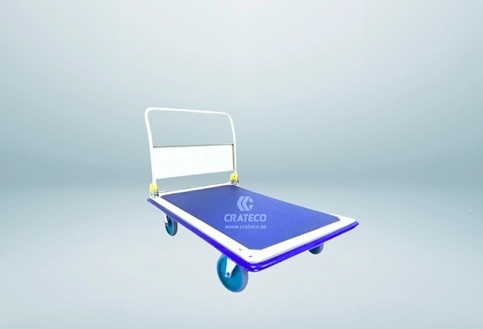
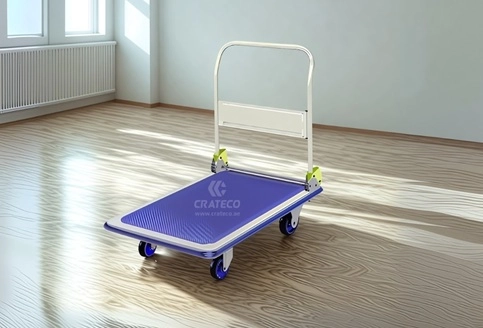
A quality trolley usually has two swivel castors (wheels that turn 360 degrees) and two fixed castors. This setup gives you "precision steering." It allows you to navigate tight corners and narrow aisles without hitting walls.
Safety isn't just about the machine; it's about the person pushing it. A bad handle forces you to bend over or strain your wrists.
Correct Height: The handle should sit at a natural waist height so you can push with your core muscles, not just your arms.
Foldable Options: If you have limited space, look for a foldable handle. This allows you to tuck the trolley under a shelf or into a truck easily.
Non-Slip Grip: A padded or textured grip prevents your hands from slipping, especially if you are wearing gloves or working in a humid environment.
There is nothing worse than pushing a trolley and watching your expensive products slide right off the edge. A flat, slippery surface is a recipe for disaster.
Quality trolleys, like those from Crateco, feature a textured surface pattern. These small bumps or grooves create friction. This friction grips the bottom of your boxes and keeps them stable during turns.
Check if the trolley has rubber bumpers around the edges. This "buffer" protects your walls, furniture, and the trolley itself if you accidentally bump into something. It keeps your facility looking new!
Should you go with a plastic platform or a steel one? The answer depends on your environment.
| Material | Pros | Best For |
|---|---|---|
| High-Grade Plastic | Lightweight, rust-proof, quiet, and easy to clean. | Hospitals, kitchens, and laboratories. |
| Stainless Steel | Extremely strong, heat-resistant, and heavy-duty. | Construction sites and industrial factories. |
| Aluminum | Very light and rust-resistant. | Delivery drivers who need to lift the trolley in and out of vans. |
At Crateco, our heavy-duty plastic platform trolleys are a top seller because they offer the strength of metal without the risk of rust or loud clanging noises.
Saves Time: Move 10 boxes at once instead of walking back and forth 10 times.
Prevents Injury: Reduces the risk of back strain and dropped items.
Protects Goods: Secure transport means fewer broken items and less wasted money.
When shopping for a trolley, stay away from:
Plastic that feels "brittle": Cheap plastic will crack in the cold or under heavy sunlight.
Thin metal handles: These will bend the first time you try to push a heavy load.
Noisy wheels: Loud wheels often mean the bearings are of poor quality and will fail soon.
Why choose Crateco for your platform trolleys? Because we focus on the details. We use premium materials and precision engineering to make sure our trolleys are the most reliable in the market. Whether you need a silent trolley for a quiet hospital or a rugged one for a busy port, we have the perfect fit.
Check the Load Capacity — Is it enough for your heaviest items?
Inspect the Wheels — Are they swivel? Are they quiet?
Test the Handle — Is it foldable? Is the height comfortable?
Look at the Surface — Is it non-slip?
Choose the Material — Plastic for hygiene/rust-free, Steel for extreme heat.
A platform trolley is more than just a deck on wheels. It is a tool that keeps your business moving forward. By looking for these five key features — load capacity, wheel quality, ergonomics, non-slip surfaces, and the right material — you ensure that your investment pays off for years to come. Don't settle for "good enough." Choose a trolley that makes your job easier every single day.
It's easy! Occasionally, check the wheels for tangled hair or debris. If the wheels start to squeak, a tiny bit of lubricant goes a long way. Also, tighten any bolts if they feel loose after months of heavy use.
No. Standard platform trolleys are designed for flat surfaces. For stairs, you would need a specialized "stair-climbing" hand truck.
Yes! We provide various sizes, from small "mini" trolleys for office mail to large industrial platforms for heavy warehouse pallets.