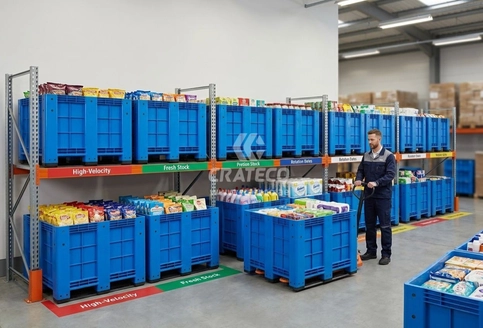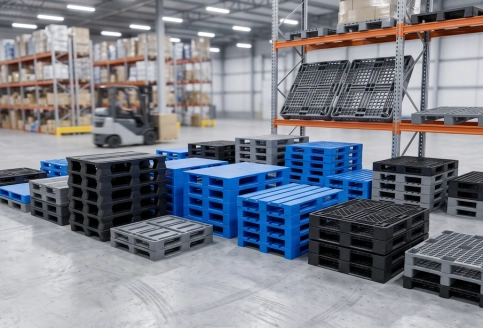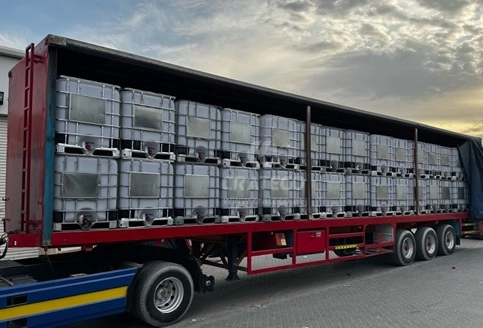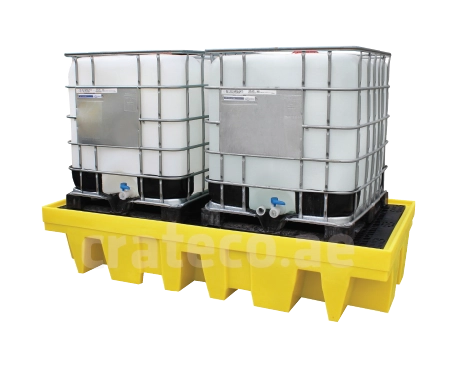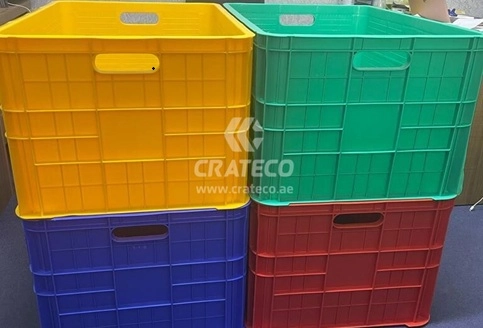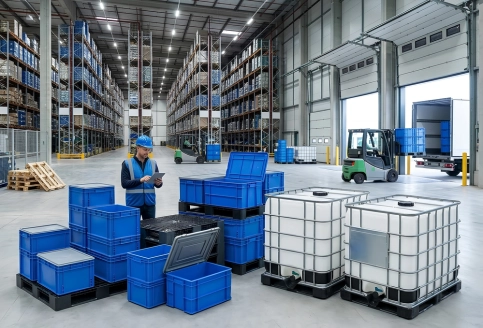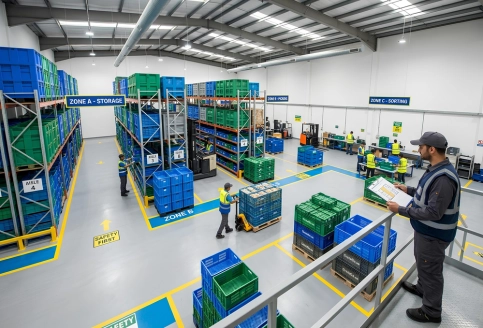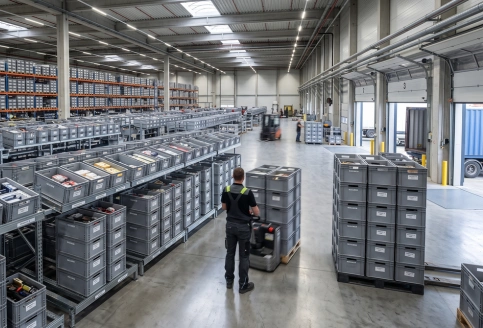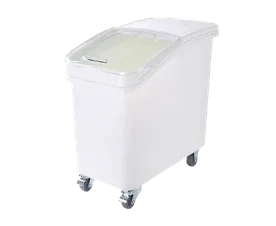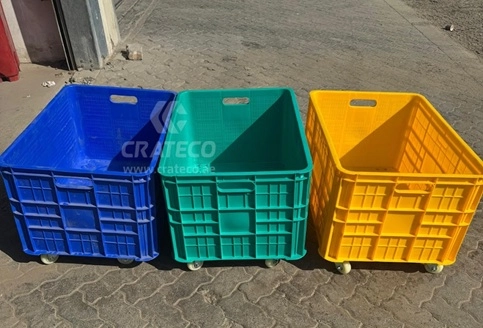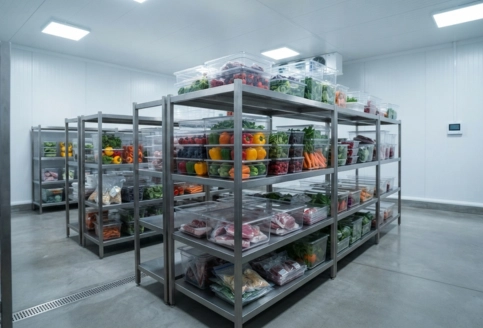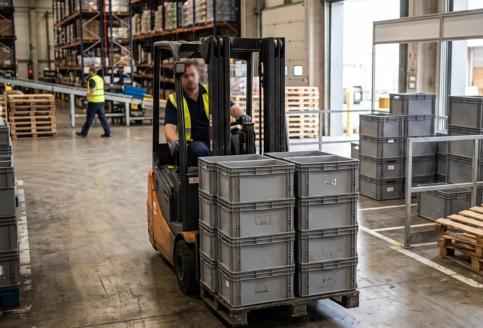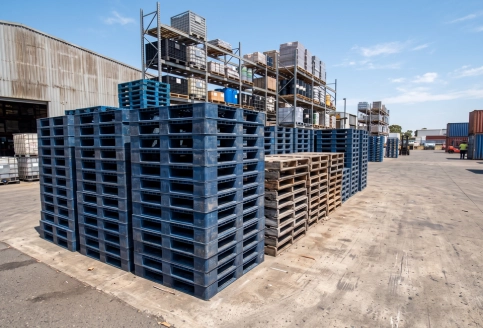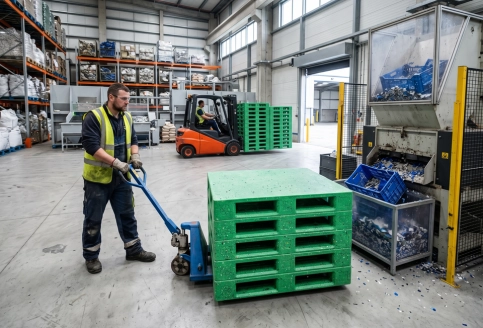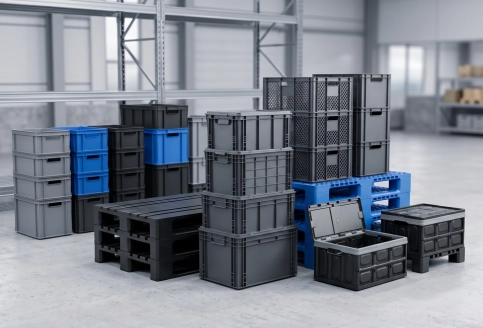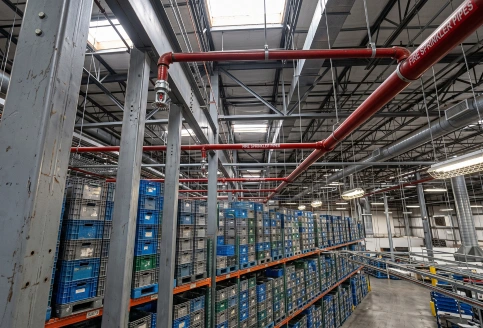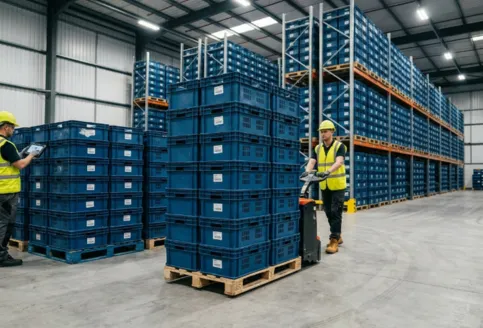

A busy warehouse can lose time when workers have to read labels, check SKUs, or search through mixed stock for every item. Color-Coded Crate Systems make storage easier by using simple visual signals to identify products, zones, and inventory status.
Different colors can separate product groups, fast-moving stock, quality-hold items, and finished goods. Matching colors with barcodes and Warehouse Management Systems (WMS) can improve picking accuracy and stock control.
A simple color plan also helps workers find items faster, reduces placement errors, makes training easier, and supports FIFO inventory rotation. For UAE and GCC warehouses, durable plastic crates can make this visual system practical for daily material handling.
Color coding gives workers an immediate visual reference when moving, picking, or storing products. Instead of reading every label before making a decision, workers can first identify the correct crate by its assigned color.
This can reduce search time and make common warehouse tasks easier to follow. It is especially useful in high-volume facilities where workers handle many SKUs during each shift.
When the same color rules are used across storage racks, picking areas, and dispatch zones, the system becomes easier to understand and maintain.
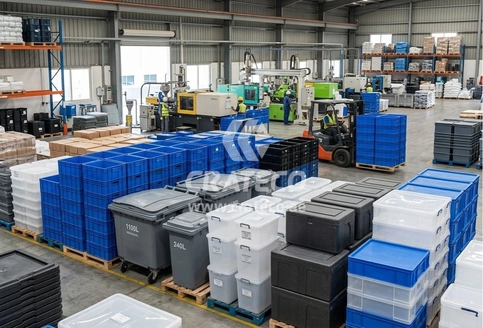
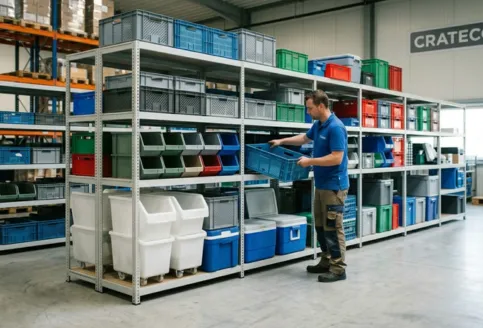
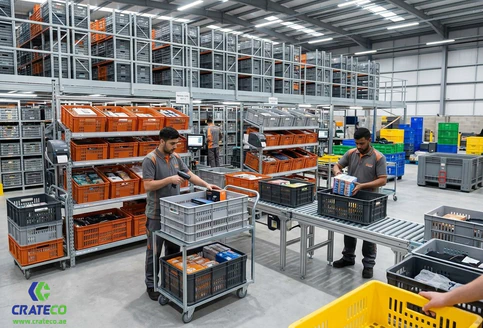
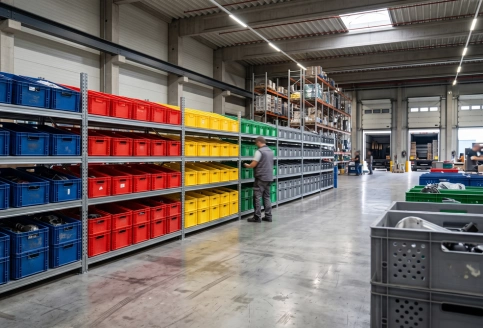
Colored storage crates help workers recognize product groups from a distance. A worker can identify a blue crate for raw materials or a green crate for approved goods without checking every container individually.
This simple visual cue can shorten the time needed for picking and put-away tasks. It also helps supervisors quickly check whether products are stored in the correct area.
In large warehouses, these small time savings can add up across hundreds or thousands of daily movements. The system works best when each color has one clear meaning throughout the facility.
Wrong-item picking and incorrect stock placement can create delays, returns, and extra handling work. Color-coded containers provide another identification layer that helps workers confirm they are handling the right stock.
For example, red crates can be reserved for rejected or damaged products, while green crates can identify goods that have passed inspection.
Some warehouse studies and industry reports suggest that visual color systems can reduce manual picking errors by up to 27%, although actual results depend on the warehouse layout, process, and staff training.
New warehouse workers must learn product locations, storage rules, picking routes, and safety procedures. A clear color system can make this learning process easier because workers can connect colors with specific tasks or inventory groups.
This is useful in UAE warehouses where teams may include workers with different language backgrounds. Visual signals can support written instructions without replacing them.
Once workers understand the basic color rules, they can use the same system during receiving, storage, picking, quality checks, and dispatch. This creates a simpler and more consistent workflow across different shifts.
There is no single color scheme that suits every warehouse. The best setup depends on the products, storage process, stock movement, and safety requirements of the facility. A simple system with four to six main colors is often easier to manage than using too many shades.
Each color should have a fixed meaning that workers can remember quickly. The same rules should also apply across different warehouse zones. This prevents confusion when workers move between receiving, storage, production, picking, and dispatch areas.
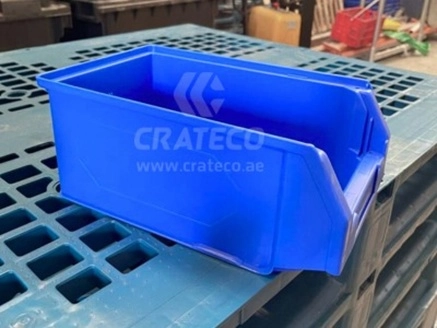
Blue crates can be assigned to raw materials, bulk parts, or components that have not yet entered the production or final packing stage. Keeping these items visually separate can make receiving and production supply easier to manage.
For example, manufacturing facilities can use blue crates for metal parts, fittings, electrical components, or assembly materials. The color should remain linked to the same inventory status throughout the facility.
Barcode labels and SKU information should still be added because color alone cannot identify the exact product, quantity, batch, or specification.
Green crates can represent products that have passed quality checks and are ready for picking, dispatch, or customer delivery. This creates a simple visual difference between completed stock and materials that still require inspection or processing.
Green containers can be especially useful in distribution centers where goods move quickly from storage to outbound areas. When combined with location codes and barcode scanning, they can help workers confirm product status before dispatch.
The same green identification should be used in rack labels, floor markings, and digital records where practical.
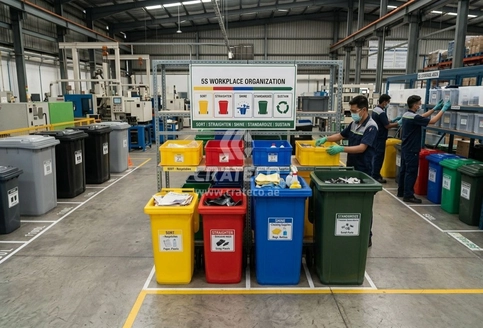
Red and yellow crates can help separate inventory that should not enter normal picking operations. Red can be reserved for damaged, rejected, or returned products, while yellow can identify goods waiting for quality inspection, approval, or another action.
This type of visual control helps prevent restricted stock from being mixed with available inventory. It can also support quality control procedures by creating a clear physical boundary.
However, warehouses should define these colors in written procedures and train all employees so that restricted products are handled correctly.
Grey crates can be useful for maintenance, repair, and operations (MRO) supplies. These may include hand tools, spare machine parts, fasteners, cleaning materials, or other equipment used to keep warehouse and production operations running.
Separating MRO stock from saleable goods makes inventory checks easier and reduces the risk of maintenance items being picked as customer orders.
Grey crates can also be placed near maintenance areas or equipment rooms. For larger facilities, each crate should still carry a part number, location code, and barcode to support accurate stock records.
A successful system needs more than different colored containers. The colors must be connected to actual warehouse processes and supported by clear rules. Start by reviewing the types of inventory stored at the facility and identifying where workers lose the most time.
Next, select a small number of colors and assign each one a fixed purpose. The system should then be added to rack labels, floor signs, digital records, and staff training. Regular checks are also needed to make sure workers continue using the system correctly.
Too many colors can create visual clutter instead of improving warehouse organization. A practical system can begin with four to six clear colors, with each color assigned to one main purpose.
For example, blue can mean raw materials, green can mean approved stock, yellow can mean inspection or hold, red can mean rejected goods, and grey can mean MRO supplies.
The exact choices can change based on business needs. What matters most is consistency. A color should never have different meanings in different departments or warehouse locations.
Color should support existing inventory controls rather than replace them. Every crate should still have the correct SKU, barcode, product name, batch details, or location code where required.
Workers can first use color to identify the general category and then scan the barcode to confirm the exact item. This creates a dual identification system that combines fast visual recognition with accurate digital data.
It is particularly useful for warehouses with many similar products, where two items may look almost identical but have different specifications, batches, or customer requirements.
A Warehouse Management System can make a physical color system more useful by linking container colors with digital inventory records. For example, a picking screen can show the storage location and the color assigned to that inventory category.
Workers can then match the digital instruction with the physical crate before picking an item. ERP systems can also support stock status, purchase orders, batch information, and inventory levels.
This connection reduces dependence on memory and helps create a more controlled workflow between physical storage and digital inventory management.
Color-coded containers can support FIFO inventory control when colors are linked to batches, dates, or storage groups. This is useful for food, FMCG, pharmaceuticals, chemicals, and other products where stock age matters.
For example, different colors can identify incoming batches or specific stock stages, while labels provide the exact date and batch number. Color alone should not decide which product leaves first.
Instead, it should act as a visual aid alongside date codes, barcode scanning, and warehouse procedures. This makes stock rotation easier to follow.
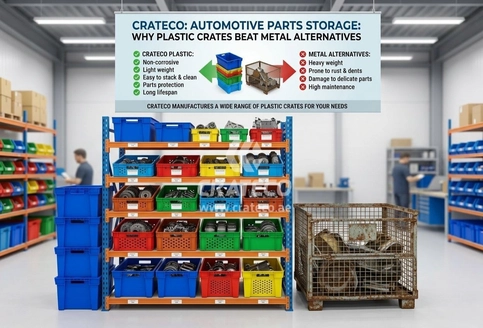
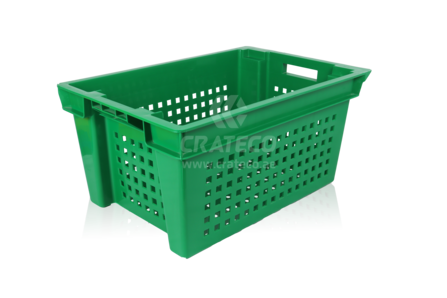
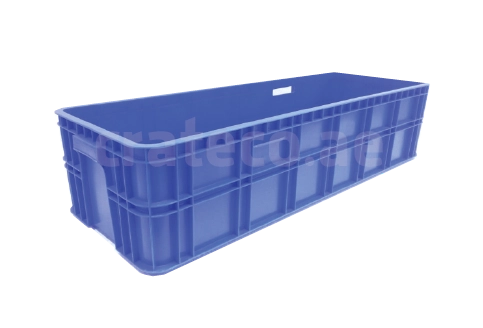
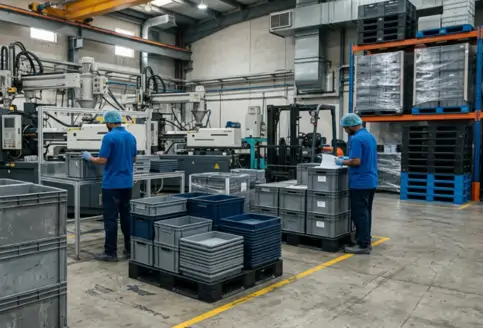
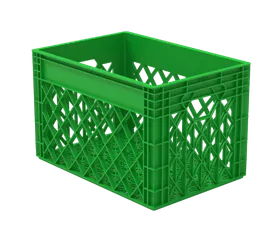
Plastic crates are well suited to UAE and GCC warehouses because they can be reused, cleaned, stacked, and moved repeatedly. However, businesses should choose crates based on their products, storage method, and working conditions.
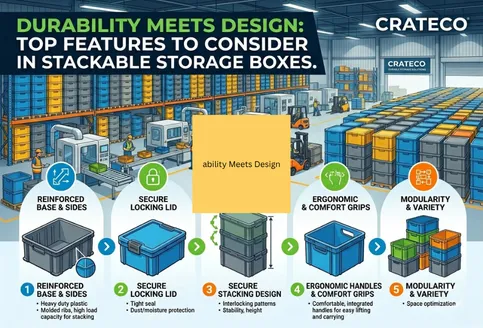
Load Capacity: Choose crates with the correct static and dynamic load ratings for the weight of the stored products and stacking requirements.
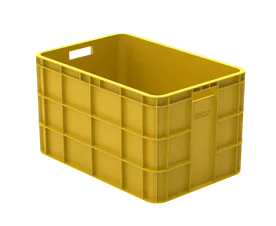
Stackability: Stackable crates help use vertical warehouse space and keep products organized on racks, pallets, and storage floors.
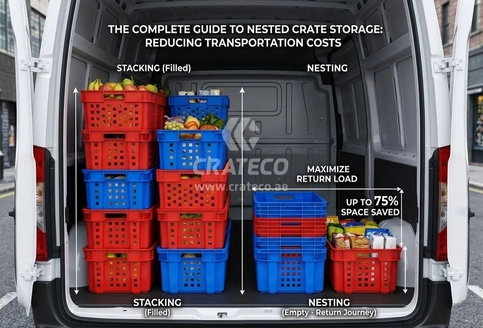
Nestability: Nestable crates can save space when empty because they fit inside one another, making storage and return transport easier.
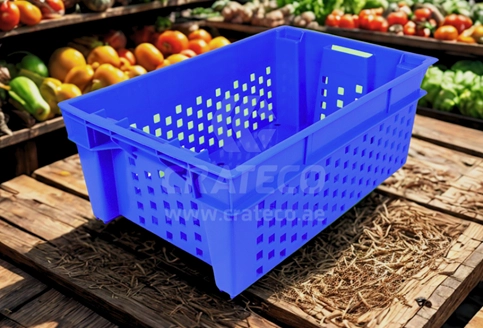
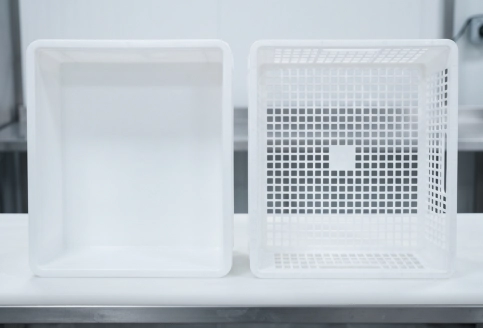
Ventilation: Ventilated crates allow airflow and can be useful for suitable food, agricultural, and other products that need air circulation.
Solid-Wall Design: Solid plastic crates provide better containment for small parts and products that could fall through open crate walls.
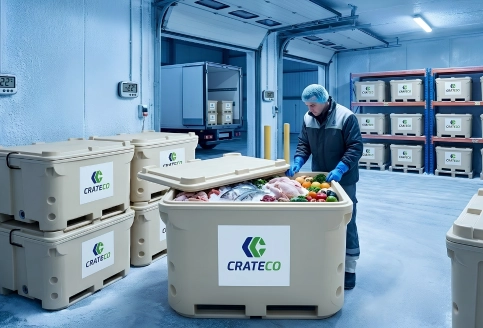
Temperature Resistance: Crates should be suitable for the temperature conditions where they will be stored or used, especially in hot UAE environments.
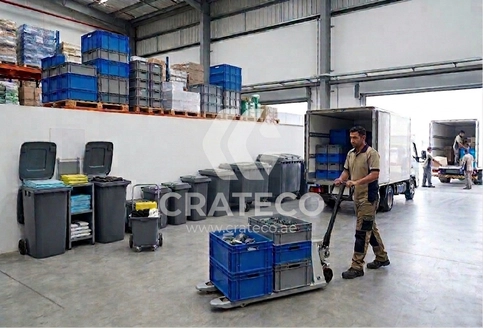
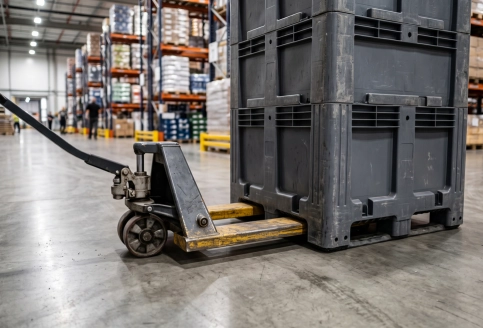
Handling Compatibility: Check that crate dimensions and base designs work safely with pallets, pallet jacks, conveyors, and other material handling equipment.
Durability and Reuse: Heavy-duty plastic crates should withstand repeated handling, cleaning, stacking, and warehouse movement without frequent replacement.
A clear visual system can also support warehouse safety when colors are assigned to restricted or sensitive inventory. Red containers may identify rejected products, while yellow can be used for items that require inspection or special handling.
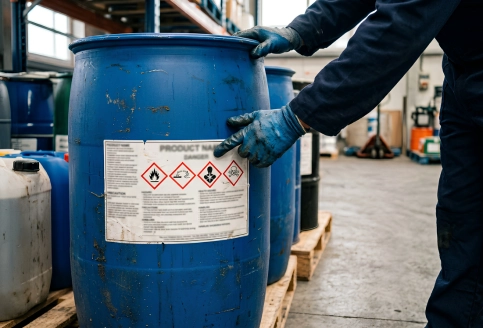
However, safety colors should follow the company's safety procedures and must not conflict with legally required signs or hazard labels. Dangerous goods still need the correct labels, documentation, and storage controls.
Color coding is an additional visual tool, not a replacement for safety standards. Combining colors with signs and written instructions creates a stronger identification system.
Companies operating warehouses in Dubai, Abu Dhabi, Sharjah, or other GCC locations can improve consistency by using the same crate colors, sizes, and meanings across all facilities. A standardized system helps workers understand storage rules even when they move between different locations.
Consistent Color Rules: Using the same color for the same inventory status across facilities reduces confusion and improves stock identification.
Simpler Worker Training: Staff can follow familiar crate and storage rules when transferred to another warehouse.
Better Stacking and Storage: Standard crate dimensions make it easier to plan racking, stacking, and floor space.
Improved Transport: Uniform crates can simplify movement between warehouses, delivery vehicles, and distribution centers.
Better Pallet Utilization: Matching crate sizes can help businesses use available pallet space more efficiently.
Connected Supply Chain: Consistent colors, labels, dimensions, and handling rules create a more organized material handling process across multiple sites.
A color coding system only works when workers can understand and follow it consistently. Poor planning can make the system confusing instead of improving warehouse efficiency. Businesses should keep the rules simple and review them as inventory needs change.
Using Too Many Colors: A large number of colors can create visual clutter and make identification harder.
Changing Color Meanings: Each color should have one fixed purpose across the warehouse or company.
Removing Text Labels: Colors should support, not replace, SKUs, barcodes, batch numbers, and other product information.
Mixing Different Stock Types: Products with different statuses should not be placed together simply because they use the same crate color.
Ignoring Crate Condition: Faded, damaged, or dirty crates can make colors difficult to identify.
Skipping Staff Training: New workers should understand the color rules before handling inventory independently.
Failing to Update Signs: Rack labels, floor markings, and digital records should match the current color system.
Warehouse managers should measure performance before and after introducing a visual storage system. This helps show whether the new approach is actually saving time and reducing errors. Regular checks can also reveal areas that need improvement.
Picking Accuracy: Track incorrect items picked or orders that require correction.
Inventory Search Time: Measure how long workers take to locate products in storage.
Put-Away Time: Check whether workers can place incoming goods in the correct location faster.
Stock Count Accuracy: Compare physical inventory with records in the WMS or ERP system.
Order Processing Time: Monitor how quickly orders move from picking to dispatch.
Training Time: Check whether new employees can learn storage and picking procedures more quickly.
Floor Audits: Inspect crate placement, color use, labels, and storage zones on a regular basis.
If errors remain high after implementation, the problem may not be the color system itself. Warehouse layout, unclear labels, poor training, incorrect WMS data, or weak stock control procedures may also need attention.
Color-coded crate systems can improve inventory management by making products, storage zones, and stock status easier to recognize. A simple color plan can speed up picking, reduce placement mistakes, support FIFO, simplify worker training, and improve control over restricted inventory.
The best results come from using a limited number of colors, keeping their meanings consistent, and combining them with barcodes, SKUs, WMS data, and clear warehouse procedures. Durable plastic crates can further support these systems through safe stacking, repeated handling, and organized storage.
For businesses looking for reliable storage and material handling solutions, Crateco Pack LLC is a trusted crate supplier in the UAE, offering plastic crates and other industrial packaging products for different warehouse needs.
Choosing the right crate design, size, and color system can help UAE and GCC businesses build a cleaner, faster, and more organized warehouse operation.