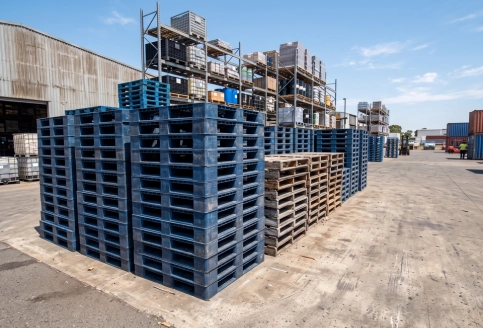
Anyone who has left a plastic chair outside in the UAE sun for a few months knows what happens. It fades, becomes brittle, and eventually cracks under the slightest pressure. The same process happens to plastic pallets and storage containers when they are used in outdoor or semi-covered warehouse areas without proper UV protection.
The difference is that a broken pallet under a heavy load does not just mean a replacement purchase. It means collapsed racking, damaged goods, potential injuries, and unexpected operational downtime.
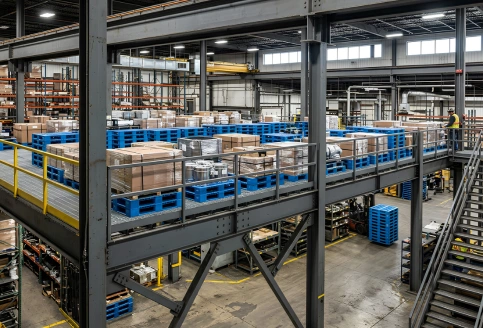
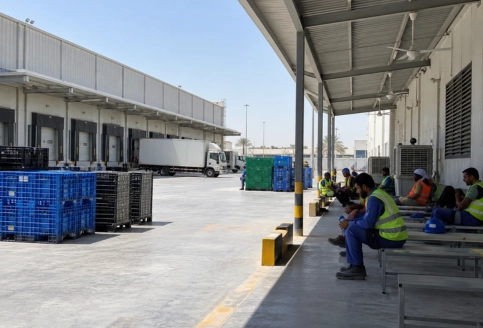
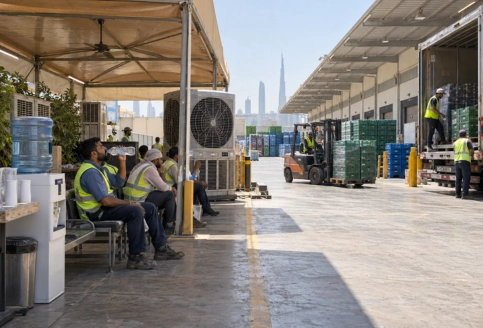
Outdoor and semi-exposed warehouse environments are common across the UAE and the wider Gulf region. Loading docks, yard storage areas, open-sided warehouses, and rooftop storage facilities all expose pallets to direct sunlight for extended periods.
In a region where temperatures regularly exceed 45°C and UV radiation levels are among the highest in the world, the material quality and UV resistance of your pallets are not minor specification details.
It is a core operational requirement. Choosing the right pallet for exposed areas protects your goods, your equipment, your workers, and your bottom line.
UV degradation is the process by which ultraviolet radiation from sunlight breaks down the chemical bonds in plastic materials over time. This process is called photodegradation, and it affects virtually all plastics to some degree unless they are specifically protected against it.
When UV radiation hits an unprotected plastic surface, it attacks the polymer chains that give the material its strength and flexibility. Over time, this causes the plastic to lose its original properties in a progressive sequence:
Surface discoloration: The outer layer becomes chalky or faded as pigments break down under continuous UV exposure.
Brittleness: The material loses its impact resistance and flexibility, becoming stiff and prone to snapping under stress.
Micro-cracking: Small cracks form on the surface and spread inward over time, weakening the overall structure of the pallet from the outside in.
Structural failure: Eventually, the pallet fails under loads that it would have handled easily when it was new.
The UAE accelerates this process far more than most other parts of the world. Three climate factors combine to speed up UV degradation significantly:
Intense solar radiation: The UAE receives some of the highest UV index levels globally, regularly reaching extreme ratings of 10 to 11 or above during summer months.
Extreme heat: High ambient temperatures amplify the chemical reactions triggered by UV exposure, making degradation faster and more severe.
Low humidity: Unlike humid climates where moisture can slow certain surface reactions, the desert air in the UAE provides no buffer against UV penetration into the plastic surface.
The real-world impact of this is significant. A pallet with no UV protection that might last five years in Northern Europe could fail within one to two years in outdoor storage in the UAE. This makes UV stabilization not just a desirable feature but an essential requirement for any pallet used in exposed environments in this region.
UV stabilizers are chemical additives that are blended into the plastic material during the manufacturing process. They work by absorbing or neutralizing the UV radiation before it can attack the polymer chains in the base material.
There are two main types of UV stabilizers used in plastic pallets.
It works by absorbing the UV radiation and converting it into harmless heat energy that dissipates from the material. This prevents the radiation from reaching the polymer chains and causing photodegradation.
Carbon black is one of the most effective UV absorbers used in plastic products, which is why black pallets typically offer superior UV resistance compared to lighter-colored alternatives.
This works differently. Rather than absorbing UV radiation, they interrupt the chemical degradation process after UV exposure begins.
HALS molecules neutralize the free radicals that UV radiation creates in the polymer chains, stopping the chain reaction that would otherwise lead to brittleness and cracking.
HALS are highly effective even at low concentrations and are widely used in high-quality outdoor plastic products.
Not all pallets marketed as UV-resistant offer the same level of protection. Here are the warning signs that a pallet has insufficient UV stabilization for outdoor use in the UAE.
Surface chalking or fading: When a black pallet starts to turn grey or a colored pallet fades significantly within the first year of outdoor use, the UV stabilizer concentration is too low, or the stabilizer type is not suited to the level of radiation exposure.
Surface cracking: Small cracks appearing on the top deck or runner surfaces after a relatively short period of outdoor exposure indicate that UV degradation is advancing faster than expected. Once cracking begins, the structural integrity of the pallet declines rapidly.
Brittleness under impact: A pallet that has lost flexibility due to UV degradation will shatter or break when dropped or struck rather than absorbing the impact. This is a serious safety risk in a live warehouse environment.
Deformation under load: UV degradation combined with heat exposure can cause pallets to warp or deform under loads that they would normally handle without difficulty. This is particularly common in pallets stored flat in direct sunlight with heavy goods on top.
Short lifespan compared to specification: If a pallet is rated for a certain number of use cycles but shows significant degradation well before reaching that number under outdoor conditions, the UV protection is inadequate for the environment.
Selecting the right pallet for exposed warehouse areas involves more than just checking whether the product description mentions UV resistance. Here are the factors that matter most.
HDPE and PP are the two most common base materials for plastic pallets. Both can be effectively UV-stabilized, but they behave differently under prolonged outdoor exposure.
HDPE is generally more resistant to UV degradation and performs better in the extreme heat and solar radiation conditions found in the UAE and Gulf region. It retains its impact resistance and flexibility longer than PP under continuous outdoor exposure, making it the preferred material for pallets that will spend significant time in direct sunlight.
PP has excellent chemical resistance and performs well across a wide temperature range, but it is more susceptible to UV degradation than HDPE without adequate stabilization. In outdoor environments with very high UV exposure, ensure that PP pallets include a high-concentration UV stabilizer package before selecting them for long-term outdoor use.
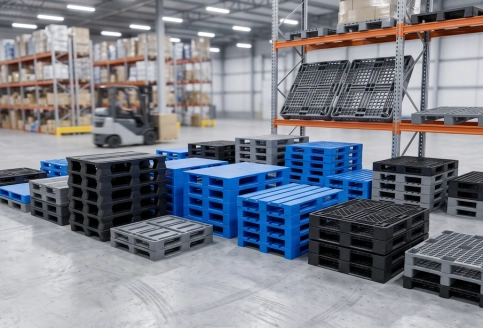
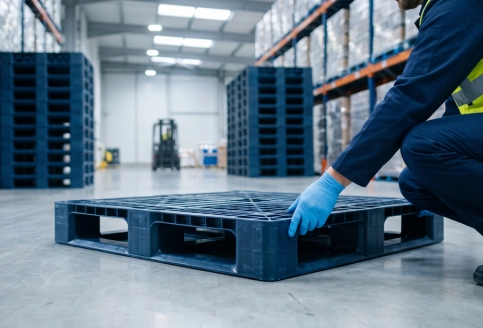
The color of a pallet directly affects its UV resistance performance in real-world conditions. Black pallets contain carbon black pigment, which is one of the most effective natural UV absorbers available.
Black pallets consistently outperform lighter-colored alternatives in outdoor UV resistance tests and in real-world long-term use. For operations that require colored pallets for identification or sorting purposes, darker colors generally offer better UV resistance than lighter ones.
If color-coded pallets are needed for outdoor use, discuss UV stabilizer concentrations with your supplier to ensure the chosen colors include sufficient protection for outdoor conditions.
Not all UV stabilizers are equal, and the concentration used in the material makes a significant difference to real-world performance. Request technical data sheets from your supplier that specify the type and concentration of UV stabilizer included in the pallet formulation.
Reputable suppliers will be able to provide this information and should be able to confirm that the stabilizer package is appropriate for outdoor use in high-UV environments like the UAE.
High outdoor temperatures affect the load-bearing performance of plastic pallets independently of UV degradation. When ambient temperatures exceed 40°C, and a pallet is sitting in direct sunlight on a dark surface, the actual temperature of the pallet surface can reach 60°C to 70°C or higher.
At these temperatures, even good-quality plastic can begin to creep under heavy static loads, meaning it deforms slowly over time rather than immediately.
When selecting pallets for outdoor use in hot climates, check the dynamic and static load ratings at elevated temperatures, not just at standard testing temperatures of 20°C to 23°C. A pallet rated for 1,500 kg dynamic load at 20°C may have a significantly lower effective capacity at 60°C.
Certain structural features make pallets better suited to outdoor environments regardless of UV resistance.
Closed deck design prevents water pooling on the pallet surface, which accelerates degradation when combined with UV exposure. Standing water also promotes algae and biological growth on pallet surfaces, which can be a hygiene concern if pallets transition between outdoor storage and food environments.
Reinforced runners with steel inserts maintain their structural integrity longer under the combined stress of UV exposure, heat, and load-bearing use. In outdoor racking systems where pallets sit on rack beams, steel-reinforced runners prevent the premature deflection that UV-weakened plastic runners are prone to.
Anti-slip surfaces are particularly important for outdoor pallets because temperature changes between day and night cause slight dimensional changes in the pallet surface. Anti-slip plugs or textured surfaces maintain load stability across these temperature cycles.
Not every pallet type is equally suited to outdoor use. Here is a practical guide to matching pallet types to different outdoor storage scenarios.
| Outdoor Storage Scenario | Recommended Pallet Type | Key Requirement |
|---|---|---|
| Open yard storage, full sun exposure | Black HDPE heavy-duty pallet with UV stabilizers | Maximum UV resistance, high static load capacity at elevated temperature |
| Semi-covered loading dock | Medium-duty pallet with UV stabilizers | UV protection, forklift compatibility, moisture resistance |
| Open-sided warehouse | Flat or closed deck pallet with UV package | Closed deck to prevent water pooling, UV stabilized |
| Rooftop storage facility | Heavy-duty rackable pallet, black HDPE | High UV resistance, structural integrity under heat and load |
| Outdoor cold chain staging area | Vehicle or floor pallet with UV stabilizers | Low profile, moisture resistant, UV protected |
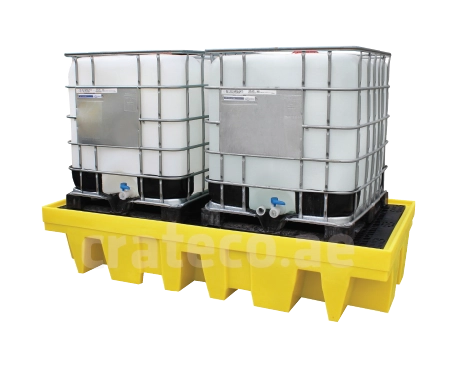
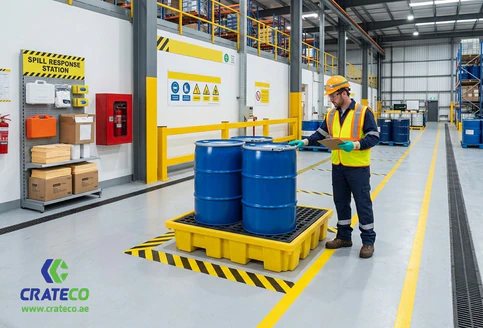
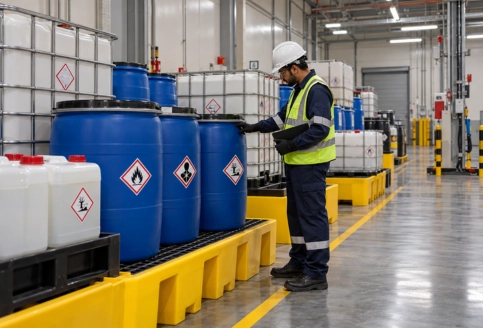
| Chemical outdoor storage | Spill pallet with UV-stabilized construction | Chemical resistance, UV protection, liquid containment |
The UAE presents one of the most demanding outdoor environments for plastic materials anywhere in the world. Understanding the specific climate factors that affect pallet lifespan helps in making the right selection.
1. Solar radiation intensity: The UAE receives extremely high levels of solar radiation year-round. UV index readings regularly reach 10 to 11 or higher during summer months, which is classified as extreme on the international UV index scale. This accelerates photodegradation in unprotected or inadequately stabilized plastics at a significantly faster rate.
2. Temperature extremes: Summer temperatures regularly exceed 45°C in the shade and can reach 60°C to 70°C on exposed surfaces in direct sunlight. These temperatures accelerate both UV degradation and thermal creep in plastic materials, reducing effective load capacity and accelerating the aging process.
3. Thermal cycling: The difference between daytime and nighttime temperatures in the UAE, particularly in inland areas, creates repeated expansion and contraction cycles in plastic pallets. Over time, this thermal cycling stresses the material and accelerates crack formation in pallets with inadequate UV and heat stabilization.
4. Dust and sand exposure: Outdoor pallets in the UAE are also exposed to fine sand and dust particles carried by wind. Abrasive dust particles can scratch pallet surfaces, removing the thin protective layer and accelerating UV penetration into the base material.
These combined factors mean that pallets selected for outdoor use in the UAE need to meet a higher standard of UV and thermal stabilization than what would be adequate in most other regions.
Even the best UV-stabilized pallet lasts longer with proper care and maintenance in outdoor environments.
Regular inspection: Check outdoor pallets for surface cracks, discoloration, and deformation on a regular schedule. Early identification of UV degradation allows pallets to be rotated out of outdoor use before they reach the point of structural failure.
Rotation between indoor and outdoor use: Where operationally possible, rotating pallets between indoor and outdoor use reduces the total UV exposure per pallet and extends the overall fleet lifespan. Pallets that spend less continuous time in direct sunlight age more slowly even without additional stabilization.
Cleaning to remove surface contamination: Sand, dust, and organic material that accumulate on outdoor pallet surfaces can accelerate degradation when combined with moisture and UV exposure. Regular washing removes these materials and helps maintain surface integrity.
Avoid prolonged static loading in direct sunlight: Where possible, avoid leaving heavily loaded pallets sitting in direct sunlight for extended periods. Even UV-stabilized pallets are subject to thermal creep under heavy static loads at high temperatures. Rotating loads, using shade structures, or moving loaded pallets to covered areas when not in active use reduces this risk.
Stack empty pallets in covered areas: When pallets are not in use, storing them in a covered or shaded area rather than leaving them stacked in direct sunlight significantly reduces total UV exposure and extends their working life.
| Material | UV Resistance | Heat Resistance | Best Color for Outdoor Use | Outdoor Lifespan (UAE) |
|---|---|---|---|---|
| Black HDPE with UV stabilizers | Excellent | Very Good | Black | 7 to 10 years |
| Colored HDPE with UV stabilizers | Good to Very Good | Very Good | Dark colors preferred | 5 to 8 years |
| PP with high-concentration UV stabilizers | Good | Good | Black or dark | 4 to 7 years |
| PP without UV stabilizers | Poor | Moderate | Any | 1 to 2 years |
| HDPE without UV stabilizers | Moderate | Good | Any | 2 to 3 years |
| Wood | Poor | Poor | N/A | 1 to 3 years |
| Metal (steel) | Excellent (with coating) | Excellent | Any | 10+ years with maintenance |
UV resistance is not a minor specification detail for pallets used in outdoor or semi-exposed warehouse areas in the UAE. It is the difference between a long-lived business asset and an expensive, recurring replacement cost.
The intense solar radiation, extreme heat, thermal cycling, and abrasive dust conditions that characterize outdoor storage in the Gulf region accelerate UV degradation in plastic pallets far faster than in most other parts of the world.
Choosing the right pallet for outdoor use means selecting a product made from UV-stabilized HDPE, preferably in black or a dark color, with a structural design that handles the combined stress of UV exposure, high temperatures, and load-bearing use over many years.
For businesses across the UAE operating in outdoor or semi-exposed warehouse environments, Crateco Pack LLC provides plastic pallets manufactured from UV-stabilized HDPE and PP specifically suited to the demands of the Gulf climate.