Picking the right storage container can make a big difference in how smoothly your business runs. Whether you move food, beverages, auto parts, or baked goods, using the wrong container wastes time, money, and space. The right crate protects your products, fits your workflow, and lasts for years without breaking down.
Plastic crates are rigid containers made from high-density polyethylene (HDPE) or polypropylene (PP). They are used across industries to store, carry, and transport goods safely. If you are looking for the best plastic crates supplier in the UAE, it helps to first understand the different types available and which one fits your specific needs.
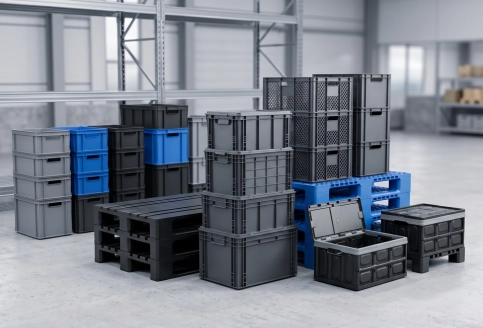
Depending on your operation, you can choose from ventilated crates, closed crates, nestable crates, jumbo crates, crates with lids, bottle crates, spare parts bins, and many application-specific options like bakery crates, fish crates, milk crates, and more.
Each type serves a different purpose, and knowing the difference helps you pick the one that works best for your business.
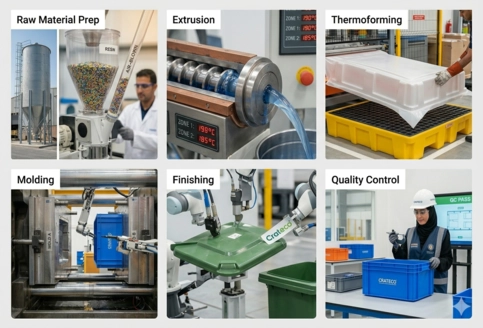
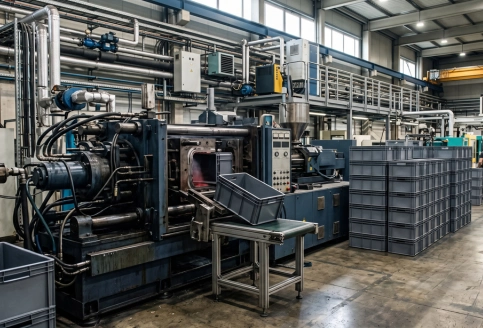
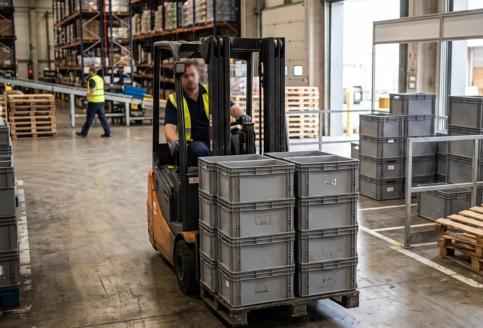
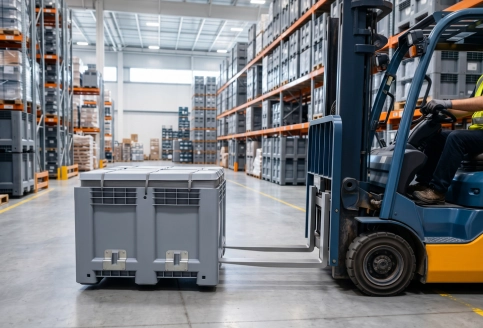
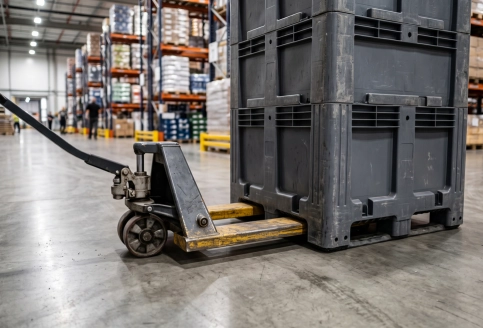
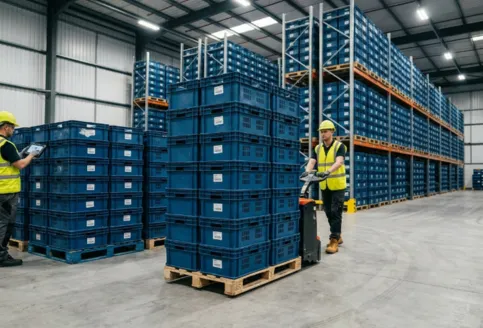
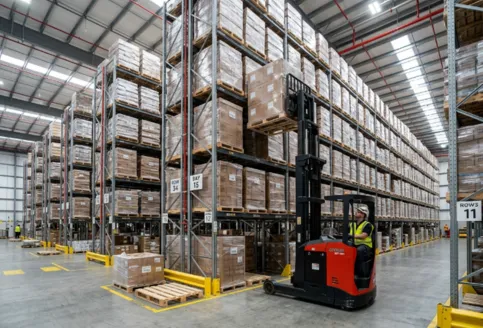
Plastic crates are reusable, stackable containers built to handle repeated loading and unloading. They are injection-moulded for uniform shape and strength, which makes them compatible with forklifts, conveyor systems, and pallet jacks.
Unlike cardboard boxes that weaken with moisture or wooden crates that splinter over time, these containers maintain their shape and strength through hundreds of use cycles.
Industries like food processing, logistics, retail, agriculture, and manufacturing rely on them because they are hygienic, easy to clean, and built to last. The material also resists bacteria, pests, and chemical exposure, which is important in food-grade and industrial environments.
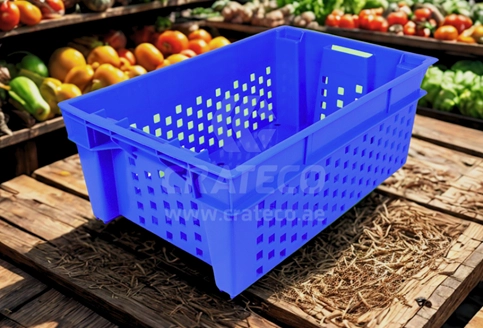
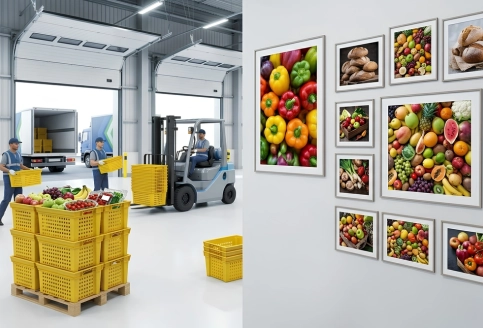
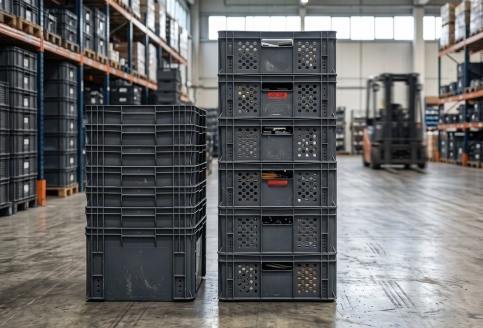
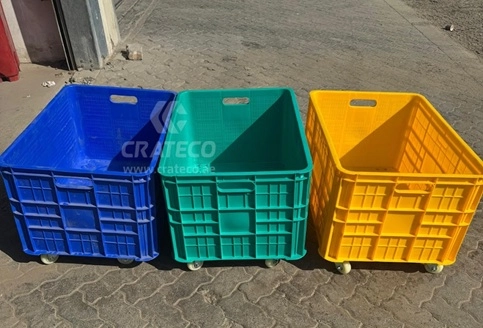
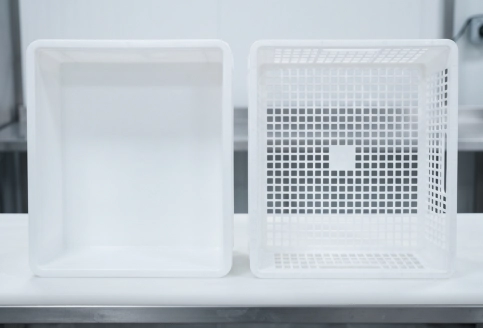
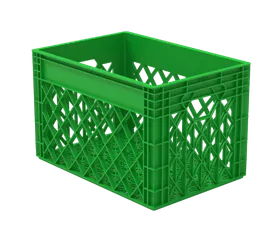
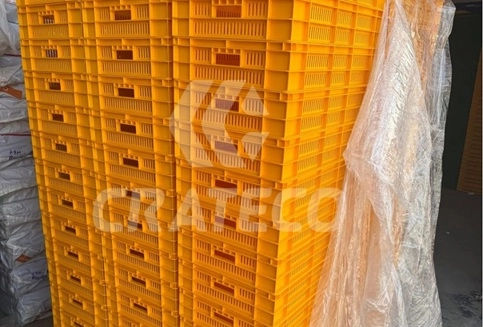
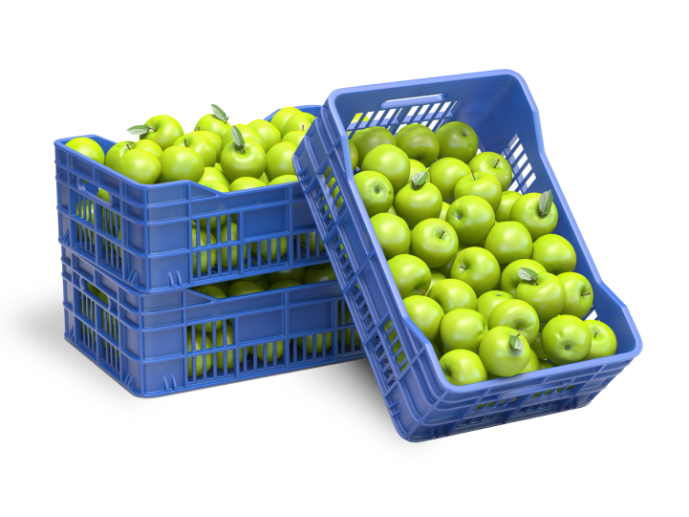
Ventilated crates have open walls, perforated sides, or slatted designs that let air flow through the container. This airflow slows down the ripening or spoilage process for perishable goods.
These crates are widely used for fruits, vegetables, herbs, and freshly baked goods. The ventilation also helps reduce moisture buildup inside the crate, which can cause mold or rot.
Ventilated harvest crates, for example, come in depths ranging from 80mm to 485mm, giving you flexibility based on how much product you need to carry per trip. They are stackable and often include handle holes for easy carrying.
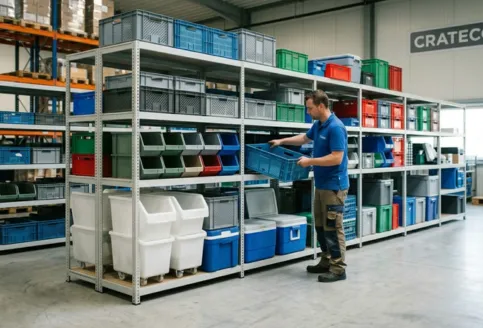
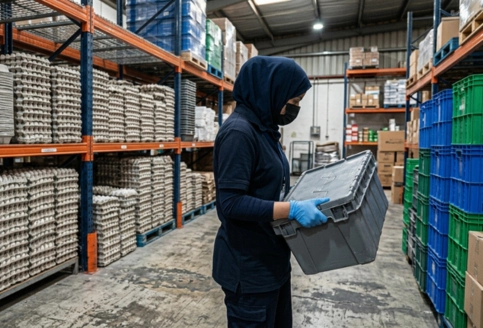
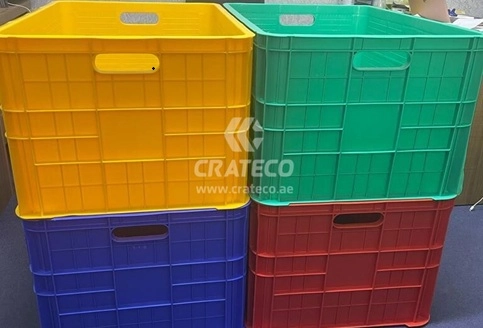
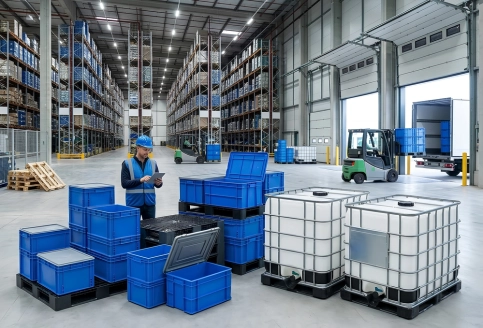
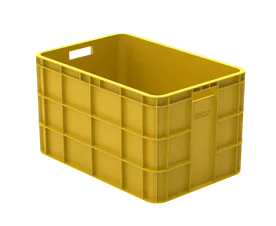
Closed crates have solid walls and a solid base with no openings. This makes them ideal for goods that need protection from dust, light, or external contact. If you are storing manufactured parts, packed food items, or goods that must not be exposed to open air, a closed crate is the right choice.
These are also preferred in clean-room or pharmaceutical settings where contamination control matters. Closed crates come in a wide range of volumes, from as small as 6 litres to as large as 99 litres, so you can match the size to your exact product.
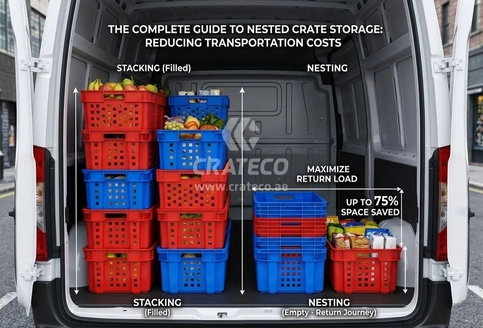
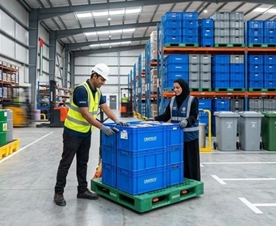
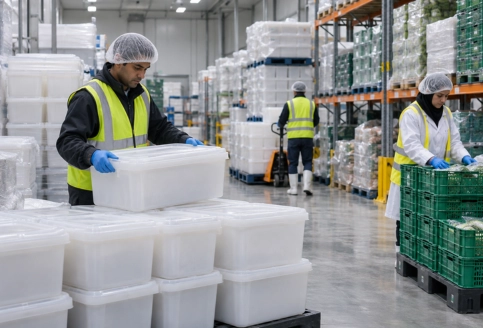
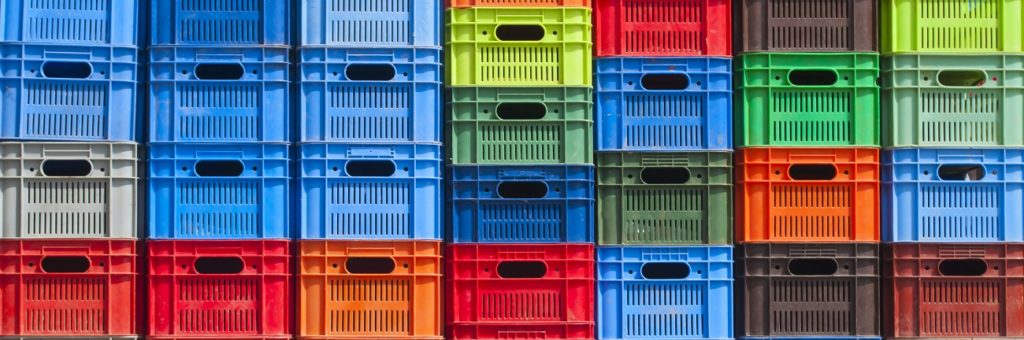
Nestable crates are designed so that empty crates slide or nest inside one another. This feature significantly reduces the space needed to store or transport empty crates. When full, they stack normally on top of each other.
Ventilated nestable crates combine both benefits: airflow for fresh produce and space-saving nesting when empty. These are especially popular with retailers, supermarkets, and distributors who send out full crates and need to bring back empties without wasting truck space.
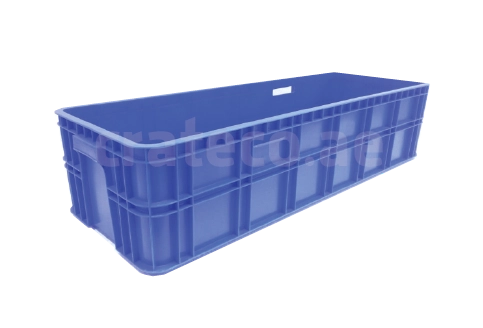
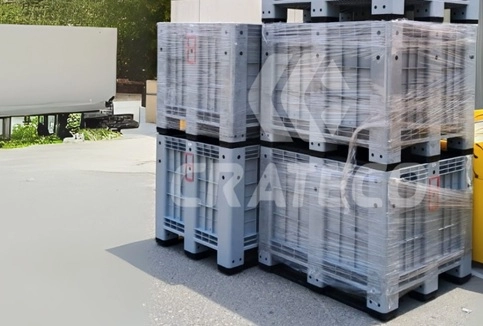
Jumbo crates are large-capacity containers designed for bulk storage and heavy-volume transport. A standard jumbo crate measures 805mm x 570mm x 425mm and holds up to 165 litres.
There are also long jumbo crates measuring 1200mm x 400mm x 340mm for oversized or awkward items. Both ventilated and closed jumbo versions are available.
These are popular with wholesale distributors, large warehouses, and agricultural suppliers who move high volumes in single trips. They feature reinforced corners, handle holes, and a "3-in-1" design that supports stacking, nesting crate storage, and individual handling.
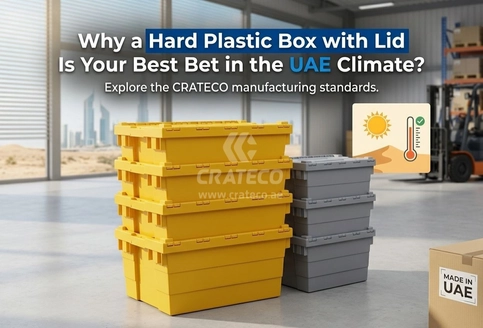
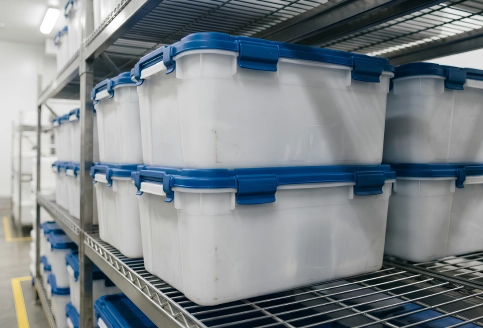
Crates with lids come as a two-piece unit where the lid snaps or fits securely on top to close the container. This is useful when goods need protection during transit, or when crates are stacked, and the top layer must not shift.
Lid-equipped crates are common in pharmaceutical logistics, industrial parts storage, and food manufacturing. Separate lid options are also available for the 3020, 4030, 5032, and 6040 series crates, so you can add a lid to an existing crate without buying a completely new set.
Bottle crates are purpose-built to hold bottles securely in individual pockets. Available in 6-pocket, 12-pocket, and 24-pocket variants for different bottle sizes and distribution volumes, these crates prevent bottles from knocking into each other during transport, which reduces breakage.
They are used by dairy companies for milk bottles, beverage firms for water or soft drink bottles, and by breweries for glass beer bottles. All pocket-style crates are stackable and can be paired with dolly trolleys for easier floor-level movement.
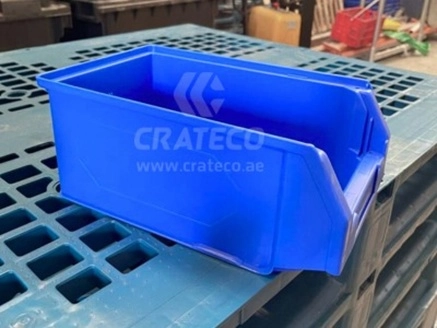
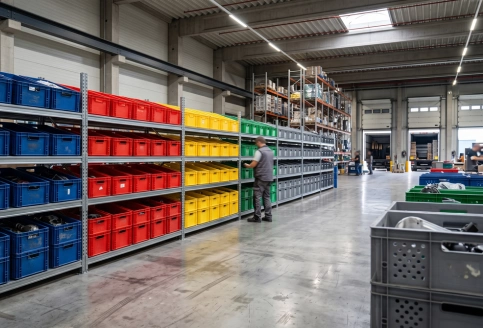
Spare parts bins are small, open-top containers used to organize and store small items like nuts, bolts, fasteners, connectors, and machine components. They come in sizes ranging from 95mm x 102mm x 51mm to 600mm x 400mm x 230mm for larger parts.
Many models include a stacking pin feature that allows bins of different sizes to lock together, preventing sliding or tipping.
Workshops, automotive garages, electronics assembly lines, and maintenance departments use these bins to keep their workspaces tidy and their parts easy to find.
Many businesses need crates built for a very specific product. Generic containers often do not fit odd shapes or do not provide the right level of ventilation or protection. That is why Crateco offers a range of application-specific crates designed for particular industries and products.
Each of these crates is made from food-safe HDPE or PP material and includes a UV stabilizer to resist sun damage, which is particularly important in the UAE's climate.
| Crate Type | Dimensions (L×W×H) | Key Feature | Best Used For |
|---|---|---|---|
| Bakery Crate | 590 x 460 x 180 mm | Ventilated, stackable, nestable | Bread, buns, pastries |
| Toast Crate | 720 x 650 x 150 mm | Flat design, handle hole | Sliced bread, toast loaves |
| Fruits and Vegetable Crate | 585 x 385 x 210 mm | Ventilated, nestable | Fresh produce transport |
| Dates Crate | 585 x 385 x 210 mm | Stackable, nestable | Date fruit packaging |
| Fish Crate | 600 x 400 x 350 mm | 3-in-1, handle hole, lid option | Wet fish, seafood |
| Milk Crate | 400 x 323 x 310 mm | Sturdy, stackable | Milk cartons and bottles |
| Poultry Crate | 944 x 575 x 295 mm | Large format, ventilated | Live poultry transport |
| Ribbon Crate | 760 x 330 x 70 mm | Flat, wide base | Flat bakery items, ribbons |
| Bottle Crate (24-pocket) | 398 x 283 x 234 mm | Pocket design, stackable | Beverage bottles |
| Foldable Crate | 600 x 400 x 280 mm | Collapsible walls | Return logistics, space saving |
Choosing the right crate comes down to understanding what you are storing, how it needs to be handled, and what kind of environment it will move through. Here are the main factors to think about:
| Question | Recommended Crate Type |
|---|---|
| Perishable goods like fruits, vegetables, fish, or baked items? | Ventilated crates for airflow and freshness |
| Dry goods, manufactured parts, or items that must stay clean? | Closed crates with solid walls |
| High-volume operations needing fewer trips? | Jumbo crates or 6040-series crates |
| Small-batch distribution handled manually? | 3020 or 4030 series crates |
| Need to save space when crates are empty? | Nestable crates to reduce return footprint |
| Product needs to be sealed during stacking or transit? | Crates with matching lids |
| Working with conveyor belts, pallet jacks, or forklifts? | Standard 600 x 400mm footprint crates |
| Heavy-duty or cold chain use? | HDPE crates for impact resistance at low temperatures |
| Heat-based sanitation or sterilization cycles? | PP crates for higher temperature tolerance |
| Crate Type | Airflow | Space-Saving | Lid Option | Best Volume | Typical Industry |
|---|---|---|---|---|---|
| Ventilated Crate | Yes | No | Optional | Up to 99L | Agriculture, food |
| Closed Crate | No | No | Optional | Up to 99L | Industrial, pharma |
| Nestable Crate | Both options | Yes | Optional | Up to 59L | Retail, logistics |
| Jumbo Crate | Both options | Partial | Available | Up to 165L | Wholesale, farming |
| Crate with Lid | Depends | Yes | Built-in | Up to 85L | Food, manufacturing |
| Bottle Crate | Open pockets | Stackable | No | 6–24 pockets | Beverage, dairy |
| Spare Parts Bin | Open top | Yes (stack pins) | No | Up to ~30L | Automotive, assembly |
Both HDPE and PP are thermoplastics that work well for injection-moulded crates, but they have slightly different properties.
HDPE, or high-density polyethylene, is known for its excellent toughness, resistance to cracking under stress, and performance at low temperatures. This makes it the better choice for cold storage, freezer environments, or situations where crates take heavy physical impact regularly.
PP, or polypropylene, is slightly lighter and handles higher temperatures without deforming. It is commonly used for crates that go through heat-based sanitation or sterilization cycles, which is common in food processing and dairy environments.
Both materials include UV stabilizers in Crateco's products, which prevent the plastic from becoming brittle or fading due to prolonged sun exposure. This is especially relevant in the UAE, where outdoor temperatures and sunlight can degrade lower-quality plastics quickly. Always choose a trusted plastic manufacturer in the UAE for long-term benefits.
One of the biggest reasons businesses switch to plastic crates is the long-term cost advantage. A cardboard box is cheap to buy once, but it cannot be used again after getting wet or crushed.
A single plastic crate from Crateco can go through hundreds of loading and unloading cycles over several years without failing. When you calculate cost per use, plastic crates almost always come out cheaper than disposable alternatives.
For example, if a plastic crate costs AED 25 and lasts through 200 uses, the cost per use is just 12.5 fils. A cardboard box used once for the same purpose costs much more per use, even if its purchase price is lower.
Additionally, many plastic crates are recyclable at the end of their life. This supports sustainability goals and, in some industries, helps businesses comply with environmental regulations or earn green certifications.
| Industry | How Plastic Crates Help |
|---|---|
| Food and Beverage | From bakeries transporting toast crates filled with sliced bread to fish suppliers using deep ventilated crates packed with ice, the food industry relies on food-grade plastic containers that are easy to sanitize and safe for direct food contact. |
| Agriculture and Fresh Produce | Farmers and distributors use ventilated and nestable crates to bring fruits and vegetables from the farm to the market while keeping the produce fresh. The airflow through perforated walls helps regulate temperature and reduce spoilage. |
| Dairy and Milk Supply Chain | Milk crates and bottle pocket crates are built to handle the weight and shape of dairy containers. They allow easy stacking in cold storage and simple loading onto delivery vehicles. |
| Retail and Supermarkets | Large retail chains use standardized plastic crates for moving products from distribution centres to store shelves. Nestable crates are preferred because they take up very little space on the return trip. |
| Automotive and Engineering Workshops | Spare parts bins organize small components on shelves or toolboard systems. Their open-top design allows quick visual identification of parts without opening lids or searching through closed containers. |
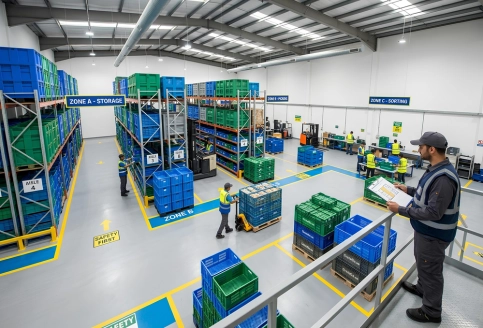
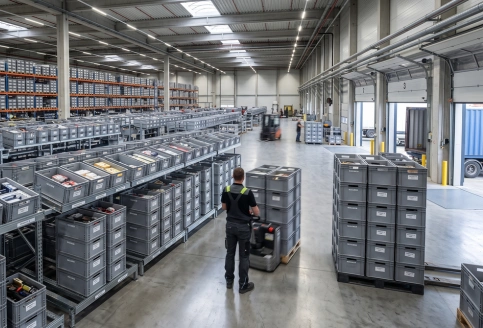
| Logistics and Warehousing | Closed crates in standard footprint sizes move through automated warehouse systems smoothly. They stack uniformly, reducing the risk of collapse and making it easier to calculate pallet loads. |
Picking the right plastic crate is not complicated once you understand what each type does. Ventilated crates protect fresh produce by allowing air to flow. Closed crates keep dust and moisture away from sensitive goods. Nestable crates save space on the return trip. Jumbo crates handle large volumes with fewer containers.
Crates with lids seal your products during stacking and transit. Bottle crates keep glass or plastic containers safe in individual pockets. Application-specific options like bakery crates, fish crates, milk crates, and date crates are built for the exact products they carry.
The material matters too. HDPE and PP both offer durability, hygiene, and resistance to the harsh conditions common in UAE logistics and storage environments. Over time, investing in quality reusable crates reduces costs, minimizes waste, and makes your operation more efficient.
If you are looking for the right crate for your business, Crateco is the leading plastic crate manufacturer and supplier in the UAE. With over 100 sizes, multiple crate types, food-safe materials, and ISO-certified quality, Crateco has a crate for every industry and application. Their products are trusted by businesses across the Middle East, Africa, and Europe.
A ventilated crate has open or perforated walls that allow air to pass through, making it suitable for fresh produce, fruits, vegetables, and baked goods that need airflow to stay fresh.
A closed crate has solid walls on all sides, which keeps dust, moisture, and external contact away from the contents.
Closed crates are better for manufactured parts, packed food items, or anything that needs to stay clean and protected during storage or transport.
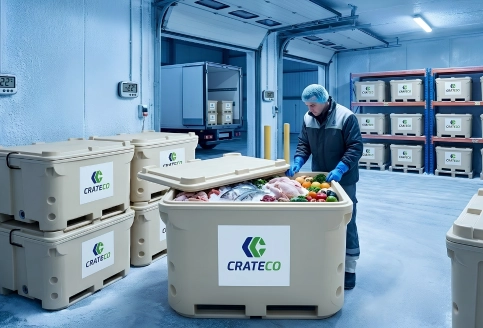
Yes. Most plastic crates made from HDPE are well-suited for cold chain and freezer use.
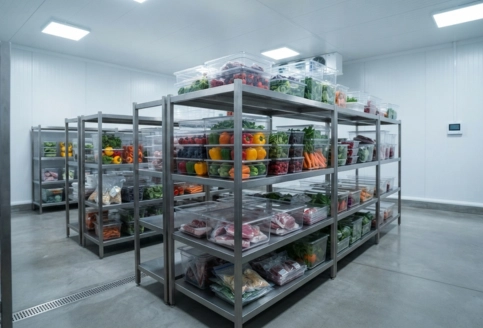
HDPE maintains its strength and does not become brittle at low temperatures, which makes it a reliable choice for dairy, seafood, meat, and other perishable goods that require refrigerated or frozen storage conditions.
Plastic crates come in a very wide range of sizes. Common footprint sizes include 300x200mm, 400x300mm, 500x325mm, and 600x400mm, with heights ranging from as shallow as 80mm to as deep as 485mm.
For large-volume needs, jumbo crates go up to 805x570x425mm or even 1200x400x340mm. The right size depends on your product dimensions, weight, and how you plan to stack or store the crates.
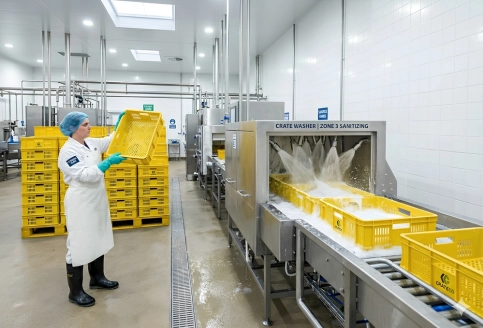
Yes. Food-grade plastic crates are made from HDPE or PP materials that are safe for direct or indirect contact with food products. These materials do not absorb odors, are resistant to bacteria, and can be washed and sanitized repeatedly without breaking down.
Always confirm with your supplier that the crates you choose are specifically rated for food-grade use.
A nestable crate is designed with a slightly tapered body so that empty crates can slide inside one another, reducing the stack height significantly.
For example, ten empty nestable crates may take up the same space as two or three standard stacked crates.
This is very useful for businesses that send out full crates to customers and need to bring the empties back without wasting vehicle or warehouse space.
Yes. Crateco offer printing, embossing, or labelling options so you can add your company name, logo, or product information directly onto the crate.
This is useful for brand visibility during delivery and helps with easy identification in busy warehouse or retail environments.
With proper use and regular cleaning, a good-quality HDPE or PP plastic crate can last anywhere from 5 to 10 years or more. The exact lifespan depends on how frequently the crate is used, the weight it carries, and the environment it is exposed to.
UV stabilizers added during manufacturing help extend the life of crates used outdoors or in direct sunlight.
Stackable crates are designed to sit firmly on top of each other when full, forming a stable tower. Nestable crates are designed to fit inside each other when empty, saving storage space.
Some crates are both stackable and nestable, meaning they stack safely when loaded and nest compactly when returned empty. This dual function makes them a popular choice for distribution and retail operations.