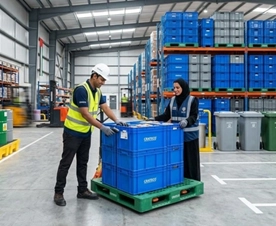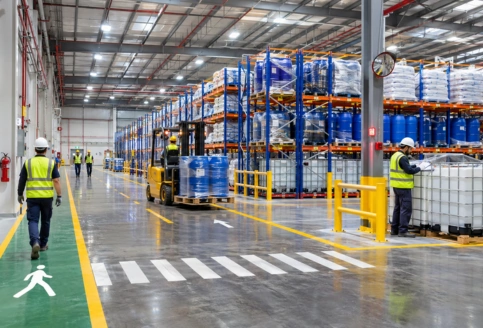
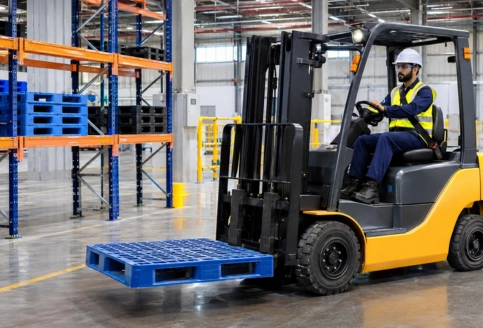
A forklift tipping over rarely starts with the driver. It usually starts with a cracked pallet, a load wider than the forks, or an operator who was never properly licensed. In a busy UAE warehouse, any of these can turn a routine lift into a serious injury.
In the UAE, forklift safety rests on two sets of rules. The licensing side requires every operator to hold a valid forklift licence, issued in Dubai through the Roads and Transport Authority (RTA) after approved training and tests.
The occupational safety and health (OSH) side, set by Federal Decree-Law No. 33 of 2021, makes the employer responsible for a safe workplace, trained staff, and sound equipment. Load compatibility links the two: the forklift, the pallet and the load must all be rated for the job.
Why Forklift Safety Gets So Much Attention
Forklifts remain one of the deadliest machines in any warehouse. US figures compiled by the National Safety Council show 84 workers died in forklift incidents in 2024. The same data counts 25,110 cases across 2023 and 2024 where a forklift injury led to days off work, a job transfer, or restricted duties.
The UAE does not publish an equivalent national forklift injury series, but the risk profile is similar. Pedestrians struck by forklifts are a leading cause of deaths worldwide. Tip-overs, falling loads, and crushed feet make up much of the rest.
Most of these incidents trace back to three gaps: untrained operators, overloaded or unstable loads, and poor traffic separation between people and machines.
RTA Forklift Licensing Rules
In Dubai, forklift operators need an RTA licence. The RTA Forklift Operator's Handbook sets out the basics:
Training runs through RTA-approved driving institutes and ends with a knowledge test, an assessment and a practical test. In other emirates, such as Ajman, Sharjah and Abu Dhabi, the local traffic and licensing authority handles the process. A licence proves basic competence. It does not replace site-specific training on your own trucks, racking and layout.
Employer Duties Under UAE OSH Law
The RTA licence covers the operator. The OSH framework covers the employer. Article 13 of Federal Decree-Law No. 33 of 2021 requires employers to protect workers from injury and occupational disease. Cabinet Resolution No. 1 of 2022, Ministerial Resolution No. 44 of 2022 and Administrative Decision No. 19 of 2023 add detail on safety measures and inspections.
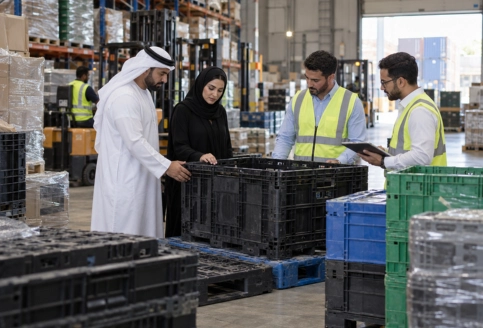
For forklift operations, that translates into practical duties:
Workers carry duties too. They must follow safety rules and use the protective equipment provided. Free zones and some emirates add their own rules on top, such as Abu Dhabi's OSHAD framework and Dubai Municipality's health and safety requirements.
Our guide to employer obligations for material handling equipment covers the wider legal picture beyond forklifts.
What Load Compatibility Really Means
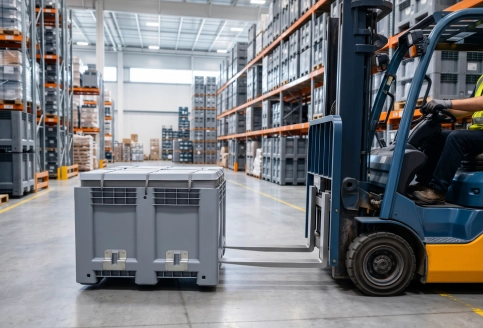
Every forklift has a data plate showing its rated capacity at a set load centre, often 500 mm or 600 mm from the fork face. That rating only holds when the load sits within that centre, at the stated lift height, with standard forks.
Capacity drops when any of these change:
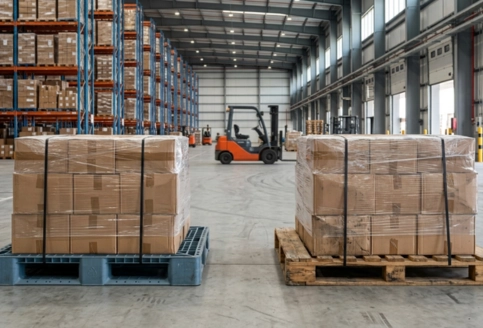
The pallet matters just as much as the forklift. A pallet rated for floor storage may fail in a rack or under a moving forklift. Each pallet carries three separate ratings, and operators should know all three.
| Pallet rating | What it means | Where it applies |
|---|---|---|
| Static load | Weight the pallet holds sitting on a flat floor | Floor storage and block stacking |
| Dynamic load | Weight it holds while being lifted and moved | Forklift and pallet truck handling |
| Racking load | Weight it holds supported only at its edges in a rack | Beam and drive-in racking |
The racking rating is usually the lowest of the three. Choosing rackable pallets with a stated racking rating removes guesswork for high-bay storage.
A Load Compatibility Checklist for Operators
| Check | What to confirm | Common failure |
|---|---|---|
| Forklift capacity | Load weight is under the data plate rating at the actual lift height | Ignoring derating at height or with attachments |
| Load centre | Load sits back against the fork carriage | Long loads pushing the centre forward |
| Fork length | Forks support most of the pallet depth | Short forks tipping pallets on lift |
| Pallet condition | No cracked deck boards, broken blocks or missing runners | Reusing damaged pallets |
| Pallet entry | Fork entry matches pallet design, 2-way or 4-way | Forcing forks into the wrong side |
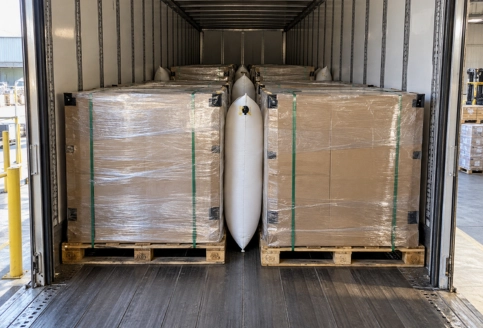
| Load stability | Goods wrapped, strapped or boxed with no overhang | Loose cartons shifting on turns |
| Racking match | Pallet racking rating covers the load | Using floor-only pallets in racks |
The GCC commonly uses the 1200 x 1000 mm pallet. Matching racking beam spacing, fork length, and pallet size to that footprint keeps loads square and stable.
Pallets and Containers That Make Lifting Safer
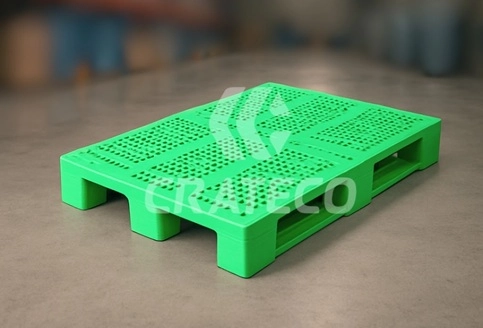
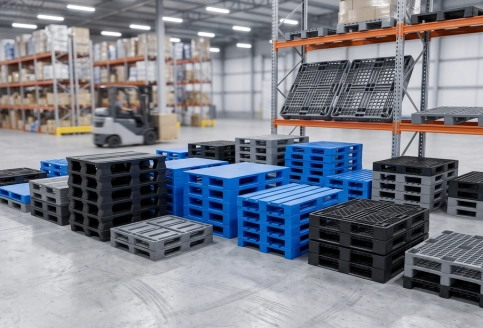
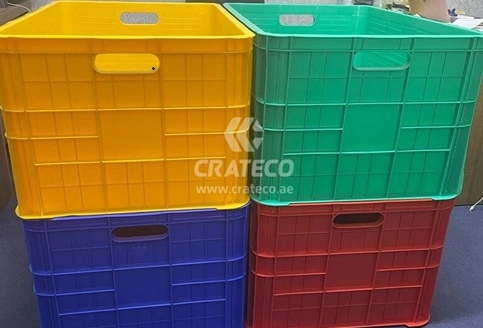
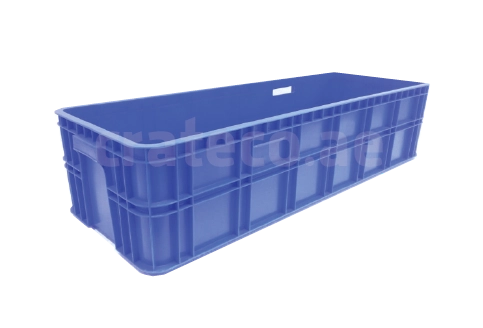
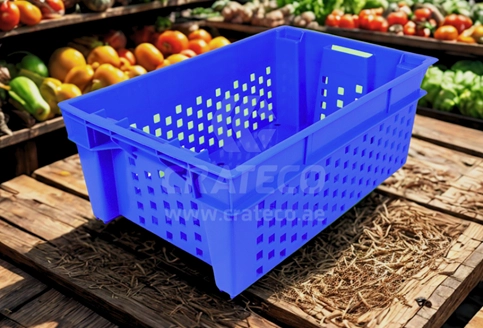
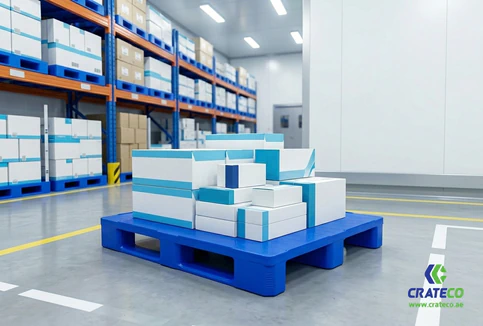
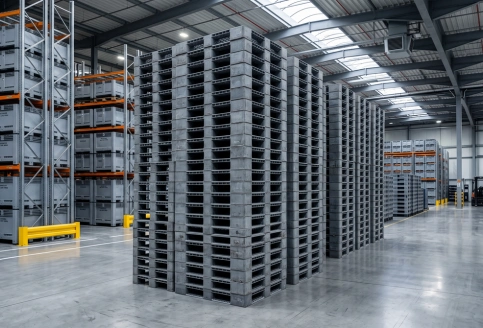
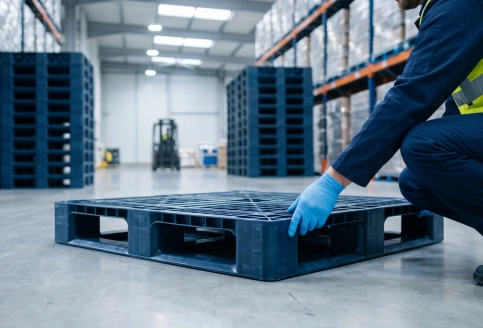
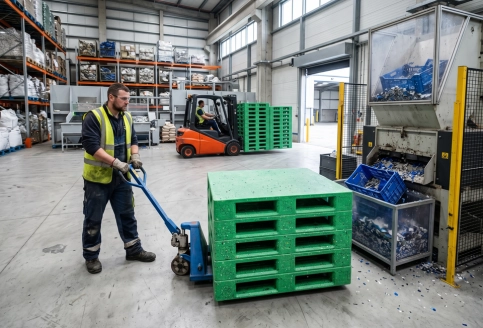
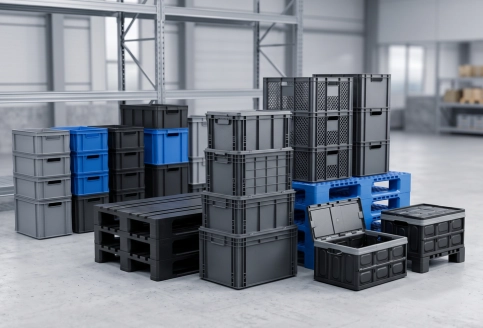
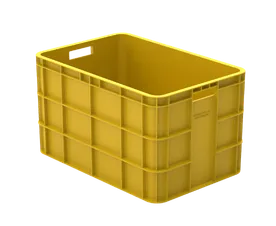
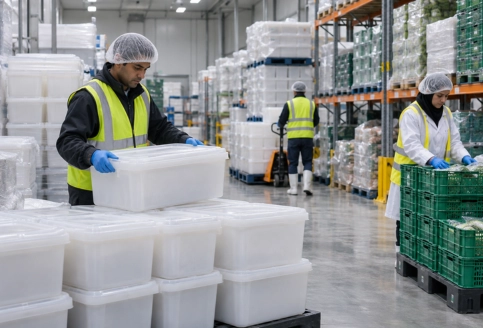
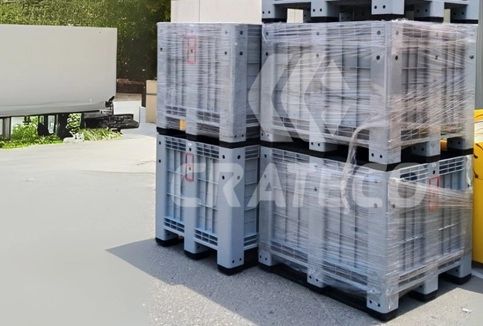
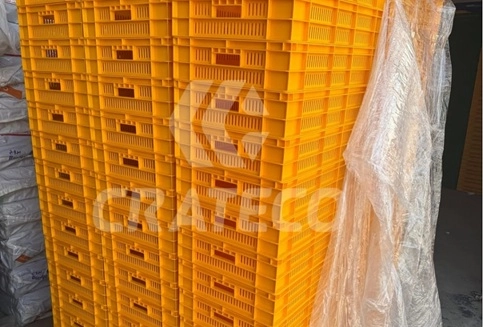
Equipment choice reduces many risks before the operator starts. Plastic pallets have no nails, splinters or loose boards to catch forks. Their dimensions stay consistent, which helps automated racking and repeat lifts.
Crateco supplies plastic pallets in light-duty, medium-duty, heavy-duty, and hygienic designs, plus steel-reinforced options for heavier racking loads. Check each product's rated loads against your heaviest pallet before buying.
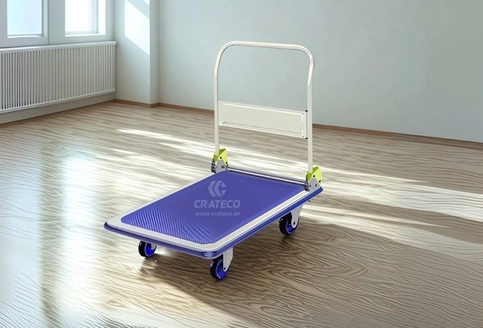
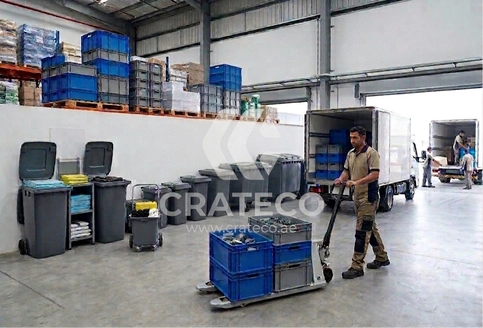
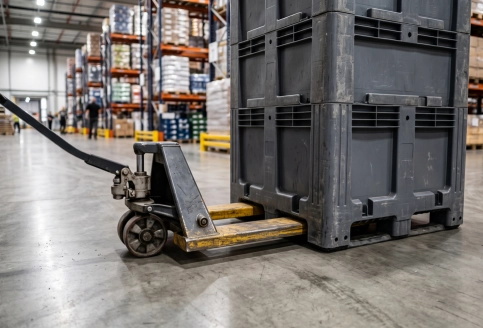
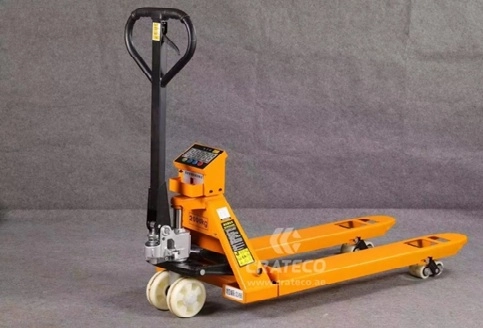
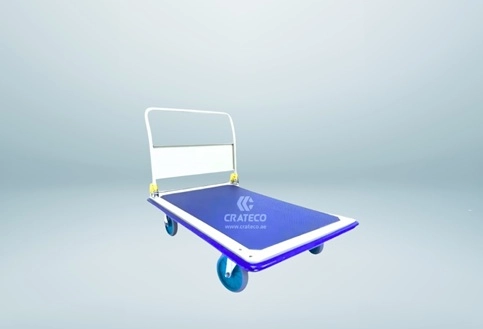
For smaller loads moved by hand, hand pallet trucks and trolleys take forklifts out of tight areas altogether. Our post on stacking height explains how to store safely once goods reach the rack.
Frequently Asked Questions
Do forklift operators need a licence in the UAE?
Yes. In Dubai, operators need an RTA forklift licence after approved training and tests. Other emirates issue licences through their own traffic authorities. Until licensed, a trainee may only drive under a licensed instructor's supervision.
What is the difference between a light and heavy forklift licence?
The RTA classifies a light forklift as one weighing up to 7.5 tonnes empty, and a heavy forklift as one above that. Both share the same course, and the licence type depends on the forklift used during the final tests.
Who is responsible for forklift safety at work?
The employer holds the main duty under Federal Decree-Law No. 33 of 2021 to provide a safe workplace, trained operators, and maintained equipment. Workers must follow safety rules and use the PPE provided, so the duty is shared.
How do I know if a pallet can go in racking?
Check the pallet's racking load rating, not just its static or dynamic rating. Racking rating is usually the lowest because the pallet is supported only at its edges. If no racking rating is stated, treat it as floor use only.
Why does forklift capacity drop at height?
As the mast extends, the combined centre of gravity rises, and the truck becomes less stable. The data plate shows capacity at specific heights, and attachments reduce it further, so heavy loads need lower lift heights or a larger truck.
Conclusion
Safe forklift work in the UAE depends on three things lining up. Operators need a valid licence and site training. Employers need to meet their OSH duties on equipment, layout and supervision.
Loads, pallets, and racking need ratings that match the forklift and the job. Get those right and most common incidents disappear. For pallets with clear load ratings built for UAE warehouses, explore the plastic pallets range from Crateco Pack LLC.