
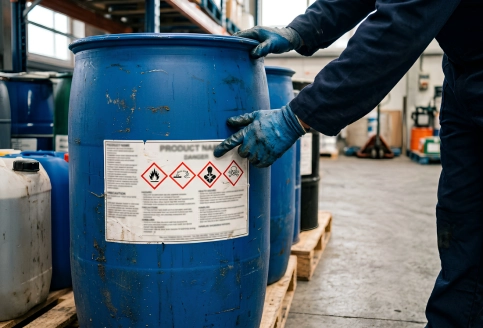
Chemical containers need more than a product name. A proper label helps workers identify hazards, understand safe handling requirements, and respond correctly during an emergency.
For UAE businesses that manufacture, import, store, or use hazardous chemicals, correct labeling should be part of a wider chemical safety system.
The Globally Harmonized System of Classification and Labelling of Chemicals, commonly known as GHS, provides a standardized approach to communicating chemical hazards.
UAE businesses should also consider applicable federal and local requirements covering chemical storage, workplace safety, transportation, and environmental protection. The exact requirements can vary depending on the type of chemical and the business activity.
GHS is an internationally developed system for classifying chemical hazards and communicating those hazards through standardized labels and Safety Data Sheets (SDS).
It uses common symbols, signal words, hazard statements, and precautionary statements so that workers can recognize risks more easily.
For UAE businesses, GHS labeling should not be treated as a simple sticker placed on a container. The information on the label needs to correspond with the chemical's classification and supporting safety documentation.
UAE workplace rules also require employers to take measures to protect workers from risks associated with hazardous substances and provide appropriate safety information and protection.
A compliant chemical label normally communicates several core pieces of information. These elements work together to identify the product and explain the hazards associated with it.
The product identifier tells users exactly what chemical is inside the container. It may include the chemical name, product name, or another accepted identifier.
The identifier should be consistent with the information provided in the relevant SDS. If a warehouse has several similar-looking drums or containers, clear identification becomes especially important. Workers should not have to guess what a container holds based on its color, shape, or location.
GHS pictograms use standardized symbols inside red-bordered diamonds to communicate specific hazards. Depending on the chemical classification, a label may show symbols representing hazards such as flammability, acute toxicity, corrosion, oxidizing properties, or serious health effects.
Pictograms provide a quick visual warning, which is particularly useful in busy warehouses and industrial facilities where workers may need to identify a hazard before reading the complete label.
A signal word indicates the relative severity of the hazard. GHS uses "Danger" for more severe hazard categories and "Warning" for less severe categories when applicable.
The correct signal word depends on the chemical's classification. Businesses should not select one simply because it appears stronger or more appropriate. It should be based on the applicable GHS classification.
Hazard statements describe the nature of the chemical hazard in standardized wording. They may communicate risks such as flammability, skin corrosion, serious eye damage, acute toxicity, or other health and physical hazards.
Using the correct statement matters because it gives workers specific information about what can happen if the chemical is misused, spilled, inhaled, or otherwise mishandled.
Precautionary statements explain steps that can reduce the risk of exposure or help users respond to an emergency. Depending on the chemical, these may cover storage, handling, personal protection, spill response, first aid, or disposal.
These instructions should be easy to read and consistent with the information provided in the SDS. Clear precautionary information can help workers make safer decisions during routine operations and emergencies.
The label should identify the responsible supplier using the information required under the applicable standard or regulation. This can help users identify who supplied the chemical and where to obtain additional safety information.
Supplier details become particularly useful when a warehouse stores chemicals from several manufacturers. They can also support traceability when a business needs to investigate a spill, damaged container, or product-related safety issue.
A chemical label should not be prepared separately from the SDS. The two documents should provide consistent information about the same product and its hazards.
An SDS contains detailed information covering areas such as chemical identification, hazards, composition, first-aid measures, firefighting measures, accidental release procedures, handling and storage, exposure controls, physical properties, stability, toxicological information, and disposal considerations.
UAE authorities and local requirements may also require chemical safety documentation to be maintained or submitted for particular activities. For example, UAE legislation includes requirements in some regulatory contexts for safety information concerning chemicals used by a facility.
Businesses should therefore establish a process for checking labels and SDS documents whenever a chemical is introduced, reformulated, reclassified, or supplied under a new product name.
Language requirements should be checked according to the applicable UAE regulation, product category, authority, and intended use. Businesses should not assume that an English-only label is sufficient simply because the product was manufactured outside the UAE.
Where Arabic and English information is required, translations should accurately communicate the same product and hazard information. Poor translations can create safety problems if a warning changes meaning or important handling instructions are omitted.
The safest approach is to confirm the applicable requirements before importing or placing a chemical product on the UAE market, particularly for regulated chemical categories.
Chemical labeling requirements can also depend on how a container is used.
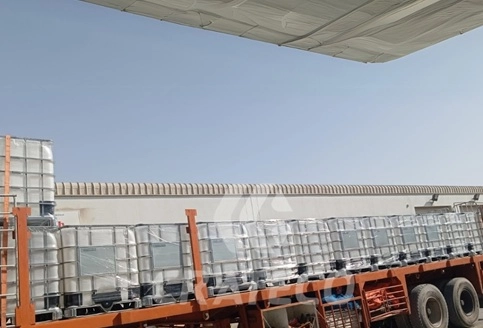
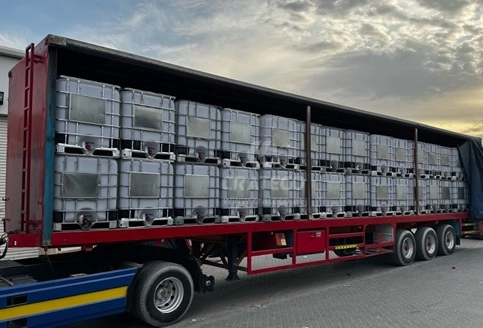
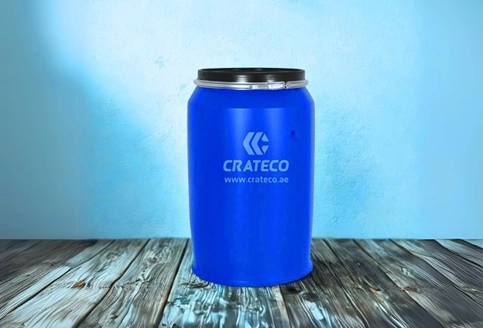
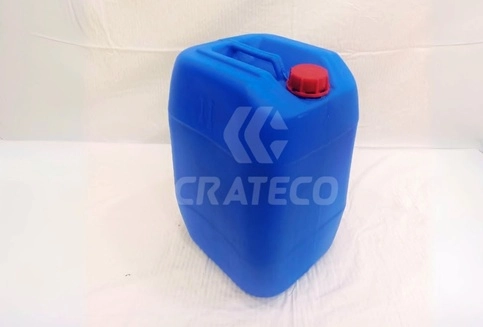
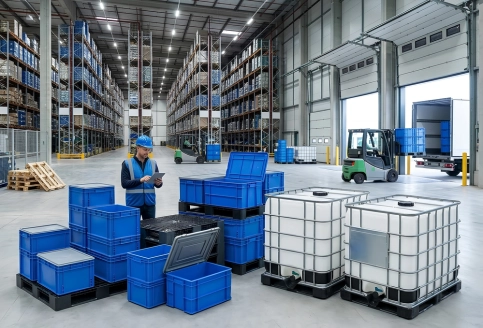
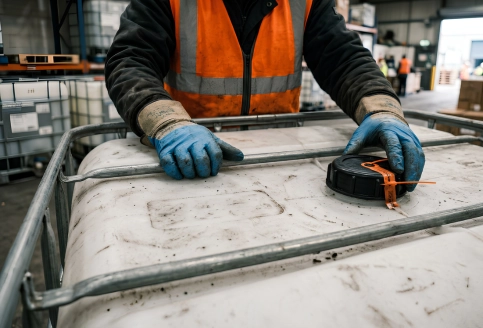
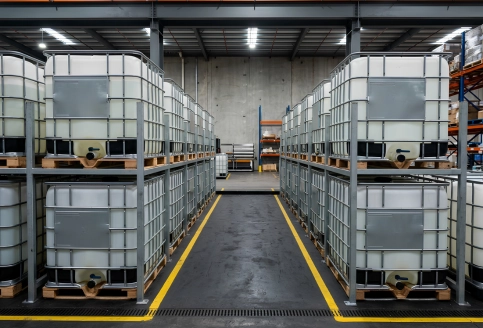
Primary containers are the original packages supplied by the manufacturer or distributor. Examples can include drums, bottles, jerry cans, and IBC containers.
The label should remain attached, readable, and consistent with the product documentation throughout storage and normal handling. Damaged containers should be assessed promptly because a missing or unreadable label can make safe identification difficult.
Chemicals are sometimes transferred from a large container into smaller bottles, spray containers, or other workplace containers. These secondary containers should not be left unidentified.
The appropriate labeling requirements depend on the chemical, container, use, and applicable workplace rules. As a general safety practice, workers should always be able to identify the chemical and understand its main hazards before using it.
A label is only useful if workers can read it. Chemical containers may be exposed to heat, humidity, dust, chemical vapors, outdoor conditions, or repeated handling.
Low-quality labels can fade, peel, tear, or become difficult to read. Businesses should select label materials and adhesives suitable for the storage environment and chemical exposure involved.
This is especially important for drums and IBC containers that may remain in warehouses for extended periods. Regular inspections should check whether labels are still firmly attached and legible.
GHS labeling is one part of chemical safety. A correctly labeled container can still create a serious workplace risk if it is stored incorrectly.
Businesses should consider the chemical's properties when planning storage. Incompatible substances may need to be separated, flammable chemicals may require specific controls, and spill risks should be considered when deciding where containers are placed.
UAE regulatory guidance also shows that chemical-related activities can involve requirements for safe storage, transportation, disposal, licensing, and inspection depending on the activity and material involved. For example, UAE guidance for certain pesticide-related activities addresses registration, storage, transportation, and waste management.
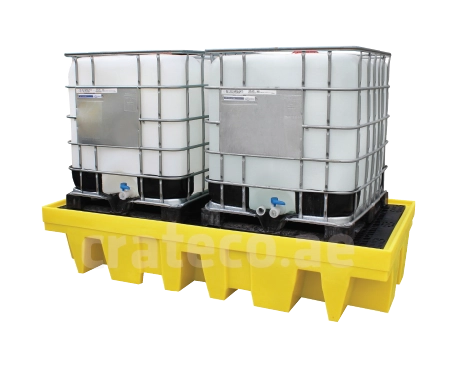
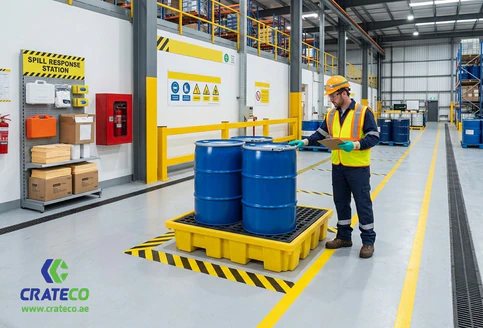
Chemical storage areas should be designed to limit the consequences of leaks and spills. Secondary containment can help prevent liquids from spreading across warehouse floors and reaching drains or other sensitive areas.
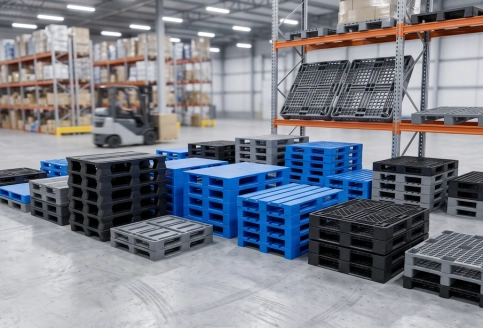
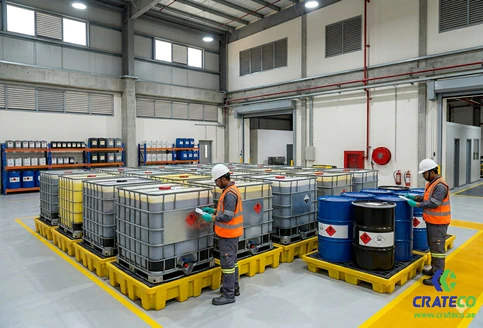
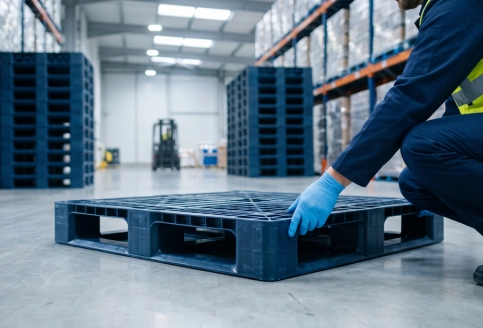
For drums and IBC containers, businesses can use suitable spill pallets, bunded areas, containment platforms, or other compatible containment solutions based on the chemical and storage arrangement.
The containment solution should be selected according to the container size, chemical compatibility, loading requirements, and workplace layout. A label identifies the hazard, while proper containment helps control the consequences of an accidental release.
Even when businesses understand the basic GHS system, small labeling problems can create safety issues.
| Compliance Area | What Businesses Should Check |
|---|---|
| Product identification | Product name and identifier are clear and consistent with the SDS |
| Hazard pictograms | Correct pictograms are displayed where required |
| Signal word | "Danger" or "Warning" is used according to the applicable classification |
| Hazard statements | Relevant standardized hazard information is included |
| Precautionary statements | Safe handling, storage, response, and prevention information is provided |
| Supplier information | Required supplier details are available |
| SDS | Current safety documentation is available to relevant workers |
| Language | Applicable Arabic and English requirements have been checked |
| Label condition | Labels remain readable, attached, and visible |
| Secondary containers | Workplace containers are identified and managed correctly |
| Storage | Chemicals are segregated and stored according to their hazards |
| Spill control | Suitable secondary containment is available where required |
A strong labeling process starts before a chemical reaches the warehouse. Procurement teams should obtain the relevant SDS and product information before accepting new chemical products. Warehouse teams should then verify the containers and documentation before placing them into storage.
Regular inspections should also be part of the process. Workers can check for damaged labels, leaking containers, missing identification, and incorrect storage locations. If a chemical container cannot be identified safely, it should be isolated until the contents are confirmed.
Training is equally important. Workers should understand GHS pictograms, signal words, basic hazard statements, SDS use, spill procedures, and the company's chemical storage rules.
GHS labeling gives workers a clear way to identify chemical hazards and understand basic precautions before handling a product. However, effective chemical compliance involves more than placing pictograms on a drum.
Businesses should keep labels and SDS information consistent, maintain readable labels, follow applicable language requirements, train workers, and provide suitable storage and spill containment.
Chemical storage products should also be selected according to the container type, chemical properties, load requirements, and workplace conditions.
Crateco Pack LLC can help UAE businesses choose suitable plastic pallets, spill containment solutions, crates, and industrial packaging products for organized and safer chemical handling operations.