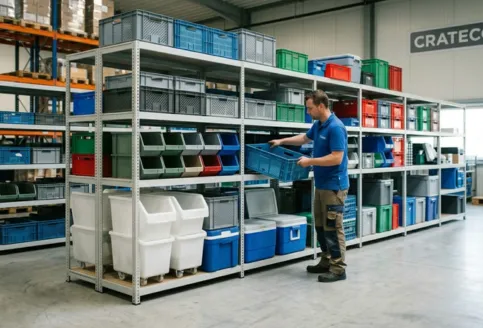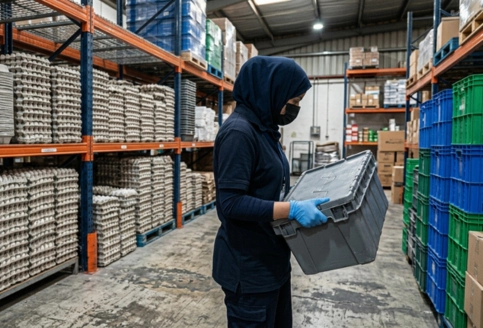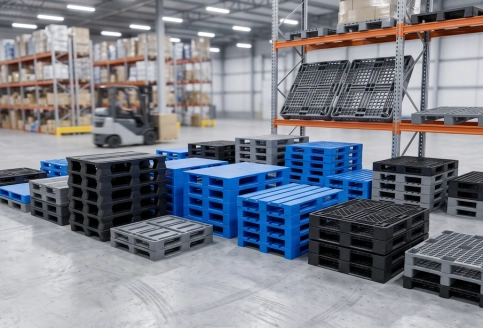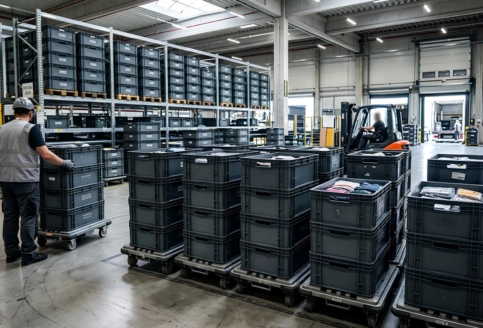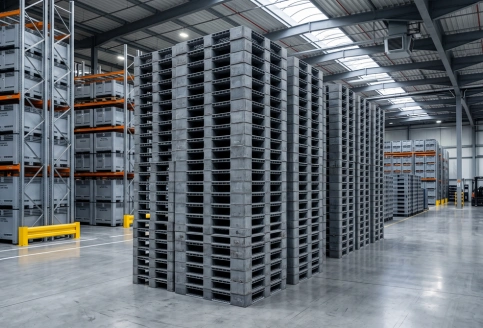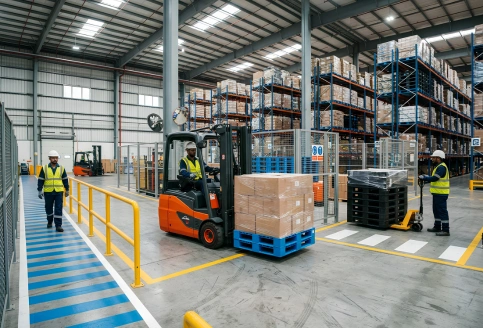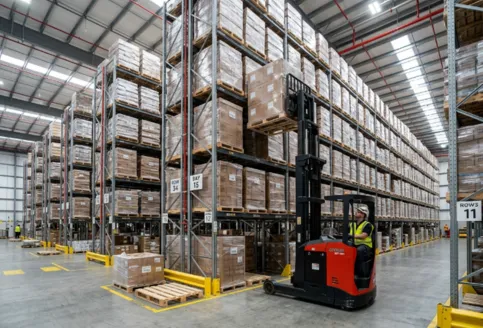
Warehouse layout design shapes three things. It decides how fast workers move. It controls how safely goods are stored. And it determines how much money a business saves each month. In the UAE, logistics volumes are growing fast, and industrial land is expensive. Getting the layout right is a serious priority.
Most warehouse managers miss one key factor: crate type. The right plastic crate in the right zone cuts picking time, reduces product damage, and makes a layout work at full capacity. The wrong crate wastes space and creates bottlenecks. At Crateco, we supply over 60 crate types to warehouses across the Gulf. This guide explains exactly how to match each crate to the right zone.
Research in the European Journal of Operational Research confirms that order picking is the most labor-intensive activity in any warehouse. It accounts for up to 55% of total warehouse operating costs. Workers in a standard warehouse spend between 30% and 50% of their shift just walking between pick locations. That walking time produces zero output.
A smart layout cuts that walking. The right crate type makes each pick faster, safer, and more accurate. These two decisions must be made together, not separately. This is especially true in UAE warehouses, where high throughput volumes and strict food safety rules leave little room for error.
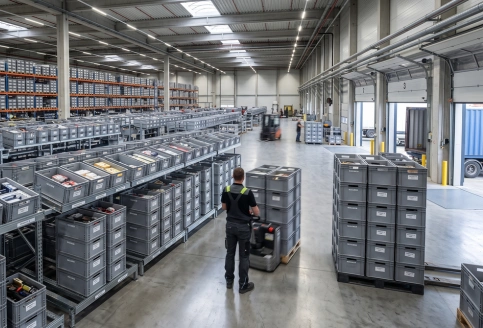
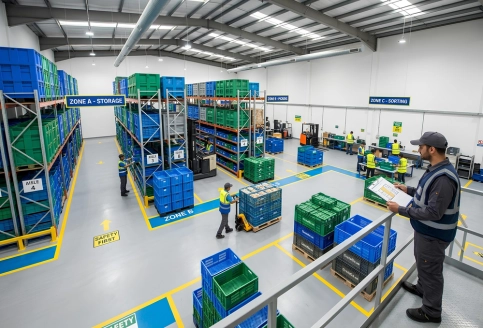
Divide the warehouse floor into these 7 zones. Then you will know which crate belongs where.
Receiving zone: Inbound goods arrive, get checked, and get sorted here.
Bulk storage zone: High-density, long-term inventory holding
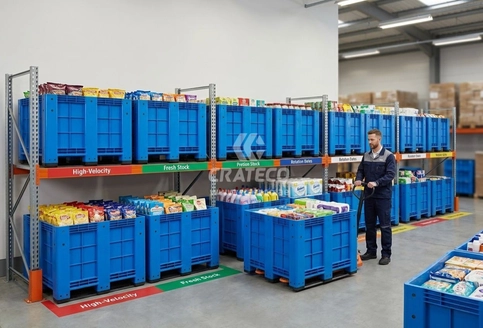
Active picking zone: Fast-moving SKUs that workers access many times per day
Staging and packing zone: Orders get assembled and prepared for dispatch
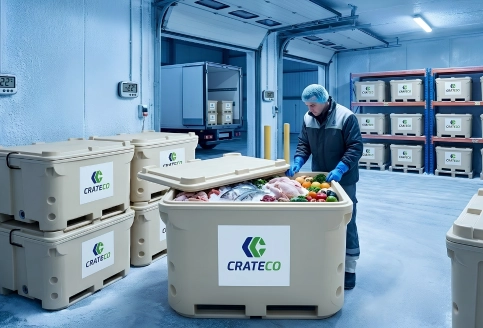
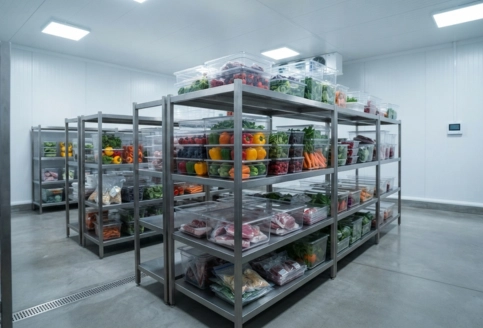
Cold chain zone: Temperature-sensitive goods, including food, dairy, and pharmaceuticals
Spare parts zone: Small, individually catalogued components
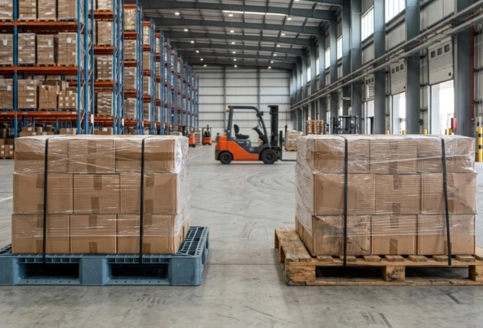
Dispatch zone: Final outbound loading area
Each zone has different movement patterns, hygiene requirements, and stacking demands. Each needs a specific crate type.
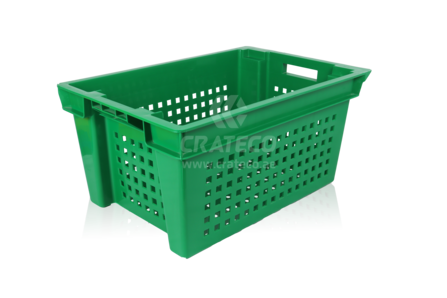
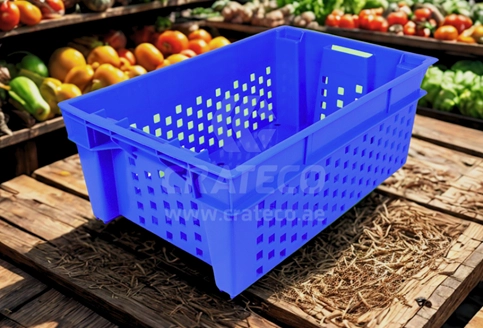
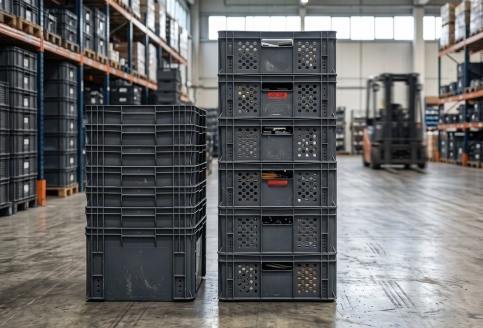
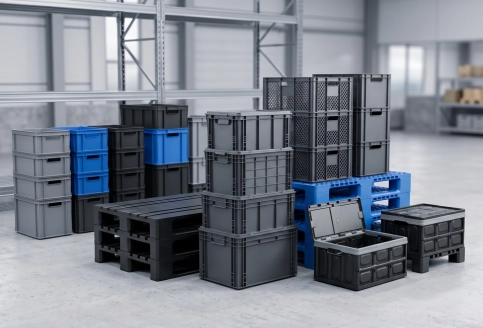
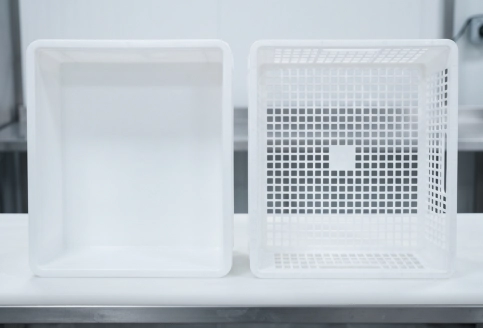
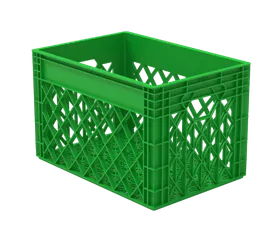
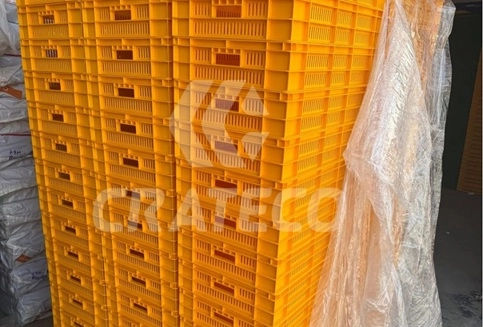
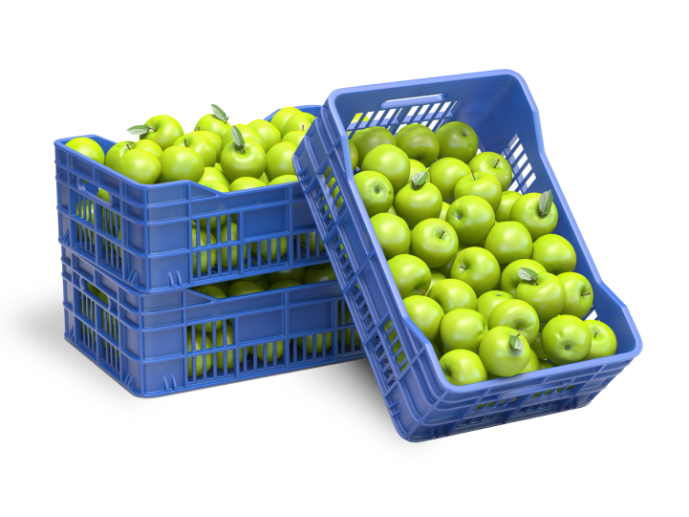
Ventilated crates let air flow around the goods inside. This is key for fresh fruit, dairy, and baked goods. It also helps with any item that gives off heat or moisture while stored.
Research in the Foods journal (MDPI) shows that gases like CO2 build up inside sealed boxes and damage fresh food. Crates with open walls let those gases out. This keeps food fresh longer and cuts waste.
Open-wall crates:
Stop moisture from building up in cold zones.
Let workers check stock without touching the crates.
Help goods reach the right temperature faster after loading.
Crateco's ventilated crates come in sizes from 400×300×175mm to 915×600×85mm.
Best zone: Cold storage, active picking, and receiving zones for dates, fish, vegetables, and baked goods. UAE food warehouses, supermarket supply centers, and farm cold stores all use ventilated crates as their main crate type.
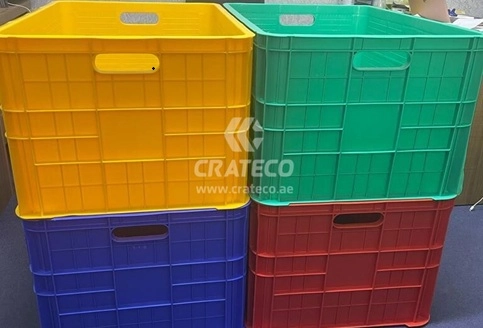
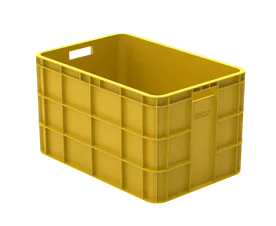
Closed crates keep dust, dirt, and moisture away from goods. This matters a lot in Gulf areas where desert dust gets into everything and ruins stock quality.
Crateco's closed crates come in sizes from 300×200×100mm to 650×450×315mm. Some have hand holes for easy lifting.
Closed crates:
Stop dust from getting into packed goods during long storage.
Stack neatly and evenly in tall storage racks.
Reduce the chance of workers or equipment getting caught on sharp edges.
Best zone: Bulk storage and dispatch zones for dry goods, packaged food, electronics, and factory parts. Closed crates are a common sight in UAE warehouses along the E311 and E611 roads between Dubai, Sharjah, and Ajman.
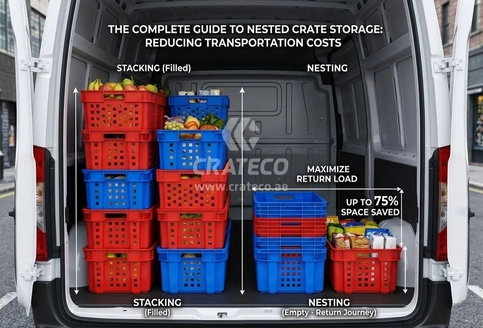
Nestable crates take up 60% less space when they are empty compared to normal crates. When full, they stack like any other crate. When empty, they slide into each other. This saves a lot of floor space when crates come back from deliveries.
A 2023 study on warehouse layout found that most warehouses do not plan well for empty crates coming back. This causes blocked aisles and wasted space.
Crateco's nestable crates come in sizes from 600×400×150mm to 600×400×325mm.
Best zone: Receiving zone for crates that just came back empty. Dispatch zone where empties pile up after deliveries. UAE supermarkets and distributors that deliver across multiple emirates use nestable crates to keep their return space under control.
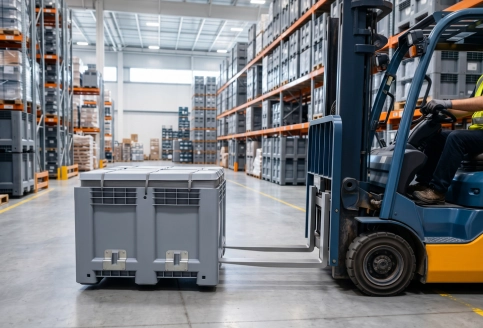
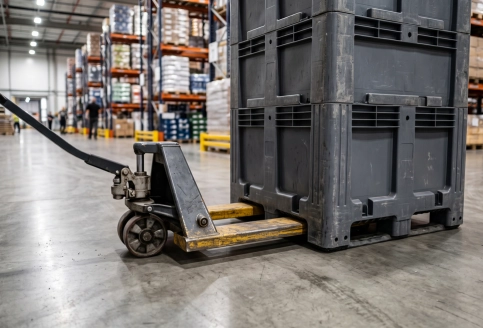
Jumbo crates carry more in one move. Instead of moving 6 small crates, one jumbo crate does the same job in one forklift trip. This means fewer trips and less handling time.
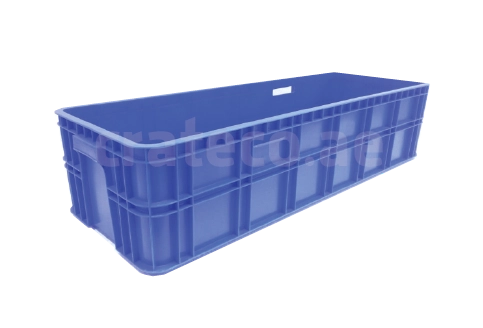
Crateco's jumbo crates include the 805×570×425mm ventilated and closed types, plus the 1200×400×340mm long jumbo crate.
Jumbo crates:
Cut the number of crate moves per load by up to 35%
Carry heavy farm loads like dates, oranges, and root vegetables.
Fit standard forklift forks used in Gulf warehouses.
Best zone: Bulk storage and receiving zones for large loads with few product types. Jumbo crates are often used in UAE farm packhouses, Jebel Ali distribution centers, and tall warehouses in Dubai South and KIZAD.
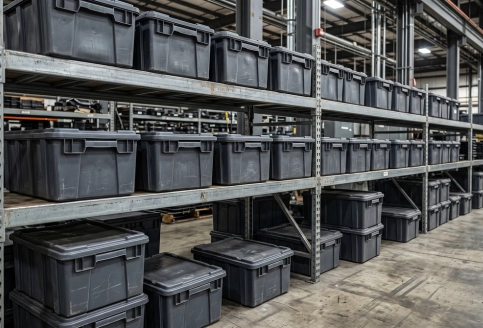
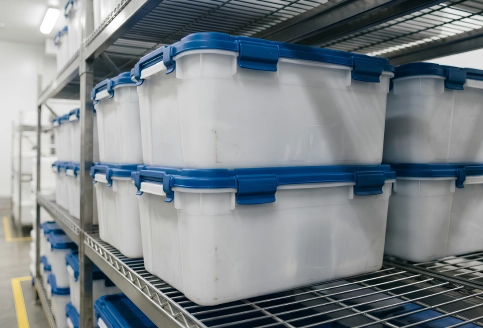
Lidded crates seal goods completely and block out any outside matter. Medicine stores, HACCP food sites, and areas next to clean rooms need this as a basic requirement.
Crateco makes 6 types of lidded crates, from 400×300×300mm to 600×400×450mm. The lid means you do not need extra plastic wrap around each crate. That cuts packing costs.
In UAE medicine warehouses that follow MOHAP and DHA rules, lidded crates help with:
Keeping goods clean near production or clean room areas
Stopping stacks from shifting during transport
Using color codes to track batches and product groups
Best zone: Medicine prep areas, food packing zones, and any dispatch area that needs sealed and secure storage.
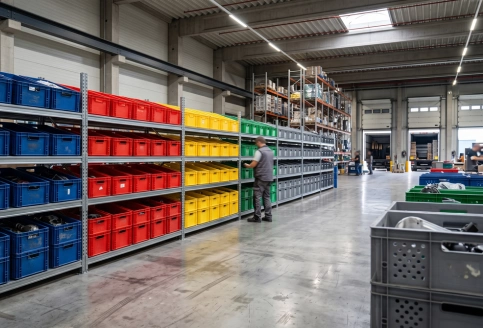
Spare parts bins give every small item its own fixed spot. This removes search time. In messy parts stores, workers waste an average of 15 minutes per shift just looking for items. Multiply that across a big team, and the loss is huge.
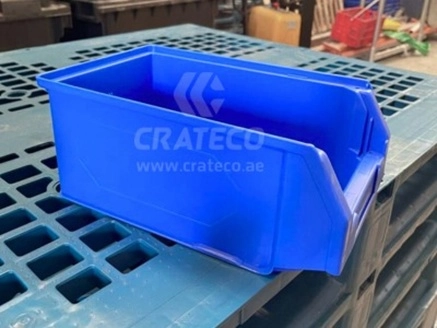
Crateco's parts bins come in 7 sizes, from the 95×102×51mm small bin to the 515×310×200mm large bin. Some have stacking pins for use on multi-level shelves.
These bins:
Clip onto shelf rails for compact, wall-style storage.
Take label holders so workers can scan barcodes easily.
Nest when empty to save space during stock resets
Best zone: Parts storage, maintenance areas, and workshop stores in the UAE car repair, factory, and manufacturing sites.
The U-flow layout places both the receiving dock and dispatch dock on the same side of the warehouse. Storage fills the center arc. Studies on U-shaped warehouse configurations show this design reduces cross-dock travel time because inbound and outbound areas stay close together.
In a U-flow warehouse, ventilated crates go in the cold zone on one arm, closed crates fill the center bulk storage zone, and jumbo crates stage near the receiving dock.
Optimal for: FMCG distributors, food and beverage warehouses, and retail distribution centers managing multiple crate types at the same time.
The I-flow layout moves goods in one end and out the other via a central aisle. Research comparing warehouse layout types confirms this design works best for operations with fewer SKUs but high order volume per SKU. This is exactly the situation where one dominant crate type handles 80% or more of the inventory.
A dates export packhouse using ventilated jumbo crates on a conveyor line runs best with an I-flow layout. Goods enter at harvest intake, flow through grading and packing, and exit at the dispatch end with no backtracking.
Optimal for: Agricultural packhouses, poultry processing facilities, and single-product cold chain operations.
The L-flow layout suits warehouses built on corner plots or constrained footprints. This is common in UAE free zone industrial units, including Ajman Free Zone, Ras Al Khaimah Economic Zone, and Sharjah Airport Free Zone, where floor area is limited. Spare parts bins and closed crates dominate L-flow warehouses because their small footprints and shelving compatibility make the most of tight spaces.
Optimal for: Automotive parts distributors, electronics component warehouses, and light manufacturing operations.
1. Using closed crates for fresh produce in cold chain zones
Solid walls trap ethylene and CO2 gases that speed up spoilage in fruits and vegetables. Produce storage research confirms that gas buildup in closed containers directly damages fresh goods. Ventilated crates are the correct choice for all produce cold stores.
2. Choosing non-nestable crates for high return-volume operations
Non-nestable crates consume 3 to 4 times more floor space when empty. Operations running daily delivery rounds need nestable crates. Without them, return fleet storage blocks to active zones.
3. Undersizing crate dimensions relative to racking beam spans
Industrial racking systems commonly use 2,700mm or 3,600mm beam spans. Crate footprints must match these dimensions. Mismatched crates overhang beams, create tipping risks, and fail load distribution checks.
4. Mixing incompatible crate series across picking zones
Combining 600×400mm and 400×300mm crates in the same aisle causes picking errors and slows order assembly. Standardize one crate family per zone.
5. Ignoring UV stability for outdoor staging areas
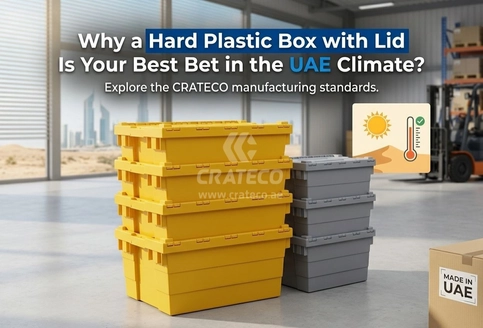
Black asphalt surfaces in outdoor yard areas reach 55°C or higher during the UAE summer months. Only UV-stabilized polypropylene crates hold structural integrity under these conditions, a standard specification across all Crateco product lines.
January to March: Post-Ramadan FMCG restocking peaks. Scale ventilated and closed crate volumes for hypermarket distribution runs across multiple cities.
April to June: Agricultural harvest season for dates and citrus starts in the UAE growing regions like Al Ain and Liwa. Jumbo crates and ventilated harvest crates handle peak inbound volumes from farms before export processing.
July to September: Outdoor operations slow down. Optimize spare parts bin layouts in air-conditioned automotive and industrial warehouses during this period.
October to December: E-commerce peak season begins. Closed crates with lids protect consumer goods during high-speed pick-pack cycles in fulfillment centers.
Crateco is a UAE-based manufacturer and supplier of plastic crates, pallets, bins, pallet boxes, and material handling equipment. Crateco serves warehouses, food distributors, manufacturers, and logistics operators across the GCC and MENA region, with delivery to all seven emirates.
With over 60 crate configurations in active supply, Crateco provides:
Custom color-coding for zone-specific crate identification in large warehouse operations
ISO-certified quality with consistent dimensional tolerances for rack-compatible stacking
Volume pricing for full-fleet procurement by distribution centers and manufacturing plants
Export supply to Oman, Saudi Arabia, Qatar, Kuwait, Bahrain, and African markets
Contact Crateco today to discuss your warehouse layout, get a custom crate recommendation, or request a volume quote.
Ventilated crates suit fresh produce, bakery goods, and chilled items. They maintain airflow and reduce gas buildup. Closed crates with lids work better for packaged dry goods that need dust and contamination protection.
Nestable crates occupy up to 60% less floor space when empty. This cuts the storage area needed for return fleets and lowers warehousing costs for distributors running daily delivery cycles.
The 600×400mm footprint is the most widely compatible with standard pallet racking beam spans. Crateco's full 6040 series, including closed, ventilated, nestable, and lidded variants, fits this standard.
UV-stabilized polypropylene crates hold structural integrity under sustained temperatures up to 60°C. This covers outdoor port yards and staging areas across the UAE and the wider Gulf region.