Insulated tubs for perishables in the UAE protect food from heat and spoilage. Summer temperatures in Dubai, Abu Dhabi, and Sharjah reach 45 to 50 degrees between June and September. At that heat level, unprotected food storage is a direct safety risk.
Seafood, meat, fresh produce, dairy, and medicines all need temperature control. This protection must run from the source to the customer without any gaps.
This guide covers what insulated tubs are, why they matter in this climate, which industries need them, and how to pick the right size.
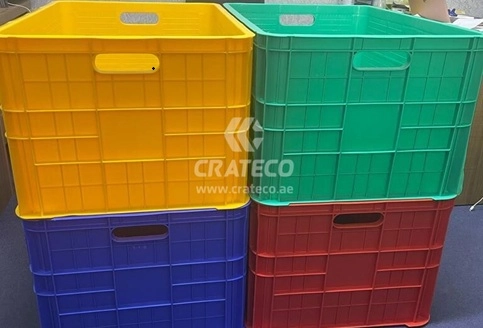
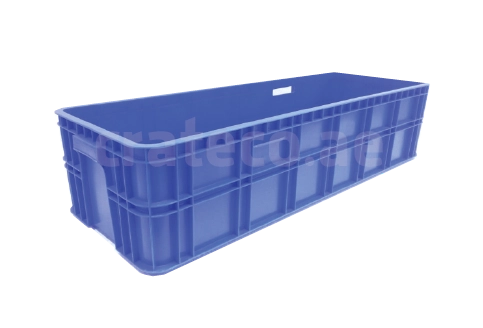
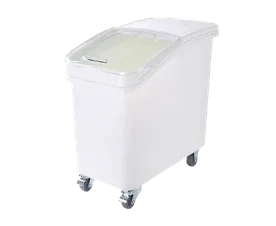
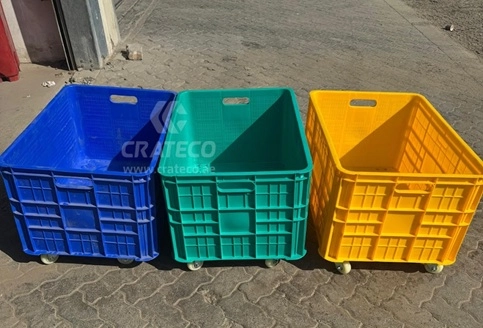
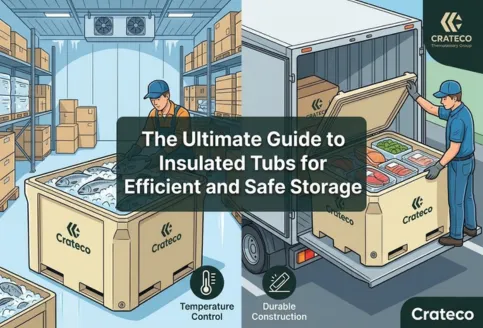
Insulated tubs are heavy-duty containers built to block outside heat and protect stored goods. Standard plastic crates give zero thermal protection. Insulated tubs work differently.
Each wall traps air between a dense inner and outer layer of polyethylene (PE). This slows heat movement in both directions. Cold goods stay cold. Warm goods stay warm. No electricity is needed.
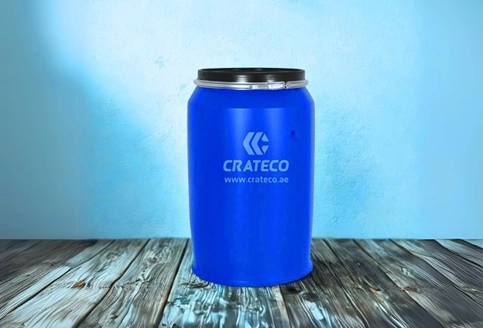
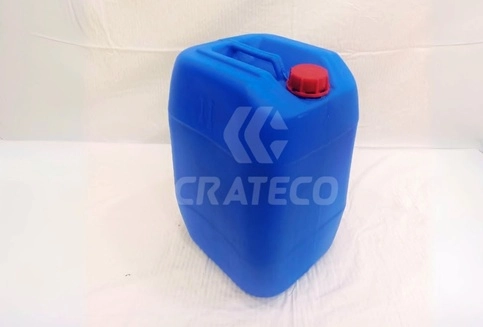
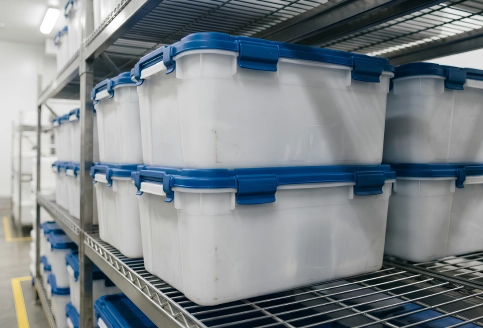
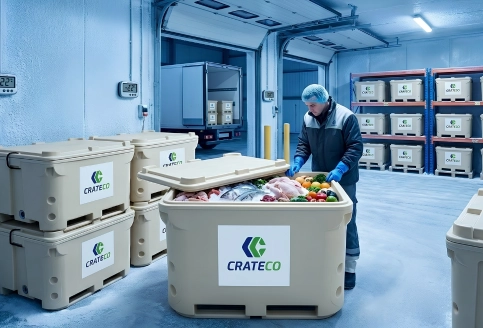
Crateco's insulated tubs use triple-layer polyethylene construction. It combines a dense outer shell, a foam-core insulation layer, and a smooth food-grade inner lining. They are portable, stackable, and need no power source.
The 5 structural features of a quality insulated tub are:
Triple-layer PE walls that block heat from entering and cold from escaping
UV-stabilised outer shell that handles direct sunlight on loading docks and outdoor yards
Smooth, non-porous inner surface that resists bacteria and is easy to clean
Reinforced base and side walls that hold up to stacking, forklift loading, and transport
Tight-fitting lid that seals the inside from outside air and heat
Gulf summers are harsh. Ambient temperatures across the UAE reach 45 to 50 degrees between June and September. Tarmac, truck beds, and loading bays often hit above 60 degrees.
For perishable goods, this creates an immediate risk.
According to the US Food Safety and Inspection Service (FSIS), bacteria grow fastest between 4 and 60 degrees. They can double in count in just 20 minutes. This range is called the temperature "Danger Zone." Any unprotected food left in the Gulf heat sits deep inside this zone.
The FSIS also states that food must not stay in the Danger Zone for more than 2 hours. When ambient temperatures go above 32 degrees, that safe window drops to just 1 hour.
Poor temperature control in storage leads to four direct problems:
Spoiled inventory and wasted product
Regulatory violations during ADAFSA or Dubai Municipality inspections
Loss of supply contracts with hotels, hypermarkets, and catering companies
Medicines, vaccines, and reagents are becoming unsafe to use
The UAE imports 85 percent of its food. Most perishables travel through Jebel Ali Port, then through distribution hubs, then through last-mile delivery routes. Each step is a health risk. Insulated tubs close these gaps.
Insulated tubs deliver 7 measurable advantages over standard containers:
Loading bays at JAFZA, Dubai Investment Park, and Khalifa Industrial Zone expose goods to open air and heat. Insulated tubs keep internal temperatures stable during these transfers. They stop heat spikes that damage freshness.
Operations that switch to insulated containers see lower spoilage rates. This applies to seafood, dairy, produce, and pharma goods. The triple-layer PE wall slows heat transfer and extends the cold-chain window. No extra refrigeration is needed.
Most deliveries in Dubai, Abu Dhabi, and Sharjah take 30 to 90 minutes. Insulated tubs hold temperature across these UAE routes without a reefer truck. This cuts fuel and vehicle costs for caterers, distributors, and medical supply teams.
Food-grade insulated tubs with smooth, non-porous inner surfaces meet food storage rules. They protect operations from inspection failures. They also meet hygiene standards required by supermarkets, airline caterers, and hotels.
Coastal Emirates like Abu Dhabi and Fujairah see humidity above 90 percent in July and August. High humidity causes condensation and microbial growth on food surfaces. Sealed insulated tubs block moisture from getting in. This gives operations full protection all year.
The food service sector peaks during Ramadan and the winter tourism season from October to March. Insulated tubs let businesses add chilled storage without building new cold rooms. This is useful for outdoor events in Al Barsha, Downtown Dubai, and Yas Island.
Industrial insulated tubs handle thousands of use cycles. UV-stabilised construction resists cracking under direct sunlight. Over a 3 to 5 year lifespan, the cost per use is far lower than that of disposable insulated packaging.
The fishing industry in Deira, Umm Al Quwain, and Ras Al Khaimah relies on insulated fish tubs. Fish, shellfish, and prawns must be stored between 0 and 4 degrees. Any temperature above this causes fast bacterial spoilage. Insulated fish tubs hold the cold chain from dock to market without constant ice replacement.
Halal meat plants in Dubai Industrial City and Musaffah use insulated tubs at every stage. This includes post-slaughter chilling, portioning, and dispatch. The smooth inner liner stops cross-contamination. It also makes cleaning easier, which is required by halal certification standards.
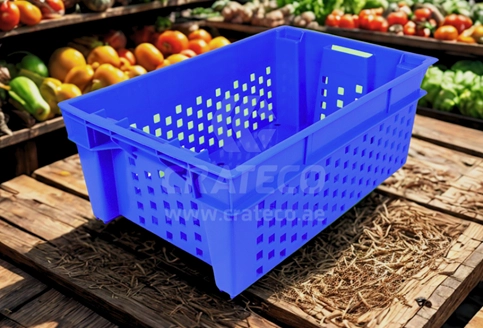
Fresh fruits and vegetables arrive daily through Dubai Wholesale City and Abu Dhabi's Central Market. Temperature control during last-mile delivery to supermarkets and hotels is critical. Insulated produce tubs stop wilting, browning, and texture loss. These problems happen fast when fresh stock sits on hot loading docks.
According to WHO guidance on vaccine cold chain management, nearly all vaccines require storage and transport within 2 to 8 degrees. In Gulf heat, this range breaks down within minutes without insulation.
Hospitals across Dubai Healthcare City, the Cleveland Clinic Abu Dhabi, and Mediclinic UAE use insulated containers daily. They transport insulin, biological samples, and diagnostic reagents between storage and point-of-care.
Hotels and caterers across Palm Jumeirah, Saadiyat Island, and Sheikh Zayed Road use insulated tubs for food prep, banquet logistics, and outdoor events. They work best where no cold room is available. Insulated tubs fill the thermal gap at every outdoor service point.
Milk, yogurt, cheese, and fresh juices need unbroken cold-chain management from production to shelf. Insulated tubs cover the gap between refrigerated delivery trucks and in-store display zones. Supermarkets like Carrefour, Lulu Hypermarket, and Spinneys depend on this gap being temperature-safe.
Insulated tubs for perishables in the UAE come in 6 capacities: 70 L, 100 L, 310 L, 460 L, 660 L, and 1,000 L. Each size suits a different scale of operation.
| Capacity | Best Use Case | Industries |
|---|---|---|
| 70 L | Single-order delivery, pharma transport | Catering, pharma logistics, restaurants |
| 100 L | Fish and seafood retail, small-batch runs | Fisheries, supermarkets, food delivery |
| 310 L | Medium food distribution, meat processing | Butcheries, food manufacturers, hotels |
| 460 L | Large-batch catering, cold-chain logistics | Industrial catering, food distribution |
| 660 L | High-volume seafood and produce handling | Wholesale fisheries, produce importers |
| 1,000 L | Industrial pharma or food storage | Hospitals, large food processors, exporters |
Choose based on 3 practical criteria:
How often will it move? Frequent transport favours the 70 L or 100 L models. They are light and stackable.
How sensitive is the product? Pharmaceutical goods need the 1,000 L tub. It holds a more stable thermal mass.
How often will it be cleaned? High-frequency cleaning needs smooth inner surfaces. The 100 L to 310 L range works best.
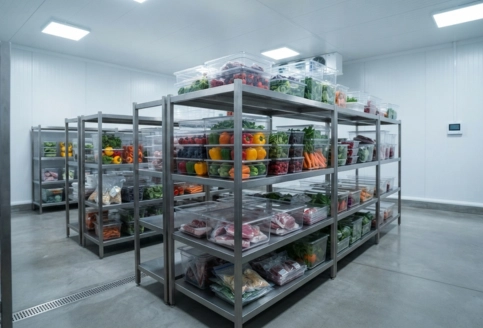
Cold rooms and refrigerated warehouses provide fixed, large-scale temperature control. They are essential for long-term storage near JAFZA, Dubai Airport Freezone, and Musaffah. But they cannot travel.
Cold rooms do not protect goods during loading, transport, or outdoor staging. These are the most exposed parts of the cold chain.
Insulated tubs fill these exact gaps. Use cold rooms for stationary storage. Use insulated tubs for every stage in between.
The 5 most common cold-chain gaps that insulated tubs solve:
Loading bay exposure when goods sit in the open air during vehicle loading
Short-haul delivery across routes under 100 km, where reefer trucks are not cost-effective
Outdoor event catering where no refrigeration infrastructure exists on site
Temporary staging when the cold room capacity is full during Ramadan or peak season
Last-mile delivery from distribution hub to hotel, hospital, restaurant, or retail store
Not all insulated tubs perform the same. The UAE's extreme heat needs containers built to industrial spec. Check every supplier against these 5 criteria before buying:
1. Wall construction. Triple-layer or multi-layer PE beats single-wall plastic every time. Ask for the wall thickness. A minimum of 30 mm total wall depth is needed for reliable summer performance.
2. UV stabilisation. Outdoor tubs must resist UV damage. Unstabilised PE cracks, yellows, and loses strength within 12 to 18 months under direct sunlight.
3. Food-grade certification. The inner surface must meet food-contact material standards. Ask for written proof of compliance before you buy.
4. Size range. A supplier with the full range from 70 L to 1,000 L gives full flexibility. It also lets you standardise handling across your entire fleet.
5. Local supply and support. Local suppliers cut lead times and replace damaged tubs faster. Overseas suppliers add import delays and extra costs that hurt operations during peak demand.
Crateco is a UAE-based manufacturer and supplier of industrial plastic packaging. Its insulated tubs are built for Gulf conditions. They use triple-layer PE construction, UV-stabilised shells, and food-grade inner surfaces.
Crateco supplies 6 capacities from 70 L to 1,000 L. Delivery covers all seven Emirates. Bulk order pricing is available for industrial buyers.
From seafood processors in Deira to pharmaceutical distributors in Dubai Healthcare City, Crateco's insulated tubs protect perishables at every stage.
It depends on tub size, ambient heat, and starting product temperature. In 45-degree summer conditions, a 310 L tub loaded at 4 degrees holds below 10 degrees for 4 to 8 hours. This covers most distribution and short-haul transport runs.
Yes. Food-grade insulated tubs with smooth, sealed inner surfaces are suitable for pharma transport. Use them with validated ice packs or dry ice inserts. For GDP-compliant logistics, place a temperature data logger inside the tub. This gives regulatory authorities the documentation they need.
No. Insulated tubs work alongside cold rooms. Cold rooms handle stationary, long-term refrigeration. Insulated tubs protect goods during transport, loading, staging, and last-mile delivery. The strongest UAE cold chains use both.
Crateco supplies insulated tubs in 6 sizes: 70 L, 100 L, 310 L, 460 L, 660 L, and 1,000 L. This covers everything from single-order catering delivery to industrial-scale fish and pharmaceutical storage.
Clean with food-grade sanitisers and hot water. Avoid abrasive tools that scratch the inner surface. Scratches create spots where bacteria can grow. For pharma use, follow the cleaning protocols in your quality management system.