
A spill can quickly become a workplace, environmental, and compliance problem if hazardous liquids are not properly contained. UAE businesses that store chemicals, oils, fuels, or other hazardous substances should therefore make spill prevention and response part of their routine site inspections.
Environmental requirements can vary by emirate, activity, and substance. Federal Law No. 24 of 1999 requires persons handling hazardous substances to take necessary precautions to prevent environmental damage, while Dubai Municipality maintains its own environmental laws and technical guidelines for businesses operating in Dubai.
A practical inspection should focus on secondary containment, chemical compatibility, container condition, spill response equipment, labeling, storage arrangements, and documentation.
Inspectors may look at both the physical condition of a chemical storage area and the records supporting its operation. The exact inspection points depend on the site, materials, activity, and applicable authority.
Dubai Municipality, for example, publishes environmental sustainability guidelines and health and safety technical guidelines covering areas such as safe storage and risk assessment.
Businesses should therefore avoid treating a spill containment inspection as a one-time exercise. Regular internal checks can identify problems before they become inspection findings or environmental incidents.
The following checklist covers the main areas businesses should review when preparing chemical and hazardous-material storage areas.
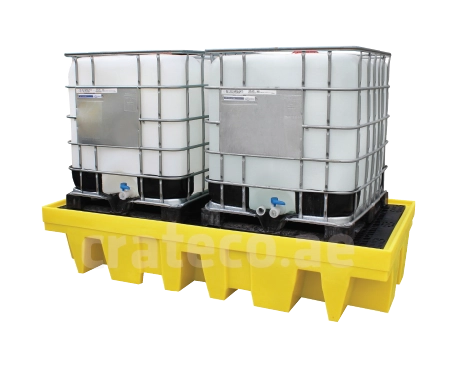
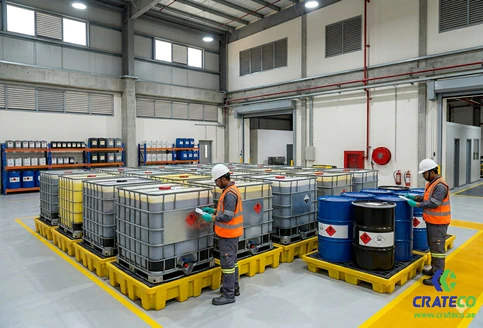
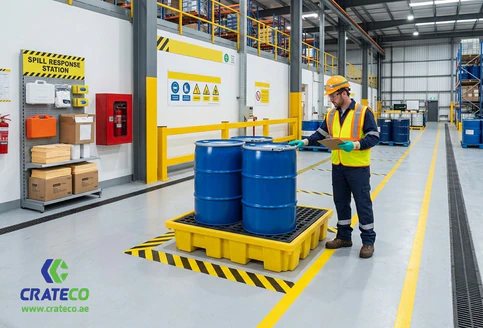
Secondary containment provides a backup barrier if a drum, tank, IBC, or other container leaks.
Businesses should calculate the required containment volume according to the applicable local requirements, permit conditions, storage arrangement, and type of material. A 110% capacity target is commonly used in spill containment planning, but it should not automatically be presented as a universal UAE requirement for every facility.
The containment area should have enough usable capacity to manage a credible spill without allowing the liquid to escape into surrounding areas or drainage systems.
Containment equipment is only effective when it is physically sound. Inspect bund walls, spill pallets, drip trays, and containment platforms for cracks, holes, broken seams, distortion, corrosion, or other signs of damage.
Plastic containment products should also be checked for warping or deterioration caused by chemicals, sunlight, heat, or age.
Any damaged containment equipment should be removed from service or repaired according to the manufacturer's instructions before hazardous materials are returned to the area.
Drainage points require particular attention in chemical storage areas. A drain that is accidentally left open can allow contaminated liquid to leave the containment area.
Where drainage valves are installed, businesses should establish clear procedures controlling when they can be opened and who is authorized to operate them.
Routine inspections should verify that valves, plugs, and other discharge controls are in the required position and are not damaged or leaking.
Spill containment products must be compatible with the substances they are designed to contain.
Different chemicals can react differently with plastics, coatings, metals, and other materials. A tray that works well for one liquid may deteriorate when exposed to another.
Before selecting a spill pallet or containment tray, businesses should check the chemical's SDS and the containment manufacturer's compatibility information. This is particularly important for corrosive, aggressive, or highly reactive substances.
Inspectors may also examine how chemicals are arranged and stored, rather than looking only at the spill tray.
Incompatible substances should not be stored together simply because there is enough physical space.
For example, certain acids, bases, oxidizers, flammable materials, and reactive substances may require separate storage arrangements. Businesses should use the SDS and applicable storage requirements to determine which materials need segregation.
Separate containment can also be important because a spill involving two incompatible substances can create additional hazards.
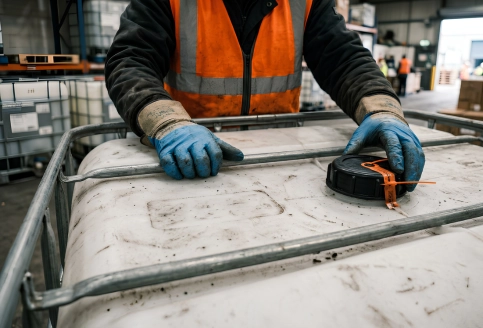
Every container should be checked for leaks, corrosion, damaged fittings, loose closures, bulging, cracks, and other signs of deterioration.
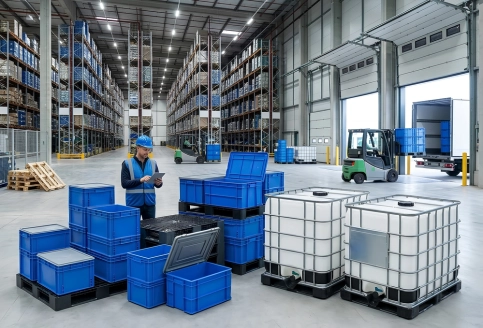
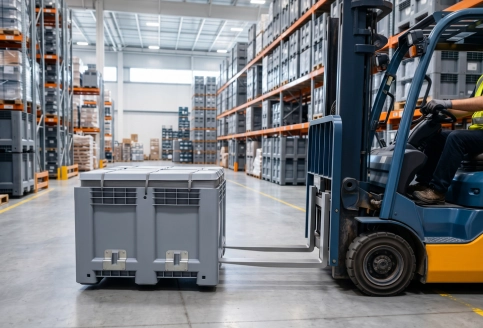
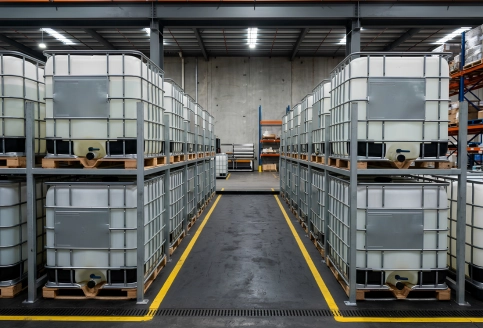
IBC tanks and drums should remain stable and should not be placed where forklifts or other equipment can easily strike them.
Damaged containers should be isolated and handled according to the site's emergency and waste procedures.
Chemical containers should remain closed when they are not being actively used, unless the equipment or process requires otherwise.
Open or poorly secured containers can increase the risk of spills, vapor release, contamination, and worker exposure.
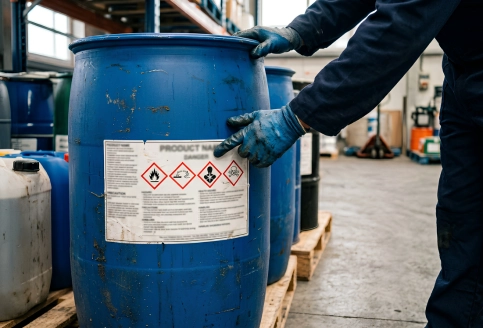
Chemical identification and hazard communication should remain clear throughout storage and handling. Labels that are faded, damaged, missing, or covered by other materials can create unnecessary risk.
Businesses should check container labels during routine inspections and replace damaged labels according to their chemical management procedures.
Outdoor storage creates additional challenges. Sunlight, heat, dust, rain, and changing weather conditions can affect containers and containment equipment.
Where outdoor storage is permitted, businesses should assess whether the area provides appropriate protection from weather and whether rainwater could reduce available containment capacity.
Containment areas should not be allowed to become filled with rainwater because this can reduce the available volume for an actual chemical spill. Any water removal procedure should be managed safely and according to the site's environmental requirements.
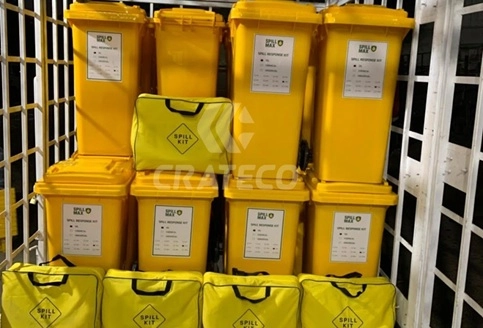
Businesses should choose the right spill kit based on the chemicals stored, the size of the potential spill, and the response equipment required. The kit should contain suitable absorbents, disposal bags, gloves, and other necessary PPE.
Spill kits should be positioned where workers can access them quickly during a leak or spill. Suitable locations may include chemical storage areas, liquid transfer points, maintenance areas, or other locations identified through the site's risk assessment.
Kits should remain visible and accessible rather than being hidden behind pallets, equipment, or stored materials.
The contents should match the types of materials handled at the facility. Depending on the application, a kit may contain absorbent pads, socks, pillows, loose absorbent material, disposal bags, gloves, goggles, or other PPE.
Oil-only absorbents, for example, are designed for petroleum-based liquids and may not be suitable for every chemical spill. Businesses should select absorbents according to the substances stored on site.
Spill kits should be checked on a defined schedule. Inspections can confirm that absorbents have not been used, PPE has not expired or deteriorated, and disposal bags and other supplies remain available.
After a spill, the kit should be restocked immediately rather than waiting for the next scheduled inspection.
Depending on the substances and workplace risks, emergency equipment may include eyewash stations, safety showers, fire extinguishers, emergency communication systems, and other controls.
Access routes should remain clear. Equipment should not be blocked by pallets, drums, crates, forklifts, or temporary storage.
Testing and maintenance should follow the applicable requirements and the equipment manufacturer's instructions. Businesses should also keep records when inspections or testing are required.
Physical containment is only one part of environmental compliance. Workers need access to accurate information about the chemicals stored at the site.
A well-managed chemical safety system should include:
Federal environmental law also places responsibilities on establishments handling hazardous substances and hazardous waste, including precautions against environmental damage and recordkeeping relating to hazardous waste in applicable circumstances.
Some chemical and industrial activities require permits, approvals, or other authorizations from the relevant authority.
Federal Law No. 24 of 1999 states that dealing with hazardous substances and hazardous wastes requires licensing from the competent authorities, subject to the applicable regulatory conditions.
The exact permit requirements depend on the activity, material, facility, and emirate. Businesses should maintain copies of applicable permits and approvals and verify that they remain valid.
Spill cleanup materials can become hazardous waste depending on what they have absorbed. Used absorbent pads, contaminated PPE, soil, or other materials should not simply be placed in ordinary waste bins without assessing the applicable waste requirements.
Businesses should have a defined process for collecting, storing, transporting, and disposing of contaminated materials. Where licensed waste contractors are required, companies should retain the relevant collection and disposal documentation.
This also creates a useful audit trail if an inspector asks how hazardous waste generated at the facility is being managed.
A good inspection program should create evidence that the business regularly checks its storage areas.
A simple inspection record can include:
| Inspection Area | What to Check | Status |
|---|---|---|
| Spill pallets | Cracks, leaks, deformation, chemical damage | Pass / Fail |
| Bund walls | Structural condition and available capacity | Pass / Fail |
| Drain controls | Valves and plugs secure and correctly positioned | Pass / Fail |
| Containers | Leaks, corrosion, damaged closures | Pass / Fail |
| Labels | Clear and readable | Pass / Fail |
| Chemical segregation | Compatible storage arrangement | Pass / Fail |
| Spill kits | Correct contents and accessibility | Pass / Fail |
| Emergency equipment | Clear access and required checks completed | Pass / Fail |
| SDS | Current documents available | Pass / Fail |
| Waste records | Disposal documentation maintained | Pass / Fail |
| Permits | Required approvals current | Pass / Fail |
Businesses can adapt this checklist to their own chemicals, storage systems, permits, and local authority requirements.
Several basic problems can weaken an otherwise well-designed storage area.
The best approach is to make compliance part of normal warehouse operations rather than preparing only when an inspection is expected.
Start by identifying every location where chemicals, oils, fuels, or hazardous liquids are stored or transferred. Then review the containment capacity, material compatibility, container condition, emergency equipment, labels, SDS documents, and waste procedures for each area.
Businesses operating in Dubai should also review the environmental and health and safety guidance published by Dubai Municipality because local requirements can apply in addition to federal environmental legislation. Dubai Municipality identifies environmental technical guidelines as requirements that concerned entities in relevant sectors must observe.
The right containment product depends on the container size, liquid type, storage arrangement, available space, and handling method. A small drum storage area may require a different solution from an IBC storage zone or a chemical transfer station.
Crateco Pack LLC provides industrial packaging and spill containment solutions for warehouses, factories, and logistics operations. Businesses can select suitable products based on their container sizes, material compatibility requirements, storage layout, and handling needs.
A spill containment inspection is about more than checking whether a facility has a spill pallet. UAE businesses need to look at the complete system, including secondary containment, chemical compatibility, container condition, segregation, emergency equipment, spill kits, documentation, permits, and waste management.
Requirements can differ according to the emirate, industry, substance, and facility activity, so businesses should always confirm the requirements that apply to their operation.
Regular internal inspections can help identify damaged containment, missing supplies, poor housekeeping, and documentation gaps before they become bigger problems.
Reliable spill containment products are an important part of this process. Crateco Pack LLC can support businesses with plastic pallets, spill containment solutions, crates, bins, and other industrial packaging products designed for demanding warehouse environments.