
The UAE has no direct copy of the EU's REACH law, yet chemical rules still follow every drum and IBC that crosses its border. Importers who overlook them risk held shipments and rejected loads.
REACH-style compliance in the UAE covers four areas: the chemicals the containers will hold, the materials the containers are made of, UN approval for dangerous goods packaging, and records that prove each point.
Federal Law No. 24 of 1999 and its rules control hazardous materials, MOCCAE issues import permits and keeps a banned and restricted chemicals list, and food-contact containers must meet Gulf packaging standards. Exporters to Europe also need to track the EU's list of substances of very great concern.
REACH is the EU's chemical law, covering the registration, evaluation, authorisation and restriction of chemicals. Its Candidate List of substances of very high concern (SVHCs) reached 253 entries when two more were added on 4 February 2026, according to SGS.
If an article sold in the EU contains more than 0.1% of a listed SVHC by weight, the supplier must pass on safe-use information. EU producers and importers must also notify the EU's SCIP database.
UAE firms that export containers or filled goods to Europe are pulled into these rules through their buyers. Many local buyers also ask for REACH declarations as a quality signal, even on domestic orders.
The UAE's base law is Federal Law No. 24 of 1999 on protecting the environment. Cabinet Resolution No. 37 of 2001 sets its rules for handling hazardous materials and waste, and was amended in 2021.
MOCCAE issues import permits for controlled and hazardous chemicals and keeps the national list of banned and restricted chemicals. Ministerial Decree No. 783 of 2015 sets out banned and restricted industrial chemicals.
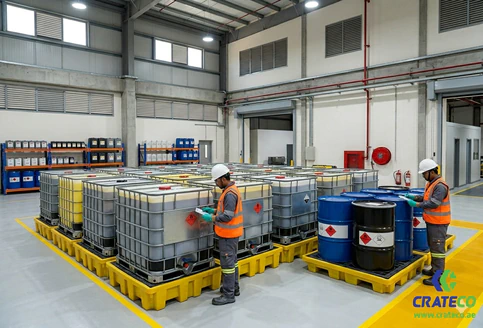
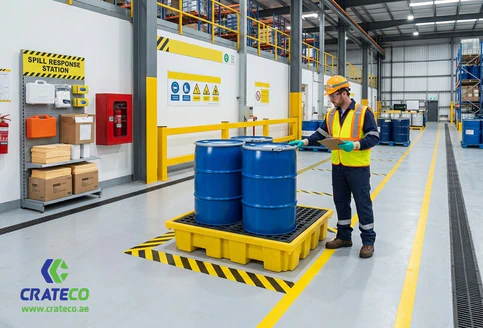
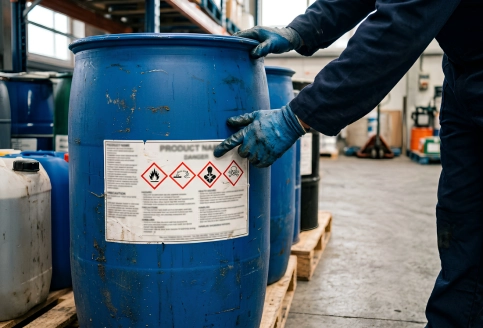
Storage adds another layer. Hazardous chemical stores need emirate Civil Defence approval and a hazardous materials permit, and misclassifying dangerous goods can be treated as an offence under the federal environment law.
| Rule or authority | What it covers | What importers need |
|---|---|---|
| Federal Law No. 24 of 1999 and Cabinet Resolution No. 37 of 2001 | Handling of hazardous materials and waste | Correct classification and safe handling |
| MOCCAE | Import of controlled and hazardous chemicals | Import permit, check of the banned list |
| Ministerial Decree No. 783 of 2015 | Banned and restricted industrial chemicals | Screening of formulations |
| Emirate Civil Defence | Storage of hazardous goods | Storage approval for the warehouse |
| Emirates Drug Establishment | Chemicals and precursors linked to medical products | Company registration and import permits |
Containers must also be safe in themselves. Drums and jerry cans used for food, water or pharma products fall under food packaging standards such as UAE.S GSO 839 for general requirements and UAE.S GSO 1863 for plastic packages.
Material declarations matter here. Buyers usually ask for confirmation of virgin HDPE or PP, migration test results and a statement that the container is free of restricted substances.
Recycled plastic brings extra checks. It may suit chemical or waste use, but food-contact use needs proof that contaminants were removed.
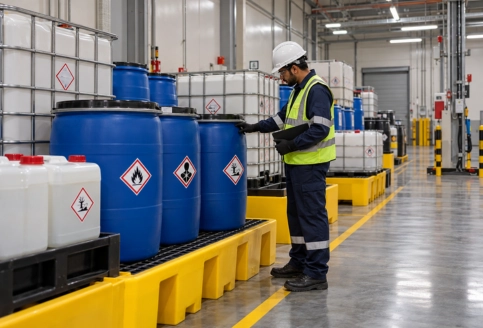
Containers carrying hazardous liquids need UN-approved packaging. The UN mark shows the container type, the packing groups it can carry, and the maximum weight or density it was tested for.
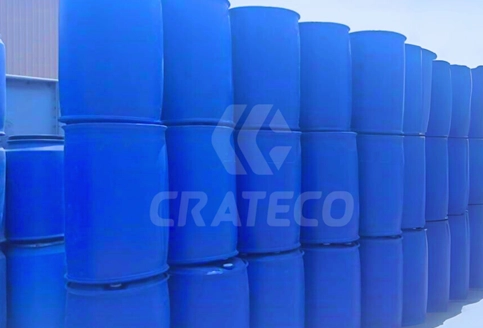
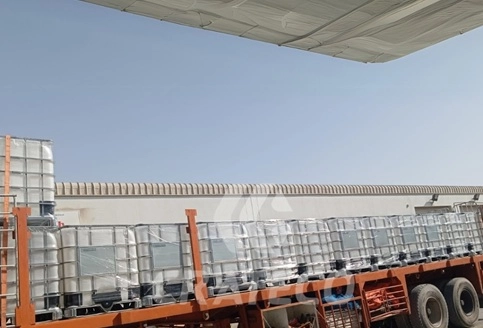
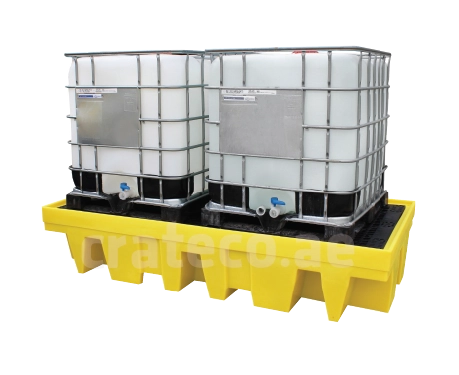
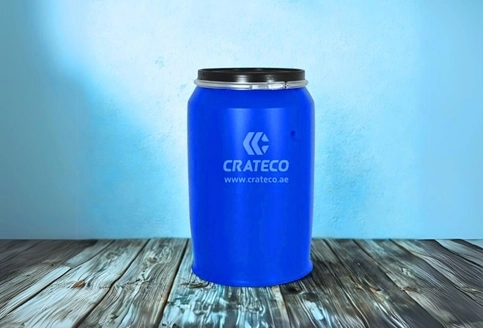
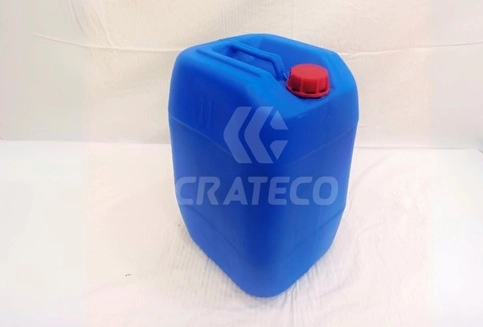
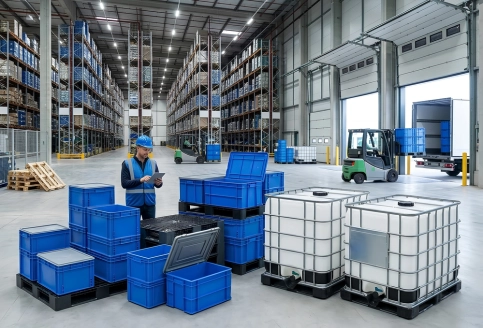
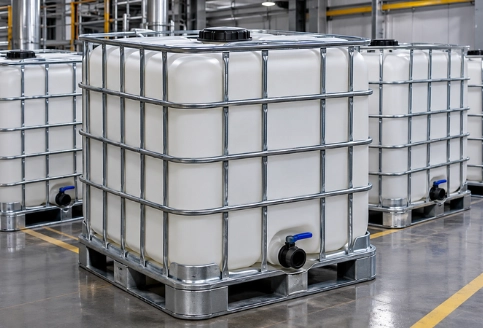
Common codes include 1H1 for closed-head plastic drums, 3H1 for closed-head plastic jerry cans and 31HA1 for composite IBCs with a plastic bottle inside a steel cage. Shipping lines and ports can refuse a container that lacks the right mark.
UN approvals also run out over time. Under international transport rules, plastic drums, jerry cans and IBCs can generally carry dangerous goods for up to five years from manufacture, and IBCs need periodic inspection and leak tests.
| UN code | Container type | Typical use |
|---|---|---|
| 1H1 | Plastic drum, closed head | Liquid chemicals |
| 1H2 | Plastic drum, open head | Solids and pastes |
| 3H1 | Plastic jerry can, closed head | Small volumes of liquid |
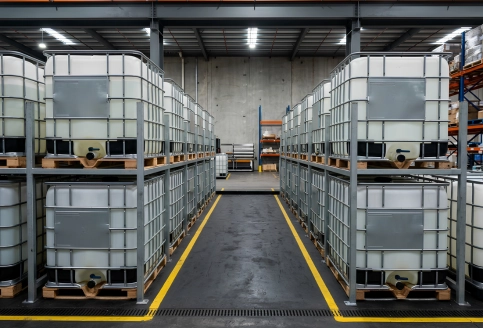
| 31HA1 | Composite IBC, plastic inner with steel cage | Bulk liquids, usually 1,000 L |
A simple file for each container type saves time at customs and during audits. It should hold the UN certificate, a material declaration, test reports and the safety data sheet for whatever the container will carry.
Check that the supplier's paperwork matches the marking on the container itself. Mismatched codes are a common reason for rejected loads.
Review the file whenever the EU SVHC list or the UAE banned list changes. Producer duties are growing too, as EPR rules push importers to plan for collection at end of life.
No, the UAE has no single REACH-style law. Instead, the federal environment law, MOCCAE import permits and national banned chemical lists cover similar ground.
Empty, clean containers usually do not need chemical permits, but food-contact and UN claims must be backed by certificates. Used containers that held hazardous chemicals may be treated as hazardous waste.
If an article sold in the EU contains more than 0.1% by weight of a listed substance, suppliers must share safe-use information. It mainly affects UAE firms exporting to Europe.
Under international transport rules, rigid plastic and composite IBCs can carry dangerous goods for up to five years from manufacture. They also need regular inspection and leak testing during that time.
Chemical compliance for containers is less about one big law and more about matching paperwork. In the UAE, that paperwork links the chemical, the container and the route it travels.
Federal environment law, MOCCAE permits and banned lists set the local rules, while food-contact standards cover the container material. UN marks prove a drum, jerry can or IBC can carry dangerous goods, and the EU's 253-entry SVHC list shapes exports. Keeping one clear file per container type makes REACH-style compliance manageable.
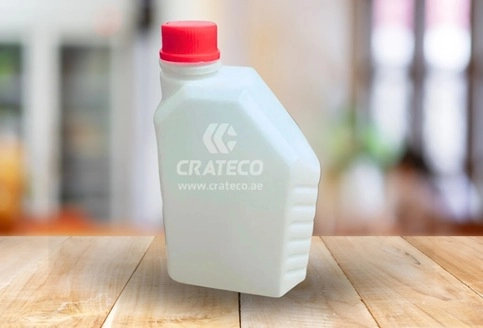
Crateco Pack LLC supplies IBC tanks, plastic drums and jerry cans from its Ajman facility for industrial and chemical users. Request certificates and specs for its IBC tanks before your next import.